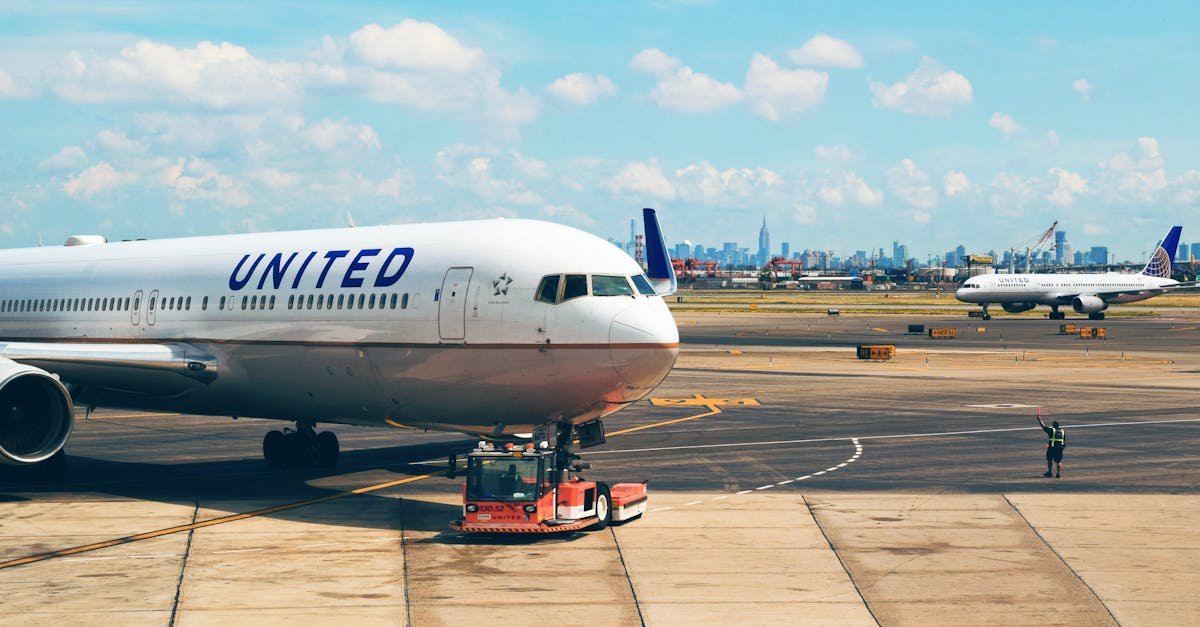
In a scene that felt like it belonged in a high-budget action movie, the skies above New Jersey became the center of a terrifying aviation incident on May 3, 2026. United Flight 169, a massive Boeing 767-400ER making its long journey from Venice, Italy, was on its final approach to Newark Liberty International Airport. As the plane descended toward the runway, things took a turn that left onlookers and those on the ground in total disbelief.
A Collision on the New Jersey Turnpike
What was supposed to be a standard landing turned into a chaotic sequence of events just as the plane crossed over the New Jersey Turnpike. At roughly 2:00 p.m., the aircraft flew exceptionally low, far lower than the standard glide path for that area. As United Flight 169 cleared the highway perimeter, its landing gear and the underside of the fuselage made contact with a tall light pole.
The impact was enough to dislodge the pole, which then crashed down onto a Jeep traveling on the highway. Even more shocking was the contact made with a commercial vehicle. A semi-truck belonging to H&S Bakery, driven by Warren Boardley, was also struck by the aircraft’s landing gear. Dashcam footage from inside the truck captured a harrowing moment where the massive tire of the Boeing 767 appeared to smash through the driver’s side windshield. Shattered glass filled the cabin as the driver managed to maintain control and pull over. Despite the terrifying nature of the collision, the plane continued its path and managed to touch down on the runway.
The Factors Behind the Low Approach
When an incident like this happens, the first question everyone asks is how a sophisticated aircraft from United could end up so close to the ground before reaching the airport boundary. While the official investigation is still in its early stages, several environmental and operational factors have already come to light.
On that particular Sunday, Newark was experiencing significant wind conditions. Because of these gusts, air traffic control vectored the United flight toward Runway 29. This specific runway is the shortest at Newark, measuring only 6,725 feet, compared to the much longer runways the flight would typically use. Runway 29 sits incredibly close to the New Jersey Turnpike, leaving a very small margin of error for pilots. The combination of a shorter-than-usual runway, shifting winds, and the immense size of a Boeing 767 likely created a challenging environment for the crew. Pilots are now being questioned to determine if there was a loss of situational awareness or if technical issues played a role in the plane dropping below the safe altitude threshold.
Why This Event Has Sent Shockwaves Through the Industry
The reason this specific incident with United has garnered so much attention is the sheer rarity of a “ground strike” during an active landing where the plane still manages to land safely. Aviation safety is built on layers of redundancy and strict altitude floors. When a plane’s landing gear hits a vehicle on a public road, it suggests a total breakdown of those safety layers.
This matters because the New Jersey Turnpike is one of the busiest stretches of highway in the United States.Thousands of people drive directly under the flight path of Newark Liberty International every hour. If the plane had been just a few feet lower, the outcome could have been a catastrophic loss of life both in the air and on the ground. The fact that all 221 passengers and 10 crew members walked off the plane without a single scratch is being described by many as a miracle. However, for the aviation industry, it is a wake-up call regarding the proximity of major infrastructure to active runways.
The Immediate Aftermath and Next Steps
Following the landing, United moved quickly to address the situation. The aircraft was immediately taken out of service so that maintenance teams could inspect the landing gear and the underside of the fuselage for structural damage. The flight crew has also been removed from active duty, which is standard procedure during a “rigorous” safety investigation.
On the ground, the driver of the bakery truck was taken to a local hospital. Fortunately, his injuries were limited to cuts from the broken glass, and he was released shortly after. The FAA and the National Transportation Safety Board (NTSB) have both launched full-scale inquiries. The NTSB has already secured the cockpit voice recorder and the flight data recorder from the United jet. These “black boxes” will be the key to understanding the final moments of the flight. A preliminary report is expected to be released within the next 30 days, which will provide a clearer picture of the mechanical or human factors that led to the strike.
Breaking Down the Risks of Short Runway Landings
From an analytical perspective, this event highlights the inherent risks of using secondary runways for large wide-body aircraft under stress. The Boeing 767 is a heavy machine, and landing it on Runway 29 at Newark requires precision. When United is forced to use these shorter strips due to weather, the “aim point” for the pilots becomes much more critical.
Investigators will likely look at the “threshold crossing height,” which is the altitude of the aircraft as it passes the beginning of the runway. Because the turnpike is so close to the airport fence, any deviation in the descent angle can bring the plane dangerously close to highway traffic. This incident may prompt a review of whether certain aircraft types should be restricted from Runway 29 during specific wind conditions. It also raises questions about the height of utility poles and lighting structures in the immediate vicinity of the airport’s approach paths. For United, the focus will be on training and ensuring that their crews are fully prepared for the unique challenges of Newark’s layout when the primary runways are unavailable.
A New Look at Aviation Safety Near Highways
While we wait for the final word from federal investigators, the images of a United jet clipping a light pole will likely stay in the public consciousness for a long time. It serves as a stark reminder that even with the best technology and the most experienced pilots, the physical world offers very little room for error. The safety of our skies depends on constant vigilance and the willingness to change protocols when a near-miss occurs.
This event was a narrow escape for everyone involved. Moving forward, the goal for both the airline and the port authority will be to ensure that the boundary between the highway and the runway remains a safe distance apart, protecting both the travelers in the air and the commuters on the ground.
Leave a Reply