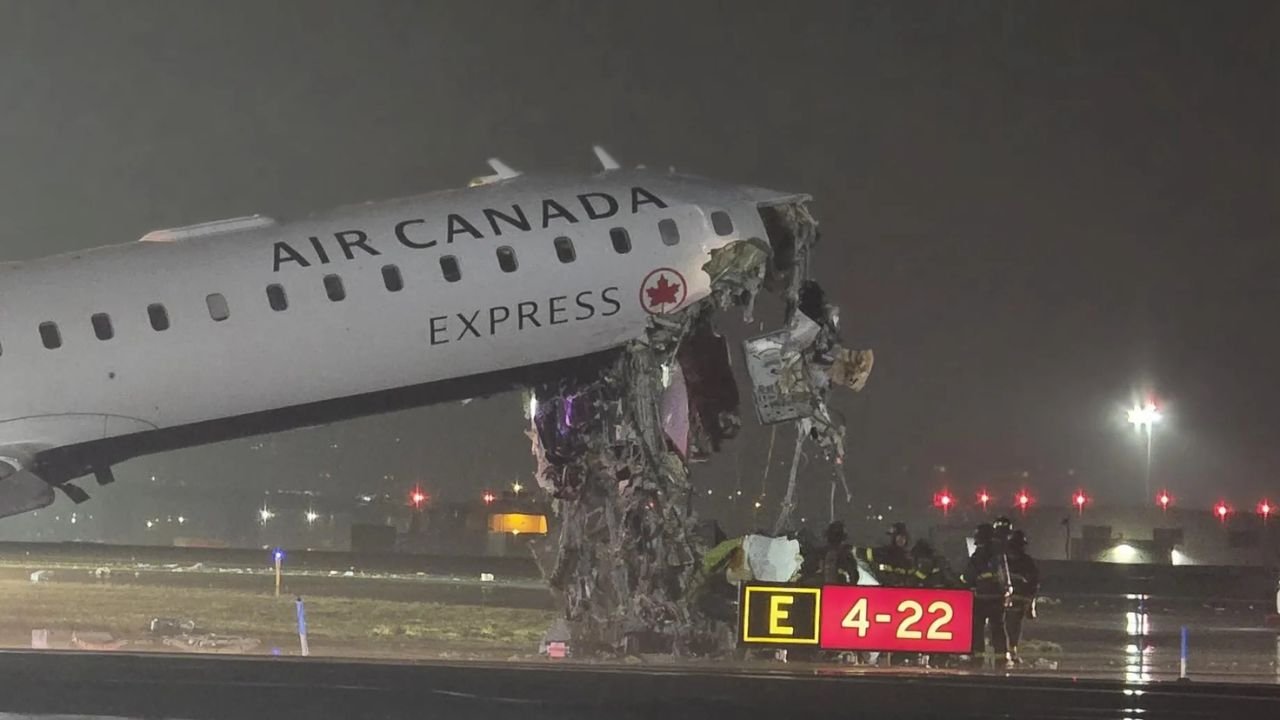
A major emergency at LaGuardia Airport has sent shockwaves through the aviation world after an Air Canada flight collided with a fire truck on the runway. The incident occurred late Sunday night, March 22, 2026, leading to a massive response from emergency services and the immediate closure of one of the busiest travel hubs in the United States. As families wait for news and investigators begin the grueling task of pieceing together the timeline, the details emerging paint a picture of a terrifying close call that turned into a tragic reality.
The Midnight Collision on Runway 4
The event unfolded at approximately 11:37 PM as Air Canada flight AC8646 was finishing its journey from Montreal. The aircraft, a Bombardier CRJ-900LR operated by Jazz Aviation for Air Canada, was in the process of landing on Runway 4 when it struck a Port Authority rescue and fire fighting vehicle. Reports from flight tracking data indicate that the Air Canada plane was moving at roughly 24 miles per hour when the impact occurred.+1
Eyewitnesses at the scene and passengers on board described a sudden, violent jolt that sent the aircraft tilting forward. Images from the aftermath show the nose of the Air Canada jet sustained significant structural damage, appearing smashed where it made contact with the heavy fire engine. The collision happened near the Delta terminal area, turning a routine Sunday night arrival into a scene of absolute chaos as sparks flew and sirens began to wail across the airfield.
Assessing the Casualties and Injuries
The human cost of the Air Canada accident is still being tallied, but the initial numbers are sobering. Local authorities have declared a mass casualty incident due to the number of people requiring medical attention. At the center of the tragedy are the first responders who were inside the fire truck, often referred to as Truck 1.
There are unconfirmed reports of fatalities among the ground crew, while at least four or five firefighters are currently in critical condition at local trauma centers. On board the Air Canada flight, there were approximately 100 passengers and crew members. While many were able to evacuate the plane using emergency slides or the main cabin door, nearly 70 people have been treated for various injuries. Most of the passenger injuries are being described as minor, ranging from bruises and scrapes to the psychological shock of the impact, but several individuals were transported to hospitals for more thorough evaluations.
Chaos at LaGuardia and Ground Stop Orders
Immediately following the collision involving Air Canada, the Federal Aviation Administration took the drastic step of halting all operations at the airport. A full ground stop was issued, preventing any planes from taking off or landing at the Queens facility. This move was essential to allow emergency vehicles clear access to the runway and to ensure that no further accidents occurred in the confusion.
The impact on travel has been massive. Thousands of passengers found themselves stranded as flights were diverted to Newark Liberty International or John F. Kennedy International airports. The airport authorities have suggested that the closure could remain in place until at least 2:00 PM on Monday, March 23. Travelers are being urged to stay away from the airport and check their flight status online, as the backlog of canceled and delayed trips will likely take days to resolve.
Audio Evidence and the Investigation Process
Investigators are now looking closely at the communication between the control tower and the vehicles on the ground. Audio recordings from air traffic control have surfaced, providing a haunting glimpse into the seconds before the Air Canada jet struck the truck. In the recordings, a controller can be heard frantically calling out to Truck 1, telling the driver to stop multiple times.
The National Transportation Safety Board and the Federal Aviation Administration have both launched formal probes into the matter. They will be looking at why the fire truck was on an active runway while the Air Canada flight was landing. Key questions remain about whether there was a lapse in communication, a mechanical failure in the truck, or if poor visibility played a role in the disaster. The flight data recorder and cockpit voice recorder from the Air Canada aircraft will be vital in determining exactly what the pilots saw and felt as they touched down.
Technical Details of the Aircraft Involved
The plane at the center of this investigation is a Bombardier CRJ-900LR, registered as C-GNJZ. This specific Air Canada jet has been in service since 2005 and is a staple of regional routes between Canada and the United States. With a capacity of about 76 passengers, these planes are known for their reliability on short haul corridors like the Montreal to New York route.
While the aircraft itself is over 20 years old, it had a consistent maintenance record within the Air Canada fleet. The damage to the nose and the landing gear area is extensive, and experts suggest it may be some time before the plane is moved from the runway. This delay adds to the difficulty of reopening the airport, as the heavy jet must be stabilized and inspected before it can be towed away for further forensic analysis.
Emergency Response and Public Safety
The response from New York City emergency services was swift. Within minutes of the Air Canada collision, dozens of FDNY units and ambulances arrived at the perimeter of the airport. A triage center was set up on the tarmac to assess passengers as they deplaned. The coordination between the Port Authority and local hospitals was crucial in managing the high number of injured people in a short period.
Local officials have asked the public to avoid the roads surrounding LaGuardia to keep the paths clear for emergency personnel. The Queens community has seen a surge in traffic as travelers try to find alternative ways home or to hotels. Despite the fear and the heavy presence of police and fire officials, the evacuation of the Air Canada flight was handled in an orderly fashion, preventing further injuries that often occur during a panicked exit.
Looking Ahead at Airport Security Protocols
This incident will undoubtedly lead to a rigorous review of how ground vehicles and aircraft share the runway space. Runway incursions have been a top concern for aviation safety experts for years, and the collision of an Air Canada jet with a fire engine highlights the dangers that exist even when a plane is moving at relatively slow speeds on the ground.
In the coming weeks, the industry will look for answers regarding the safety technology used at LaGuardia. Questions about ground radar systems and automated alerts for drivers will be at the forefront of the discussion. For now, the focus remains on the recovery of those injured and the support of the families affected by the crash. The Air Canada brand, which is usually associated with a strong safety culture, is now part of a complex investigation that will likely change the way airports operate across the country.
Current Status of Air Travel and Updates
As of Monday morning, the scene at the airport remains active with investigators and clean up crews. The Air Canada flight remains on Runway 4, surrounded by portable lights and security cordons. Airlines are working to rebook passengers, but the sheer volume of travelers affected by the LaGuardia shutdown is creating a ripple effect across the East Coast.
People with scheduled trips involving Air Canada or any other carrier at this location should prepare for significant delays. The recovery of the two deceased officers and the treatment of the critically injured firefighters remain the priority for local leaders. More information is expected to be released during a press conference later today as the Port Authority and federal agencies provide more clarity on the tragedy.
Leave a Reply