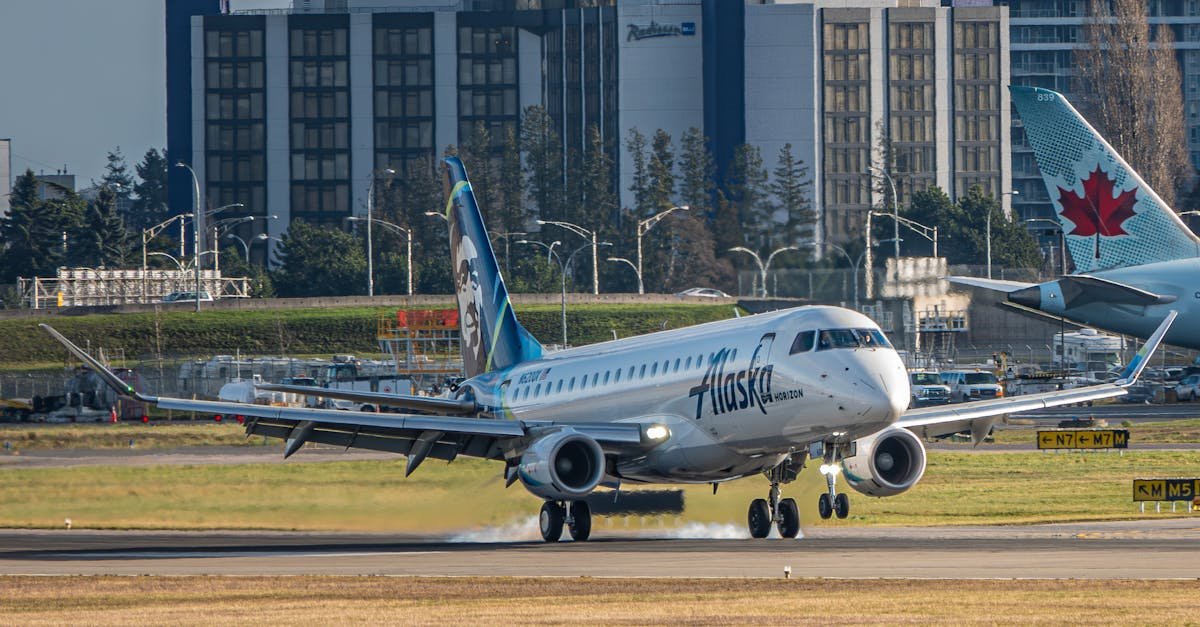
A Tuesday evening in New Jersey nearly turned into a national tragedy when two large commercial aircraft came within seconds of a collision at Newark Liberty International Airport. On March 17, 2026, an Alaska Airlines Boeing 737 and a FedEx Boeing 777 freighter found themselves on a converging path while attempting to land on intersecting runways.
The incident has sparked an immediate and intensive investigation by the Federal Aviation Administration and the National Transportation Safety Board. As radar data and cockpit audio recordings emerge, the terrifying reality of how close these two planes came to each other is becoming clear. With only a few hundred feet of separation, the safety of hundreds of passengers and the integrity of one of the busiest airspaces in the world are now under the microscope.
The Timeline of a Terrifying Descent
The sequence of events began around 8:15 p.m. local time. Alaska Airlines Flight 294, a Boeing 737 arriving from Portland, Oregon, was on its final approach to one of Newark’s primary runways. Simultaneously, FedEx Flight 721, a massive Boeing 777 cargo jet arriving from the FedEx hub in Memphis, Tennessee, was cleared for landing on a runway that intersected the path of the Alaska jet.
As the Alaska Airlines flight descended, the crew was focused on the runway ahead, unaware that the FedEx plane was closing in on a crossing trajectory. At approximately 8:17 p.m., the situation reached a critical point. The Alaska 737 was just 150 feet above the ground, seconds away from touching down, when an air traffic controller recognized the imminent danger.
The controller issued an urgent command to the Alaska pilots to perform a go around. This maneuver requires the pilots to immediately increase engine power, retract landing gear, and climb away from the airport to reset their approach. The FedEx 777, meanwhile, continued its descent and landed safely on the intersecting runway.
Measuring the Margin of Error
Preliminary data analyzed by Flightradar24 paints a chilling picture of the narrow margin for error. According to their radar tracking, the Alaska Airlines jet cleared the FedEx plane by a distance estimated between 300 and 325 feet. In the world of commercial aviation, where safety buffers are usually measured in miles or thousands of feet, a gap of 300 feet is considered a hairsbreadth.
The physical size of the aircraft involved adds to the gravity of the situation. A Boeing 777 is one of the largest twin engine jets in the world, with a wingspan of nearly 200 feet. Having a Boeing 737 fly directly over or past it at such a low altitude and high speed represents a significant breakdown in the standard separation protocols that keep the skies safe.
Understanding the Risk of Intersecting Runways
Newark Liberty International Airport, like many older major airports in the United States, uses a runway configuration that includes intersecting paths. While this design allows for greater flexibility in handling high volumes of traffic and adapting to changing wind conditions, it inherently introduces a higher level of complexity for air traffic controllers.
At Newark, Runway 11/29 intersects with the primary parallel runways, 4L/22R and 4R/22L. When traffic is heavy, controllers must carefully sequence arrivals and departures to ensure that no two aircraft occupy the “box” where the runways cross at the same time. On Tuesday night, that sequencing appears to have failed, leading to the close call between Flight 294 and Flight 721.
Industry experts note that while intersecting runways are common, they require absolute precision. A delay of just a few seconds in communication or a slight misunderstanding of a clearance can lead to a runway incursion or a near miss.
The Human Element and Air Traffic Control Strains
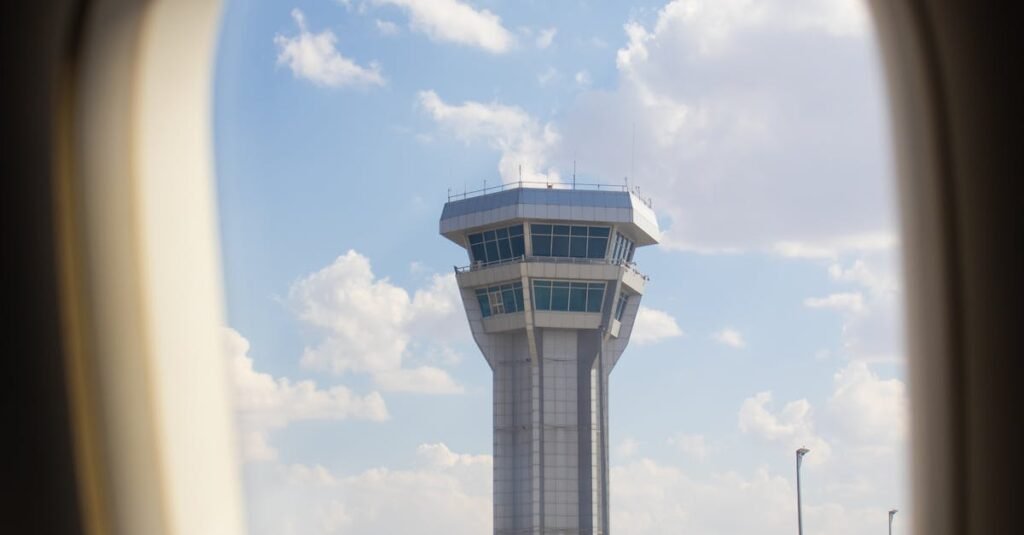
The investigation is expected to look closely at the workload and staffing levels at the Philadelphia TRACON, the facility responsible for managing the airspace around Newark. In recent years, the FAA has faced criticism over chronic staffing shortages and the aging infrastructure of the air traffic control system.
Reports from 2025 indicated that the area handling Newark traffic was operating with significantly fewer certified controllers than the targeted goal. When controllers are overworked or facilities are understaffed, the mental fatigue can lead to errors in judgment or slower reaction times. Whether staffing played a role in this specific incident will be a primary focus for NTSB investigators.
The “go around” command given to the Alaska flight was a successful use of a primary safety tool, but the fact that it was required at such a low altitude suggests that the conflict should have been identified much earlier in the approach sequence.
Official Responses and Airline Statements
In the wake of the incident, both airlines have released statements emphasizing their commitment to safety. Alaska Airlines confirmed that their crew followed standard procedures after receiving the go around instruction from the tower. The airline noted that their pilots undergo rigorous training for exactly these types of scenarios, ensuring they can react calmly and effectively when a landing must be aborted.
FedEx also issued a brief statement, confirming that Flight 721 landed safely and that the company is cooperating fully with federal authorities. Neither airline has commented on the specific details of the separation distance, deferring all technical questions to the FAA and NTSB.
The FAA released a statement on Thursday morning confirming the investigation. They stated that the controller instructed the Alaska flight to abort its landing because the FedEx plane had already been cleared for the intersecting runway. This suggests a potential conflict in the clearances issued to the two different flights.
Broader Implications for Aviation Safety
This near miss is part of a worrying trend of close calls at major U.S. airports over the last few years. High profile incidents in Austin, New York, and Boston have already prompted the FAA to hold safety summits and implement new technology designed to alert controllers of potential surface conflicts.
While modern aircraft are equipped with sophisticated Traffic Collision Avoidance Systems (TCAS), these systems are sometimes limited during the final stages of landing when planes are very close to the ground and focused on specific runway paths. In these moments, the responsibility falls almost entirely on the shoulders of air traffic controllers and the visual awareness of the pilots.
What Happens Next in the Investigation
The NTSB will now begin the painstaking process of downloading data from the “black boxes” or flight data recorders of both aircraft. They will also review the digital logs from the air traffic control tower and interview the controllers and pilots involved.
Investigators will look for “root causes.” Was there a piece of equipment that failed? Was the radio frequency congested, leading to a delayed message? Or was it a simple human error in calculating the speed and distance of the two arriving jets? The final report could take a year or more to complete, but preliminary findings and safety recommendations are often released much sooner if a systemic issue is discovered.
A System That Worked Despite the Danger
While the 300 foot gap is terrifying to contemplate, aviation experts often point out that the system’s redundancies actually worked in this case. The controller identified the error before a collision occurred, and the pilots responded instantly to the command.
Every go around is a win for safety, even if the circumstances leading up to it are a cause for concern. For the passengers on Alaska Flight 294, the sudden climb and roar of the engines may have been startling, but it was the sound of a disaster being averted. As the FAA continues its probe, the focus remains on ensuring that the narrow escape at Newark leads to meaningful changes that prevent a similar situation from ever happening again.
Leave a Reply