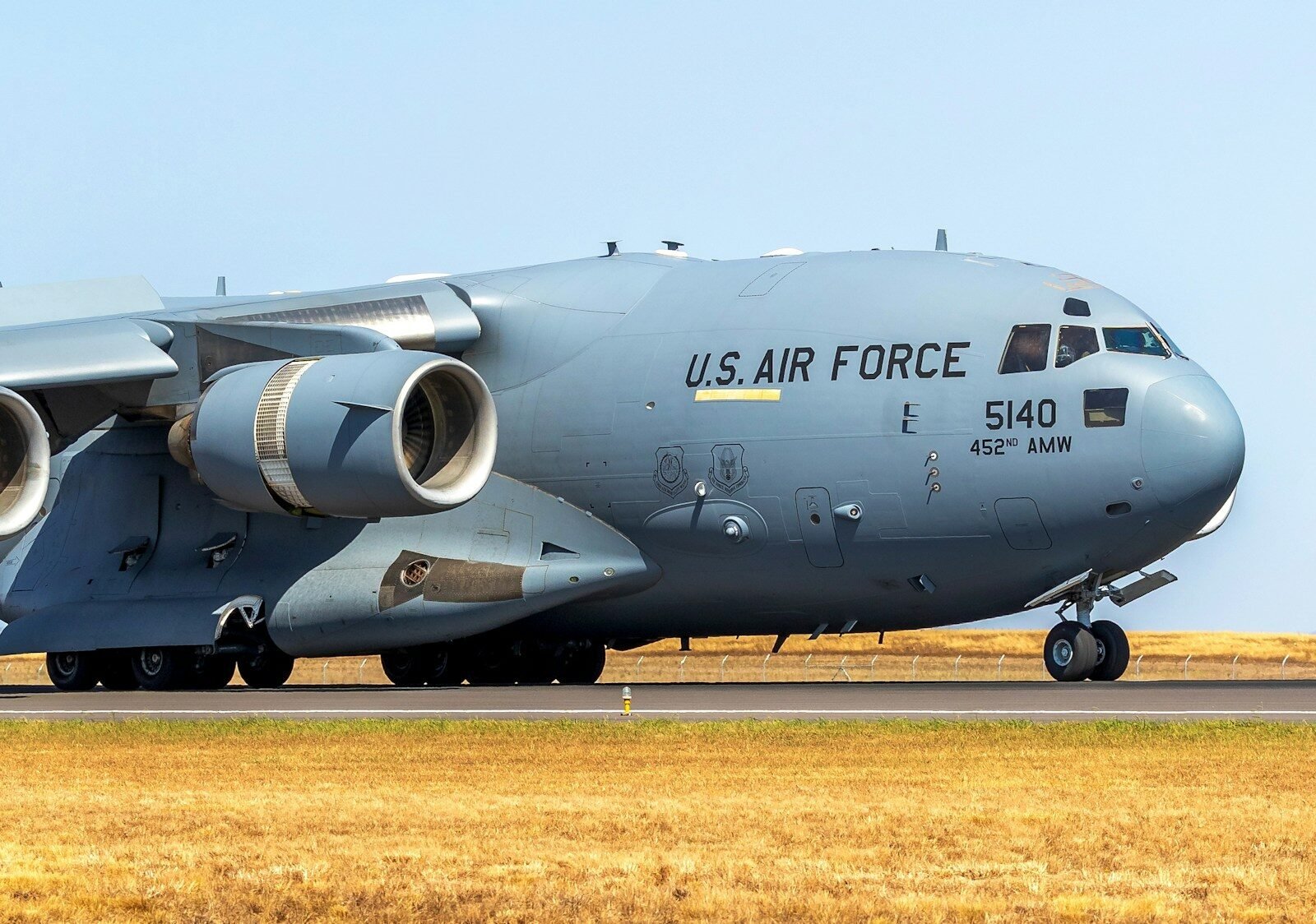
The maritime and aerial corridors of the Middle East are no strangers to tension, but the events unfolding over the Strait of Hormuz today have sent ripples through the global defense community. A US Air Force KC-135R, the venerable workhorse of aerial refueling, has vanished from flight tracking screens following a series of alarming technical developments. The aircraft was operating in one of the most heavily monitored pieces of airspace on the planet when it suddenly broadcasted a code 7700, which is the international signal for a general emergency. Almost immediately after this signal was sent, the transponder data blinked out, leaving analysts and military observers scrambling for answers.
Before the signal went dark, the US Air Force KC-135R was seen on a steady descent. Flight data suggests the aircraft was making a deliberate move toward Qatar, where several major regional airbases are located. However, the descent was not a standard landing pattern. The suddenness of the emergency squawk combined with the loss of tracking data suggests a critical failure or an external intervention. What makes this situation particularly volatile is the environmental context of the flight. Reports from maritime vessels and civilian aircraft in the vicinity indicate a massive spike in electronic interference.
Breaking Down the Sequence of the US Air Force KC-135R Incident
The timeline of the disappearance began during a routine mission. The US Air Force KC-135R was positioned to support regional operations, likely providing fuel to fighter jets patrolling the area. At approximately one hour ago, the aircraft started to deviate from its assigned altitude. Aviation enthusiasts and professionals using open source intelligence tools noted that the aircraft changed its transponder code to 7700. In the world of aviation, this code tells air traffic control that the pilot is facing an urgent situation that requires immediate priority.
Shortly after the emergency was declared, the aircraft began a rapid but seemingly controlled descent. It was heading on a southwesterly path, aiming for the safety of Qatari airspace. Then, the data stopped. In many cases, a loss of signal at high altitude suggests a catastrophic mechanical event, but in this specific region, a signal loss can also be the result of intense electronic warfare. The fact that the US Air Force KC-135R was last seen heading toward a friendly landing site provides a glimmer of hope that the crew was attempting to manage a forced landing or an emergency arrival, but the lack of official confirmation from Central Command keeps the world on edge.
Factors Contributing to the Sudden Signal Failure
While a mechanical malfunction is always a possibility for any aging airframe, the presence of localized electronic disruptions adds a layer of mystery. The Strait of Hormuz is a known hotspot for GPS spoofing and AIS jamming. On the day the US Air Force KC-135R went missing, multiple reports surfaced regarding powerful regional level jamming. GPS spoofing is a technique where a fake signal is sent to an aircraft, making its navigation system believe it is in a different location. This can cause the autopilot to behave erratically or lead the pilots to make manual corrections based on false data.
If the US Air Force KC-135R was caught in a web of spoofed signals, the crew might have been fighting their own instruments. Furthermore, AIS jamming, which affects the automated identification systems of ships in the water below, suggests a wide area electronic attack. This type of interference is often used by regional actors to mask the movement of vessels or to harass foreign military assets. If the jamming was powerful enough to knock out the transponder of the US Air Force KC-135R, it would explain why the flight tracking vanished while the aircraft was still at an altitude that should have been visible to ground based receivers.
Global Significance of the Disappearance in the Strait
The Strait of Hormuz is perhaps the most sensitive maritime chokepoint in the world. Approximately twenty percent of the worlds petroleum passes through this narrow stretch of water. When a high value asset like the US Air Force KC-135R faces an emergency in this area, it is never just a local aviation issue. It becomes a geopolitical flashpoint. The aircraft is a critical component of the American power projection strategy. Without the refueling capabilities provided by the US Air Force KC-135R, the range and endurance of tactical aircraft in the region are severely limited.
The loss of contact also raises questions about the safety of international flight paths. If GPS jamming is now potent enough to interfere with military grade hardware like the navigation systems on a US Air Force KC-135R, civilian airliners are at even greater risk. This incident forces a reassessment of how air power is managed in contested environments. It also puts pressure on diplomatic channels. If the aircraft was forced down or crashed due to external interference, the response from Washington would likely be swift and significant.
Anticipated Developments and Search Efforts
In the coming hours, the primary focus will be on search and rescue operations. Military vessels and aircraft from the Fifth Fleet are likely already converging on the last known coordinates of the US Air Force KC-135R. Because the aircraft was heading toward Qatar, authorities in Doha will be checking their primary radar systems. Primary radar does not rely on a transponder signal from the plane. Instead, it bounces radio waves off the skin of the aircraft. This data will be vital in determining if the US Air Force KC-135R reached land or if it went into the water.
Public statements from the Department of Defense will be monitored closely for any mention of hostile intent. If the US Air Force KC-135R managed to land safely, there will be a detailed investigation into the source of the electronic interference. Technicians will examine the flight data recorders to see exactly how the navigation systems responded to the jamming. If the aircraft is not found at a friendly base, the situation shifts from an emergency landing to a recovery mission in potentially hostile waters.
Examining the Technical and Tactical Reality
From an expert perspective, the combination of a 7700 squawk and immediate signal loss is highly unusual. Usually, an aircraft with a mechanical problem maintains its transponder signal until it reaches a very low altitude or hits the ground. The disappearance of the US Air Force KC-135R from tracking screens while still at a descent altitude strongly points toward the massive GPS jamming reported in the area. Electronic warfare systems can “blind” the transponders that report an aircraft’s position to the outside world, even if the plane is still flying.
The US Air Force KC-135R is an older airframe, but it has been updated with modern avionics. These systems are generally robust, but they are not invincible against state level jamming technology. If the pilots of the US Air Force KC-135R realized their navigation was being compromised, they would likely have transitioned to manual flight controls and used visual references or inertial navigation to find their way to Qatar. The “emergency” might not have been a fire or engine failure, but a total loss of situational awareness caused by the electronic environment.
Assessing the Potential Outcomes of the Mission
The world is currently waiting for a single piece of information: a tail number on a runway in Qatar. If the US Air Force KC-135R appears there, the incident will be remembered as a terrifying example of modern electronic warfare. It would serve as a wake up call regarding the vulnerability of support aircraft in the Middle East. However, if the silence continues, the implications are far more somber. The US Air Force KC-135R carries a crew of at least three people, and their safety is the immediate priority for everyone following the story.
Regardless of the final result, the flight of this US Air Force KC-135R has highlighted a major shift in regional dynamics. The ability to disrupt a military flight through signal interference is a powerful tool that changes the rules of engagement. As more information surfaces about the descent of the US Air Force KC-135R and the nature of the jamming over the Strait, the international community will be watching to see how the United States balances the need for security with the reality of an increasingly contested electromagnetic spectrum.
Leave a Reply