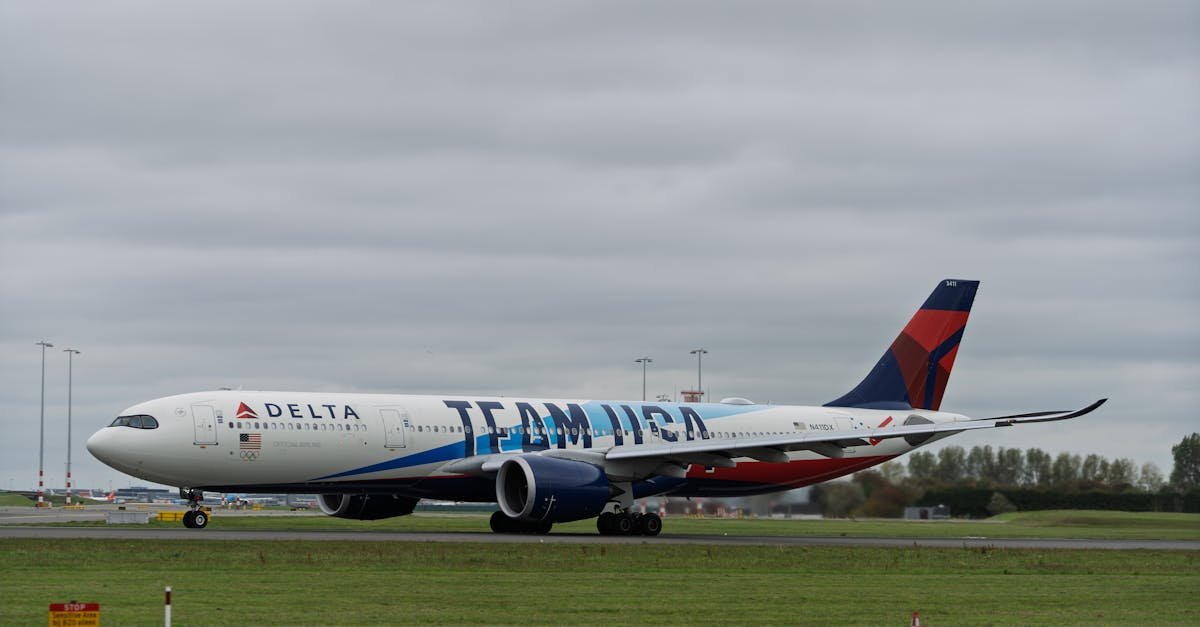
What began as a standard Sunday night journey from Brazil to the United States quickly transformed into a high-stakes emergency for the crew and passengers of Delta Air Lines Flight 104. On March 29, 2026, an Airbus A330-300 was scheduled to fly from São Paulo Guarulhos International Airport to Hartsfield-Jackson Atlanta International Airport.However, just moments after the wheels left the tarmac, a major mechanical failure in the left engine forced the pilots to make a split-second decision to return to the ground.
The incident was caught on various airport cameras and witnessed by those on the ground, showing sparks and flames trailing from the aircraft. While the event was undoubtedly frightening for the nearly 300 people on board, the outcome serves as a testament to modern aviation safety protocols and the intense training of international flight crews.
Timeline of the Engine Failure
The flight departed São Paulo at approximately 11:49 pm local time. As the aircraft reached the “rotation” point—the moment it lifts off the runway—eyewitnesses and passengers reported hearing loud bangs and seeing flashes of light coming from the left-hand engine.
Data from flight tracking services shows that the plane only reached an altitude of about 4,500 feet before the climb was halted. In the cockpit, the pilots were likely dealing with a barrage of alerts from the Electronic Centralized Aircraft Monitor (ECAM), a system designed to identify and help manage onboard failures. Air traffic controllers in the São Paulo tower also played a vital role, reportedly radioing the pilots to inform them that they could see visible fire on the wing.
Faced with an “uncontained” engine failure, where debris can potentially exit the engine casing, the crew immediately declared a “Mayday” and began the process of bringing the heavy wide-body jet back to the airport.
The Challenges of an Immediate Return
Landing an Airbus A330 shortly after takeoff is not as simple as turning a car around. When a long-haul flight like Flight 104 departs for a 10-hour journey to Atlanta, it is heavily loaded with fuel. This makes the aircraft significantly heavier than its maximum structural landing weight.
In many emergency scenarios, pilots might choose to dump fuel over a safe area to lighten the load. However, given the reports of fire and the urgency of the mechanical issue, the crew opted for an “expedited return.” This means they prioritized getting the plane on the ground quickly rather than spending time circling to burn or dump fuel.
Adding to the complexity was the operational status of the airport. Guarulhos was undergoing maintenance on one of its two main runways at the time. This meant the Delta jet had to land on the only active strip, which was also the same one it had just departed from. All other inbound and outbound traffic had to be suspended or diverted to ensure the Delta crew had a clear path home.
Chaos on the Ground: Falling Debris and Brush Fires
As the engine suffered its failure, it did more than just lose power. Reports indicate that molten debris and metallic fragments fell from the sky onto the airport grounds. This hot material ignited the dry grass alongside the runway, creating a secondary emergency for airport staff.
The São Paulo airport firefighting team (ARFF) was already on high alert for the incoming aircraft, but they also had to manage the brush fires that were spreading near the active runway. Despite these distractions, the ground teams were positioned and ready by the time the A330 touched down at 11:59 pm, exactly ten minutes after its initial departure.
Inside the Cabin: The Passenger Experience
For the 272 passengers on board, the ten-minute flight felt much longer. Those seated on the left side of the aircraft, particularly toward the rear, had a direct view of the engine as it emitted flames and loud “thumping” sounds.
One passenger, Desmond Spencer, shared his experience on social media, describing the atmosphere as one of heightened anxiety. He noted that while many people remained calm, others began to lose their cool as the reality of the fire became visible through the windows. The cabin crew worked to keep everyone seated and prepared for a potential emergency evacuation, though fortunately, a full slide evacuation was not required once the plane came to a stop.
After the landing, the aircraft was met by emergency vehicles and inspected for further fire risks. Once the situation was deemed stable, the passengers were not let off on the taxiway; instead, they were safely transported by bus back to the terminal to begin the process of rebooking.
The Airbus A330-300: A Reliable Workhorse
The aircraft involved, registered as N813NW, is a 19-year-old Airbus A330-300. While 19 years might sound old for a vehicle, in the world of aviation, this is middle-aged. Aircraft are subject to incredibly rigorous maintenance schedules where parts are replaced long before they are expected to fail.
The A330 is known for its “ETOPS” rating, which means it is certified to fly long distances over oceans even if one engine fails. It is designed to fly, climb, and land safely on a single engine. The training pilots undergo involves hundreds of hours in simulators specifically practicing for the exact scenario that happened in São Paulo: a “V1 cut,” or an engine failure at the most critical moment of takeoff.
The Importance of ARFF Teams
The “ARFF” (Aircraft Rescue and Firefighting) team mentioned in Delta’s statement is the unsung hero of airport safety. These units are specialized firefighters who deal exclusively with aviation incidents. Their vehicles carry massive amounts of foam and water and are designed to reach any point on the airport grounds within minutes.
In the case of Flight 104, their presence was not just a precaution. They had to ensure the overheated brakes of the heavy aircraft didn’t catch fire after the high-energy landing and manage the grass fires caused by the falling engine parts. Their swift action allowed the airport to eventually reopen and resume normal operations after a period of significant disruption.
Next Steps for the Aircraft and Investigation
Following an incident of this magnitude, the aircraft is grounded for a thorough investigation. Aviation authorities, likely including Brazil’s CENIPA and the U.S. National Transportation Safety Board (NTSB), will examine the engine to determine the root cause.
They will look at whether the failure was caused by:
- Foreign Object Debris (FOD): Something sucked into the engine on the runway.
- Material Fatigue: A specific component within the turbine failing over time.
- Maintenance Issues: Whether a recent service missed a developing problem.
The findings from these investigations are shared globally, ensuring that if a specific part is found to be faulty, every other airline flying the same engine type can inspect and replace it, preventing a repeat occurrence.
A Smooth Return to Safety
Delta Air Lines issued a formal apology to the passengers, acknowledging the major delay in their travel plans. While an engine fire is a terrifying ordeal, the safe return of Flight 104 is a success story in terms of safety. The combination of clear communication from air traffic control, the calm execution of emergency checklists by the pilots, and the rapid response from ground crews ensured that 288 people walked away without a scratch.
Events like this remind us that while technology can fail, the layers of safety built into modern travel are designed to handle the unexpected.
Leave a Reply