Category: News

  • Etihad Airways Smashes Records: $698M Profit as Carrier Crushes Industry Averages

    Etihad Airways Smashes Records: $698M Profit as Carrier Crushes Industry Averages

    The global aviation landscape is often defined by thin margins and intense competition, but Etihad Airways has just rewritten the rulebook. In its latest financial disclosure for the full year of 2025, the Abu Dhabi based carrier announced a record breaking profit after tax of $698 million. This represents a massive 47 percent jump compared to the previous year, proving that the airline has firmly moved past its restructuring phase and into a period of aggressive, profitable expansion.

    A Financial Masterclass in a Tough Industry

    To understand the scale of this achievement, one has to look at the wider context of the airline business. The International Air Transport Association recently estimated that the average net profit margin for the global airline industry sits at around 3.9 percent. Etihad Airways has completely bypassed this benchmark, posting a net profit margin of 8.4 percent. This means the carrier is performing at more than double the efficiency of its global peers.

    Total revenue for the year reached $8.4 billion, a 21 percent increase that was fueled by a surge in both passenger and cargo demand. This financial health has allowed the company to generate nearly $2 billion in operating cash flow. Such a strong cash position is vital because it allows the airline to fund its massive future investments without relying heavily on outside debt. In fact, the airline has successfully reduced its debt levels while simultaneously growing its fleet at a record pace.

    Passenger Growth and the Power of Abu Dhabi

    Stunning night view of Abu Dhabi's illuminated skyline reflecting on the water.

    The year 2025 saw 22.4 million people choose to fly with Etihad. This is a 21 percent increase in passenger volume, a figure that is nearly unheard of for a full service carrier of this size. Much of this success stems from the strategic importance of Zayed International Airport. The airline now accounts for roughly half of all passenger growth in the United Arab Emirates, acting as a massive engine for the local economy.

    Interestingly, the airline is not just acting as a bridge for connecting flights. Point to point traffic to Abu Dhabi rose to 5.5 million travelers. This shows that more people are choosing the capital city as their final destination rather than just a stopover point. Additionally, the airline’s specialized stopover program more than doubled in 2025, bringing 170,000 visitors into the city to explore the local culture and attractions before heading to their next flight.

    Scaling the Fleet at Lightning Speed

    One of the most difficult tasks for any airline is growing the fleet without losing operational quality. During 2025,Etihad added 29 aircraft to its lineup, bringing the total operating fleet to 127. This was the largest single year expansion in the history of the company.

    The new additions were not just standard replacements. The airline introduced the Airbus A321LR, which brings long haul comfort to medium distance routes. These planes feature high end cabins that allow the airline to offer a premium experience on routes that were previously served by smaller, less comfortable aircraft. At the same time, the carrier reactivated more of its iconic Airbus A380 double decker jets to meet the heavy demand on popular routes like London and New York.

    By growing the fleet, the airline was able to increase its network from 94 to 110 destinations. New routes to places like Atlanta, Prague, Warsaw, and Hong Kong have opened up fresh revenue streams and strengthened the airline’s presence across North America, Europe, and Asia.

    Efficiency and the 88 Percent Load Factor

    Growth is only valuable if the planes are full, and Etihad has excelled in this area. The passenger load factor reached a high of 88.3 percent for the year. This indicates that despite adding 21 percent more capacity, the airline managed to keep its planes nearly full.

    Managing this level of growth while maintaining an 81 percent on time performance rate is a testament to the operational teams behind the scenes. It shows a level of discipline where every new flight and every new destination is carefully calculated to ensure it adds value to the overall network. CEO Antonoaldo Neves has noted that the airline no longer operates any loss making routes, a rare claim in an industry where many carriers fly certain paths just for prestige.

    Cargo as a Quiet Powerhouse

    While passengers often get the headlines, the cargo division played a crucial role in these record results. Cargo revenue rose to $1.2 billion, supported by a 9 percent increase in volumes. The airline transported over 700,000 tonnes of goods across the globe.

    A major driver of this success was a strategic partnership with SF Airlines, which helped Etihad become the largest cargo operator between mainland China and the Middle East. By using the belly hold capacity of its growing passenger fleet, the airline was able to move high value goods like electronics, pharmaceuticals, and luxury vehicles more efficiently. Specific sectors saw explosive growth, such as the transport of live animals and high value art, proving that specialized logistics are a key part of the modern Etihad business model.

    Reinvesting in the Guest Experience

    Record profits have not led to complacency. The airline has used its financial strength to reinvest heavily in the passenger experience. This includes a 10 percent increase in the Net Promoter Score, which is a key metric for measuring customer loyalty and satisfaction.

    From a brand refresh to a new mobile app and website, the digital side of the journey has been streamlined. Onboard,the investment in First and Business class cabins continues to set new standards. The introduction of the A321LR with lie flat seats in Business class has bridged the gap between short flights and long haul luxury. These efforts have earned the airline over 25 international awards in 2025 alone, ranging from safety honors to recognition for the best economy class experience.

    Etihad’s Roadmap for 2030 and Beyond

    These results are part of a larger plan known as Journey 2030. The airline is not planning to slow down anytime soon.The goal is to eventually serve 38 million passengers annually with a fleet that could reach 200 aircraft by the end of the decade.

    The strategy focuses on organic growth rather than risky acquisitions. By using its own cash to buy new planes and expand into new markets, Etihad is building a sustainable future. The recent credit rating upgrade from Fitch to AA minus confirms that the financial world sees this as one of the most stable and well managed airlines in the sky today.

    Why This Matters for the Aviation World

    Etihad’s success is a signal to the rest of the industry that a focused, disciplined strategy can overcome global economic headwinds. By balancing luxury with operational efficiency and local growth with global connectivity, the airline has found a winning formula.

    As we move further into 2026, the focus remains on delivering what the airline calls extraordinary travel experiences.With 20 new aircraft expected to arrive annually over the next few years, the carrier is well on its way to becoming a top tier global powerhouse. For travelers, this means more choices, better cabins, and a more connected world. For the competition, it means that the airline from Abu Dhabi is no longer just a participant in the market; it is setting the pace for everyone else to follow.

  • Mexico Cartel Crisis: Air Canada Announces Emergency Flight Schedule

    Mexico Cartel Crisis: Air Canada Announces Emergency Flight Schedule

    The travel landscape in Mexico took a sharp and violent turn this week following a major military operation in the state of Jalisco. After several days of uncertainty and grounded planes, Air Canada has officially stepped forward with a massive update to its rescue strategy. The airline is shifting its focus toward a high capacity repatriation mission to bring home thousands of Canadians who found themselves trapped by sudden civil unrest.

    The Events That Triggered a National Crisis

    The chaos began on Sunday, February 22, 2026, when Mexican special forces conducted a raid in the town of Tapalpa.The target was Nemesio Oseguera Cervantes, famously known as El Mencho, the top leader of the Jalisco New Generation Cartel. During the confrontation, the cartel leader was fatally wounded and died while being transported for medical care.

    As news of his death spread, his followers launched a series of coordinated retaliatory attacks across multiple states.Armed groups set up hundreds of roadblocks, torched buses, and attacked local businesses. The violence quickly reached popular tourist hubs like Puerto Vallarta and Guadalajara. Local officials were forced to issue shelter in place orders, telling visitors to stay inside their hotels and avoid the streets. For thousands of vacationing Canadians, the dream trip turned into a stressful waiting game.

    Air Canada Responds with the Boeing 787 Dreamliner

    Air Canada Boeing 787 Dreamliner on the airport tarmac during a sunny day.

    In the immediate aftermath of the violence, Air Canada joined other major carriers in suspending all flights to the affected regions. However, with the situation on the ground stabilized by a heavy military presence, the airline is now moving into a recovery phase. The centerpiece of this new emergency schedule is the deployment of the Boeing 787 Dreamliner.

    Choosing the 787 is a strategic move designed to solve a numbers problem. While regional jets and narrow body planes usually handle these routes, they simply do not have the seat count needed to move people quickly. By using these wide body, heavy lift aircraft, Air Canada can carry nearly 300 passengers per flight. This allows them to clear the massive backlog of travelers much faster than traditional schedules would allow. These planes also offer significant cargo space, which is being used to move essential supplies and equipment needed for the safe operation of flight crews in a high tension environment.

    “To help get customers home as soon as possible, we’re flying larger Boeing 787-9 Dreamliners from Toronto and Montreal to Puerto Vallarta, for 258 seats of added capacity. Operations from Toronto to Guadalajara will resume on Feb. 25,” read the official statement from Air Canada.

    Understanding the New Emergency Flight Schedule

    The airline is not just resuming normal service. Instead, they have designed a specific emergency rotation that prioritizes the areas with the highest number of stranded passengers. Following consultation with the Government of Canada and Mexican authorities, full operations resumed on Tuesday, February 24, with specific aircraft swaps.

    This specialized schedule focuses on these key rotations:

    • Montreal (YUL) to Puerto Vallarta (PVR): Flight AC999 and the return leg AC998 have been upgraded to the Boeing 787-9 to maximize capacity.
    • Toronto (YYZ) to Puerto Vallarta (PVR): Flight AC1349 and the return leg AC1348 are also now utilizing the 787-9 Dreamliner.
    • Vancouver (YVR) to Puerto Vallarta (PVR): Flights AC970 and AC971 currently remain on the 737 Max 8 schedule but are being monitored for potential future upgrades.
    • Guadalajara (GDL): Flights from Toronto to the state capital are set to resume on Wednesday, February 25, to assist those in the city for business or family visits.

    Travelers should note that these flights are operating under strict security protocols. The airline is working in tandem with the Canadian government and Mexican airport authorities to ensure that the “air bridge” remains open even if ground transportation remains spotty in certain areas.

    To manage your booking or reschedule your flight during this crisis, you should use Air Canada’s official self-service tools. These allow you to skip the long wait times on the phone lines.

    Where to Reschedule or Book

    • For General Bookings: Use the Air Canada “My Bookings” Tool. You will need your booking reference number and the passenger’s last name to access your itinerary and see available rescue flight options.
    • For Air Canada Vacations: If your trip was booked as a package, go to the Air Canada Vacations Manage Your Booking page.
    • For Aeroplan Members: Log in to your account on the Aeroplan portal to manage rewards-based rescue flights.

    Important Contact Numbers

    If you cannot access your booking online due to the emergency, use these specific lines:

    • From Mexico (Toll-Free): 011-800-514-1890
    • General Rebooking Line: 1-888-247-2262
    • Air Canada Vacations Support: 1-800-296-3408

    Note: Due to the “up-gauging” of aircraft to the Boeing 787-9, some passengers may see their flight numbers stay the same while their seat assignments change. Be sure to re-download your boarding pass once you have confirmed your spot on a rescue rotation.

    Safety First for Those Still in Destination

    Even though the planes are arriving, the journey home is not without challenges. Global Affairs Canada continues to advise a high degree of caution. If you are currently in Jalisco or surrounding areas, it is vital to follow these steps before trying to reach the airport:

    First, do not leave your hotel or rental property until you have a confirmed seat and a specific departure time. Many roads still have remnants of the blockades, and local transportation like taxis or ride shares may be inconsistent. Air Canada is urging passengers to wait for an official notification via email or text before making the trek to the terminal.

    Second, travel during daylight hours only. While the Mexican National Guard has cleared most of the main highways, security experts suggest that moving during the day provides better visibility and reduces the risk of getting caught in localized skirmishes.

    Finally, keep your documents ready. Security at the airport is significantly tighter than usual. Expect extra checkpoints and longer wait times for processing. The goal is to get everyone through as safely as possible, and that requires patience from everyone involved.

    Why This Rescue Mission is Different

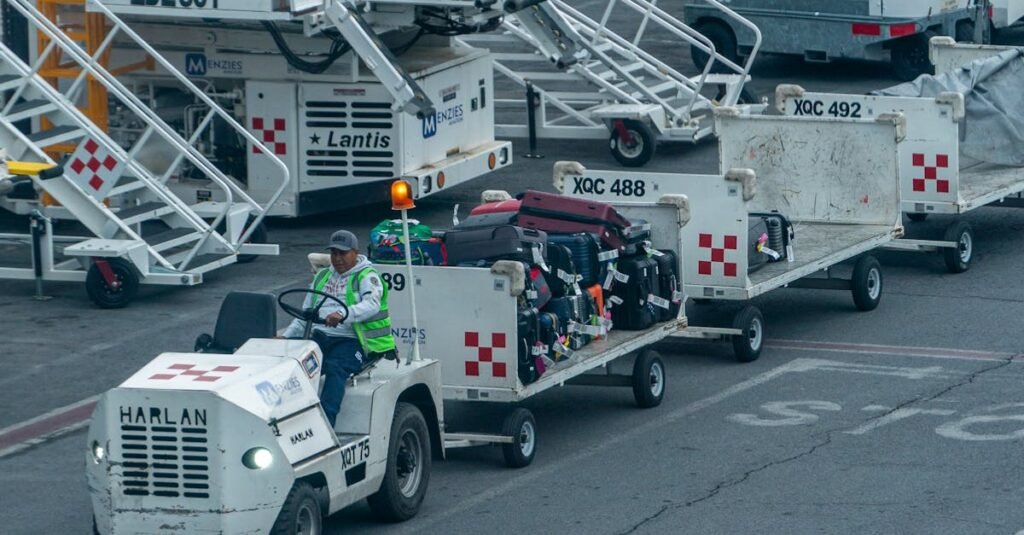
    A bustling airport scene with ground crew and baggage carts near an airplane on the tarmac.

    In past years, travel disruptions in Mexico were often caused by weather or smaller scale localized protests. The February 2026 crisis is different because it involves a direct vacuum in cartel leadership, which creates a more volatile environment.

    Air Canada’s decision to use its flagship long haul fleet for short haul rescue missions shows the seriousness of the situation. It is a costly and complex operation to reroute these massive planes from their usual international paths to Europe or Asia. However, the airline has stated that the safety of its customers and the need to bring Canadians home outweighs the logistical hurdles.

    What to Do if Your Flight Was Cancelled

    If you were scheduled to fly to or from Mexico during the peak of the unrest, you likely have questions about your ticket. Air Canada has implemented a flexible rebooking policy. This allows passengers to change their travel dates without paying the usual fees.

    For those who no longer wish to travel to Mexico this season, the airline is offering travel credits. These credits can be used for future trips once the region has fully stabilized. If you are currently in Mexico and waiting for your turn on one of the 787 rescue flights, make sure your contact information is updated in the “Manage My Booking” section of the Air Canada website. This is the fastest way for the airline to reach you with your new boarding details.

    Looking Ahead to Future Travel

    The death of a major cartel figure often leads to a period of restructuring within the criminal underworld. Because of this, travelers should expect travel advisories to remain in place for the foreseeable future. While the emergency flight schedule is designed to get people home now, the long term status of tourism in Jalisco remains a topic of discussion between the two nations.

    For now, the focus remains on the mission at hand. The sight of the Air Canada 787 on the tarmac in Puerto Vallarta has become a symbol of relief for many. As these heavy lift planes continue their rotations, the backlog of stranded tourists is expected to clear within the next few days.

    Stay tuned to official channels and keep a close eye on your airline notifications. The situation is fluid, but with the right resources and a focus on safety, the path back home is finally opening up.

  • The Southwest Effect 2.0: Why US Airlines are Still One Tech Glitch Away from Total Meltdown

    The Southwest Effect 2.0: Why US Airlines are Still One Tech Glitch Away from Total Meltdown

    The image of thousands of suitcases piled high in a terminal while families sleep on airport floors has become a recurring nightmare for American travelers. We often think of aviation as the peak of modern engineering, yet the reality behind the check-in desk is much different. While the planes themselves are high-tech marvels, the digital brains that coordinate where those planes and their crews go are often decades out of date. This creates a fragile environment where a single line of bad code or a minor server hiccup can ground an entire nation’s fleet in hours.

    The Ghost of Holiday Season Past

    To understand why 2026 feels so precarious, we have to look back at the original Southwest meltdown. That event was a wake-up call that most people hit the snooze button on. It was not just a weather problem. It was a failure of a legacy scheduling system that simply could not keep up with the chaos. When the computers lost track of where the pilots were, the airline essentially stopped existing for a week.

    Today, we are seeing “The Southwest Effect 2.0″ because the same underlying issues have spread across the industry. Airlines have spent billions on shiny new cabins and faster Wi-Fi, but the back-end infrastructure remains a patchwork of old code and manual processes. When one piece of the puzzle fails, the entire picture falls apart.

    The Fragility of Modern Scheduling

    The most critical part of an airline is not the fuel or the wings. It is the scheduling software. This software must balance thousands of moving parts: pilot rest requirements, flight attendant locations, aircraft maintenance cycles, and gate availability. In the United States, several major carriers still rely on systems built on programming languages that were popular in the 1970s.

    When a storm hits or a software update goes wrong, these systems face a data overload. They are designed for smooth sailing. As soon as a few hundred flights are canceled, the software enters a feedback loop. It cannot reassign a pilot to a new flight because it does not “know” the pilot is legally allowed to fly. The result is a total system freeze where planes are ready and crews are waiting, but the computer will not let them meet.

    The CrowdStrike Lesson of 2024

    We saw a massive example of this vulnerability recently when a faulty security update from CrowdStrike knocked out Windows systems globally. While many industries recovered in a day, Delta Airlines struggled for nearly a week. This was a classic case of the Southwest Effect 2.0. Even though the initial “glitch” was fixed quickly, the secondary systems could not handle the backlog.

    The manual work required to reset thousands of servers and re-sync crew schedules proved that the human element is being overwhelmed by the scale of modern aviation. If an airline has to manually reboot 40,000 servers to get moving again, that airline is not resilient. It is simply lucky that it does not happen more often.

    A Perfect Storm in 2026

    The current year has brought new challenges that make these tech glitches even more dangerous. We are currently facing a massive shortage of air traffic controllers and experienced pilots. This means there is no “slack” in the system. In the past, if a computer went down, humans could step in and manage the flow at a slower pace.

    Now, every worker is stretched to the limit. When the technology fails, there is no one left to pick up the slack. We are also seeing record-high travel demand as we lead up to the 2026 World Cup. With more people in the airports than ever before, a two-hour technical delay now has the potential to spiral into a three-day operational collapse.

    The FAA Modernization Race

    It is not just the airlines that are at risk. The Federal Aviation Administration is currently in the middle of a massive $12.5 billion overhaul of the air traffic control system. For years, controllers have been using paper strips to track planes. While we are finally moving toward a cloud-based digital system, the transition period is the most dangerous time.

    Running old and new systems at the same time is like trying to change the tires on a car while it is driving 60 miles per hour. Any minor error during this migration could trigger a “ground stop” that affects every airline at once. We are essentially betting that our aging infrastructure can hold together just long enough for the new tech to arrive.

    The Hidden Cost of Outsourcing Systems by Southwest, American Airlines and Others

    Another reason why we are so vulnerable to a total meltdown is the way airlines have outsourced their IT departments. Many carriers no longer have the “nerds in the basement” who built the original systems. Instead, they rely on third-party vendors and remote contractors.

    While this saves money, it creates a massive communication gap during a crisis. When a system crashes, the people who know how to fix it might be on a different continent or working for a company that has five other clients experiencing the same emergency. This “fragmentation” of responsibility means that a small glitch takes much longer to resolve than it did twenty years ago.

    Why Travelers Should Be Concerned

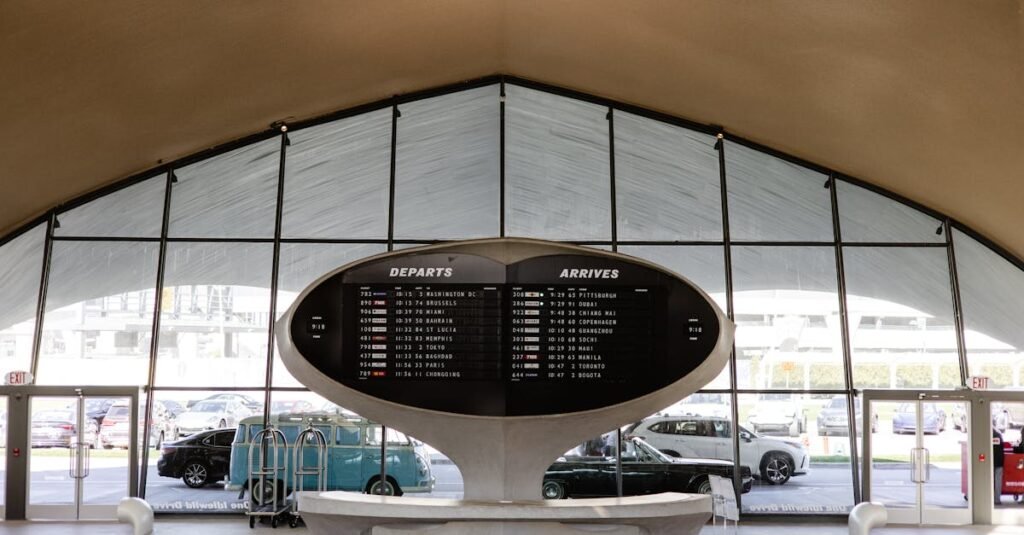
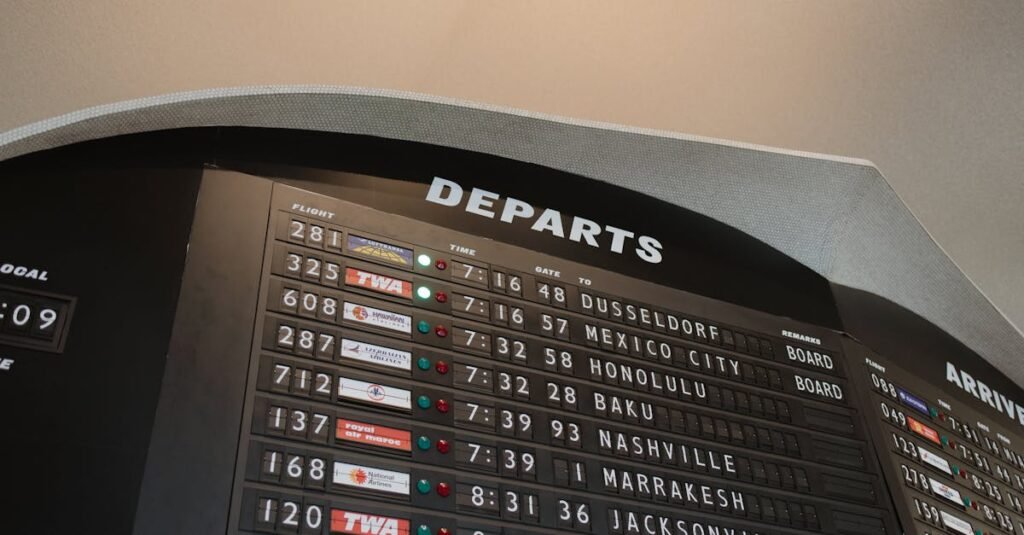
    The stylish departure and arrival board at JFK's historic TWA terminal, New York.

    For the average American traveler, the Southwest Effect 2.0 means that your “on-time” status is a coin flip. The industry has become so interconnected that a power outage in an Atlanta data center can cause a cancellation for a passenger in Seattle.

    Airlines are trying to solve this by moving to the cloud, but the cloud is just someone else’s computer. If the cloud provider has an outage, the airline has no Plan B. We have traded local reliability for global efficiency, and we are now seeing the price of that trade.

    How to Protect Your Travel Plans

    Since we know the system is brittle, travelers have to change how they book. The era of “everything going right” is over for now. The best way to avoid being a victim of the next meltdown is to fly earlier in the day. Most tech glitches and “cascading delays” happen in the afternoon and evening as the system’s stress builds up.

    It is also vital to use the airline’s mobile app but not rely on it exclusively. During a total meltdown, the apps are often the first things to provide incorrect information because they are drawing data from the very servers that are failing. Always have a backup plan, such as a rental car reservation or a hotel app, ready to go.

    The Path Forward

    Scaling the US aviation industry for the future requires more than just new planes. It requires a complete “digital gut renovation.” Airlines need to stop treating their IT departments as cost centers and start treating them as the core of their safety mission.

    Until we see a move away from 50-year-old code and a return to robust, in-house technical teams, the “Total Meltdown” will remain a permanent feature of American air travel. We are currently flying on a system held together by digital duct tape, and 2026 will be the year we find out if that tape can hold.

  • Alaska Airlines Power Bank Fire: What Happened and Why Passengers Were Delayed 7 Hours

    Alaska Airlines Power Bank Fire: What Happened and Why Passengers Were Delayed 7 Hours

    Traveling by air is usually a routine experience, but for 76 passengers aboard an Alaska Airlines flight this past Sunday, February 22, 2026, the journey became anything but ordinary. What started as a standard trip from Wichita to Seattle quickly turned into a high stakes emergency when a passenger’s portable power bank burst into flames mid-flight. The incident resulted in an emergency landing, a trip to the hospital for one traveler, and a massive seven hour delay for everyone else.+2

    This event serves as a stark reminder of the hidden dangers tucked away in our carry-on bags. Below is a deep dive into the specifics of Flight 2117, the quick thinking that saved the cabin from further harm, and why a small battery caused such a massive logistical headache.

    The Mid-Air Emergency on Flight 2117 Operated on behalf of Alaska Airlines

    The flight, operated by Horizon Air on behalf of Alaska Airlines, took off from Wichita Dwight D. Eisenhower National Airport just after 2:00 pm. Everything seemed normal as the Embraer E175 aircraft climbed toward its cruising altitude. However, as the plane reached approximately 20,000 feet, the peace of the cabin was shattered.

    Witnesses reported that a power bank belonging to a passenger suddenly began to hiss and emit a thick, acrid smoke. Within moments, flames as high as one foot erupted from the device. According to fellow travelers, the battery was not even in use at the time. It was simply sitting in a passenger’s lap when it spontaneously failed.

    The heat was intense enough to cause minor burns to the owner of the device. In a moment of panic and survival instinct, a nearby passenger reportedly threw the burning charger into the aisle to get the flames away from the seats and upholstery.+1

    Quick Action in the Cabin

    Fires on an airplane are among the most feared scenarios for any flight crew. Because the cabin is a pressurized, enclosed environment, smoke can become toxic and blinding in seconds. Passengers on Flight 2117 described the air becoming difficult to breathe almost immediately as the lithium-ion battery underwent what experts call “thermal runaway.”

    The Alaska Airlines flight attendants jumped into action using specialized training. One crew member doused the flames with a fire extinguisher while others used a containment bag. These bags are specifically designed to handle the extreme heat of lithium fires, which can reach temperatures high enough to melt metal. By sealing the device inside this “burn bag,” the crew was able to stop the fire from spreading, though the cabin remained filled with a thick, chemical haze.+1

    Why the Pilot Chose an Emergency Landing

    While the fire was technically “contained” in the bag, the captain of Flight 2117 decided that continuing the multi-hour journey to Seattle was too risky. When a lithium battery fails this violently, there is always a concern about toxic fumes lingering in the ventilation system. Furthermore, the passenger who owned the device needed immediate medical attention for burns on her arms and legs.+1

    The pilot declared an emergency and performed a rapid descent, looping the aircraft back toward Wichita. The plane landed safely roughly 40 minutes after it had first departed. Emergency medical teams met the aircraft on the tarmac, and the injured passenger was transported to a local hospital for treatment.+1

    The Long Road to Seattle: Explaining the 7-Hour Delay

    For the remaining 75 passengers, the drama in the sky was only the beginning of a very long day. Many people wonder why a small fire that was quickly put out resulted in a seven hour delay. The reality of aviation safety and logistics is quite complex.

    1. Aircraft Safety Inspections

    Once a fire occurs on a plane, that specific aircraft is grounded. Even if the damage seems localized to a carpet or a seat, engineers must inspect the floorboards, wiring, and air filtration systems. The aircraft involved in this incident, a seven year old Embraer E175, had to stay in Wichita overnight for a full safety clearance.

    2. Sourcing a Replacement Plane

    Wichita is not a primary hub for Alaska Airlines. This meant there was no “spare” plane sitting in a nearby hangar ready to go. The airline had to coordinate the arrival of a replacement aircraft from another location to pick up the stranded travelers.

    3. Crew Time Limits

    Federal regulations strictly limit how many hours a flight crew can work in a single day. After the stress and physical toll of an in-flight fire and an emergency landing, the original crew likely exceeded their “duty day” or was no longer in a fit state to fly. A new crew had to be positioned to take the passengers the rest of the way to Seattle.

    The replacement for the Alaska Airlines flight finally took off from Wichita late that evening, eventually touching down in Seattle at 11:30 pm.By the time passengers reached their final destination, they were seven hours behind schedule.

    Understanding Thermal Runaway in Power Banks

    A minimalist black and white image of a USB-C power bank on a marble surface.

    The technical term for what happened on Flight 2117 is “thermal runaway.” This occurs when a cell inside a lithium-ion battery is damaged or short-circuits, causing it to generate heat. That heat then triggers the neighboring cells, leading to a chain reaction that releases energy in the form of fire and pressurized gas.+1

    These failures can be caused by several factors:

    • Manufacturing Defects: Tiny microscopic metal particles inside the battery can cause a short.
    • Physical Damage: Dropping a power bank or crushing it in a reclining seat can compromise its internal structure.
    • Extreme Heat: Leaving a battery in a hot car or near a window can weaken the separators inside the cells.

    The most frightening aspect of this specific incident is that the passenger claimed the device was not being used or charged. This suggests a spontaneous internal failure, which is rare but extremely dangerous when it happens in a confined space like an airplane.

    Essential Battery Safety Tips for Travelers

    This incident serves as a wake-up call for anyone who travels with portable electronics. To keep yourself and your fellow passengers safe, follow these guidelines:

    • Carry-on Only: Never put power banks or loose lithium batteries in checked luggage. If a fire starts in the cargo hold, it is much harder for the crew to detect and extinguish.
    • Buy Quality Brands: Avoid “no-name” or extremely cheap power banks found on discount websites. These often lack the sophisticated circuitry needed to prevent overcharging and overheating.
    • Protect the Terminals: If you carry spare batteries, keep them in their original packaging or a plastic case so the metal ends do not touch other coins or keys, which can cause a short circuit.
    • Alert the Crew Early: If your phone or charger feels unusually hot to the touch or starts to smell like burning plastic, tell a flight attendant immediately. Do not wait for sparks to fly.

    Strategic Safety Protocols: Why Every Second Counts in the Air

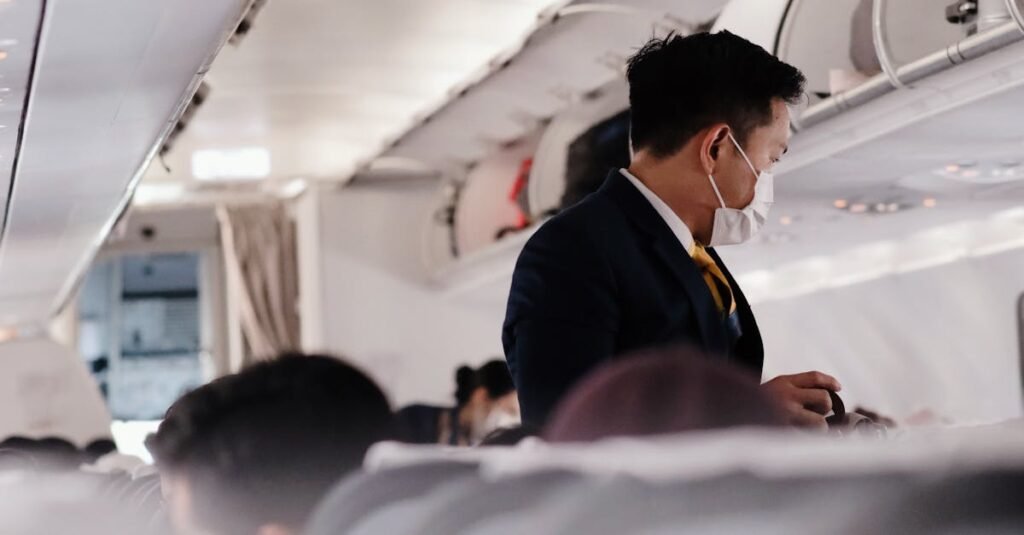
    A flight attendant wearing a mask assists passengers on a commercial Alaska Airlines flight.

    The incident on Flight 2117 operated on behalf of Alaska Airlines highlights the delicate balance of safety protocols that dictate modern aviation. When a lithium-ion battery enters a state of thermal runaway, it creates a self-sustaining fire that feeds on its own heat. Unlike a traditional fire fueled by wood or paper, a battery fire is a chemical reaction that can restart even after it appears to be extinguished. This is why the flight crew did not simply pour water on the device and return to their seats. They utilized specialized containment bags designed to withstand temperatures exceeding 1,000 degrees Fahrenheit. These bags act as a high tech pressure cooker, trapping the heat and toxic gases while preventing the fire from reaching the aluminum skin of the aircraft or the oxygen rich cabin environment.

    The decision to divert and the subsequent seven hour delay are rooted in a “safety first” culture that leaves zero room for ambiguity. Once the containment bag was sealed, the pilots had to consider the air quality for everyone on board. Lithium fires release heavy metals and caustic vapors that can irritate the lungs and eyes of passengers. Continuing a long flight with those fumes circulating through the recycled air system was not a viable option. Additionally, the pilots must account for the psychological state of the travelers. After witnessing a fire in a confined tube miles above the ground, the stress levels in the cabin are incredibly high. Landing as soon as possible allows for a controlled evacuation and immediate medical assessment for anyone experiencing smoke inhalation or shock. While a seven hour delay is frustrating for those with connecting flights or business meetings, it represents the time required to swap an entire aircraft and crew to ensure that the final leg of the journey is conducted under perfect safety conditions.

  • Delta Engine Blowout Ignites Runway Fire During Emergency Landing: All We Know So Far

    Delta Engine Blowout Ignites Runway Fire During Emergency Landing: All We Know So Far

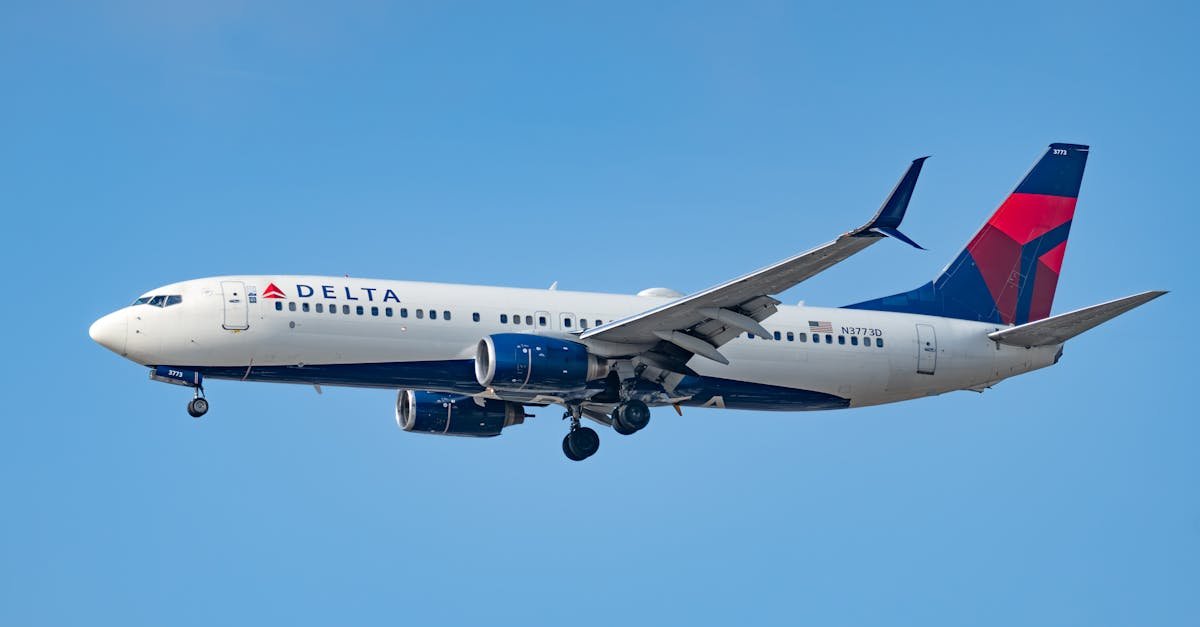
    On Sunday evening, February 22, 2026, passengers on a Delta Air Lines flight experienced a terrifying moment when an engine failure shortly after takeoff forced an emergency return to Savannah Hilton Head International Airport. The incident, involving Delta Flight 1067, did not just result in a midair scare but also sparked a massive grass fire along the airport runways. Despite the dramatic nature of the engine blowout and the secondary fires on the ground, all 185 people on board the aircraft returned to the terminal safely and without injury.

    A Sudden Bang During Ascent

    The flight was scheduled to travel from Savannah to Atlanta, a short hop that usually takes less than an hour. According to witnesses and passengers on board the Boeing 737-900, everything seemed normal until the wheels left the pavement. Within seconds of being airborne, a loud boom echoed through the cabin. Passengers reported seeing sparks and streaks of flame shooting from the left engine.

    One traveler described the sound as being similar to a car backfiring, though significantly louder and more jarring. The vibration from the engine failure was felt throughout the plane, immediately alerting the crew that something was wrong. Pilots quickly realized that the left CFM-56 turbofan engine had suffered a major mechanical failure.

    Emergency Procedures and Pilot Skill

    As soon as the engine blew, the flight crew declared an emergency. Aviation data shows that the aircraft reached a maximum altitude of roughly 3,000 feet before the pilots stopped the climb. Operating on the remaining functional engine, the pilots performed a controlled loop to bring the plane back to Savannah.

    While the situation in the cockpit was intense, passengers praised the crew for their calm demeanor. The pilots communicated clearly with the travelers, explaining that the plane could fly safely on one engine and that they were returning to the airport immediately. This transparency helped manage the fear inside the cabin as the plane made its final approach back toward the runway.

    The Ground Fire at Savannah Airport

    While the plane was still in the air, a different kind of emergency was unfolding on the ground. The flames and sparks emitted by the failing engine during takeoff had ignited the dry grass adjacent to the runway. Fed by powerful winds gusting at nearly 60 miles per hour, the small sparks quickly grew into a large brush fire.

    Air traffic controllers spotted the flames almost immediately and alerted other aircraft in the vicinity. The fire spread rapidly across a significant stretch of the airfield, specifically the area between taxiway Alpha and Charlie 1. This prompted a massive response from local emergency services. Because the fire was so large and spreading fast due to the wind, the airport fire department requested mutual aid from nearby agencies.

    A Large Scale Emergency Response

    The response to the fire and the incoming aircraft was a coordinated effort involving multiple departments. Firefighters from the Savannah Fire Department, Garden City Fire Rescue, and Pooler Fire Rescue all rushed to the scene. Additionally, the 165th Airlift Wing Fire Department provided support to help contain the blaze.

    As Flight 1067 touched down at approximately 7:12 p.m., it was met on the tarmac by a fleet of fire trucks. Emergency responders were positioned to douse the aircraft if necessary, but the primary focus of the ground crews remained on the sprawling grass fire that was threatening airport infrastructure.

    Passengers Safe but Shaken

    Once the Boeing 737 landed safely, it was towed back to the gate. The 179 passengers and six crew members deplaned normally through the jet bridge rather than using emergency slides. While everyone was physically unharmed, many described the experience as incredibly stressful.

    Travelers remained on the aircraft for about an hour after landing while officials ensured the area was safe and the fire was under control. Delta Air Lines issued an official statement shortly after the event, confirming the mechanical issue and apologizing for the disruption. The airline worked through the night to rebook passengers on alternate flights to Atlanta so they could reach their final destinations.

    Impact on Airport Operations

    The combination of a crippled aircraft on the runway and a large brush fire led to temporary ground stops at Savannah Hilton Head International Airport. Several incoming flights were held in the air or diverted, while departing flights faced significant delays.

    Fortunately, the fire did not reach the actual pavement of the runways, which allowed crews to clear the scene relatively quickly once the flames were extinguished. By later that evening, the fire was fully out, and operations at the airport began to return to a state of normalcy.

    The Role of Weather Conditions

    Weather played a significant role in how the incident unfolded. The Savannah area was experiencing high winds on Sunday, which is likely why the sparks from the engine were able to ignite the grass so easily. These same winds made the fire much harder to fight, as the flames were pushed across the dry vegetation at a high rate of speed.

    Aviation experts note that while engine failures are rare, pilots are trained extensively for this specific scenario. Modern twin engine jets like the Boeing 737 are designed to fly, climb, and land safely even if one engine completely loses power. The successful landing in Savannah is a testament to that engineering and the rigorous training of the Delta flight crew.

    What Happens Next for the Aircraft?

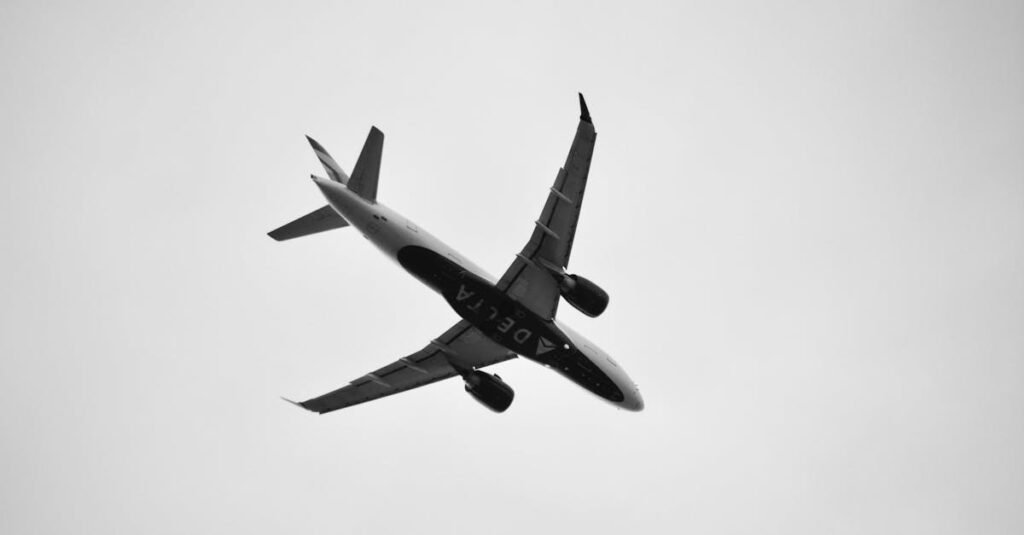
    Black and white image of a commercial airplane flying overhead, showcasing aviation in San Antonio, Texas.

    The Boeing 737-900 involved in the incident will remain on the ground in Savannah for a thorough investigation. Delta maintenance teams and federal investigators from the Federal Aviation Administration will examine the failed engine to determine exactly what caused the blowout.

    The investigation will look into whether the failure was caused by an internal mechanical part, a bird strike, or another external factor. This process often takes time, as the engine may need to be disassembled to find the root cause of the spark and subsequent power loss.

    Safety First for Travelers

    Delta Air Lines has reiterated that the safety of its customers is the top priority. While the sight of flames coming from a wing is terrifying for anyone, the airline pointed out that the systems in place worked exactly as they should. The pilots followed their emergency checklists, the aircraft remained stable, and emergency crews on the ground were ready to act before the plane even touched the ground.

    For the passengers of Flight 1067, it was a Sunday night they will never forget. Most were simply grateful to be standing on solid ground after a very close call. The quick thinking of the pilots and the rapid response of the Savannah area firefighters prevented a serious mechanical failure from turning into a much worse tragedy.

  • Fact Check: Is the Mexico Plane Fire Real? Guadalajara Airport Chaos After the Death of El Mencho

    Fact Check: Is the Mexico Plane Fire Real? Guadalajara Airport Chaos After the Death of El Mencho

    The digital landscape has been flooded with alarming images and videos claiming a commercial aircraft was set ablaze at the Guadalajara International Airport after the death of El Mencho. These reports surfaced shortly after news broke of a major military operation in the state of Jalisco. Given the high stakes of the situation and the reputation of the region for volatility, many travelers and concerned citizens are asking if the Mexico plane fire is real.

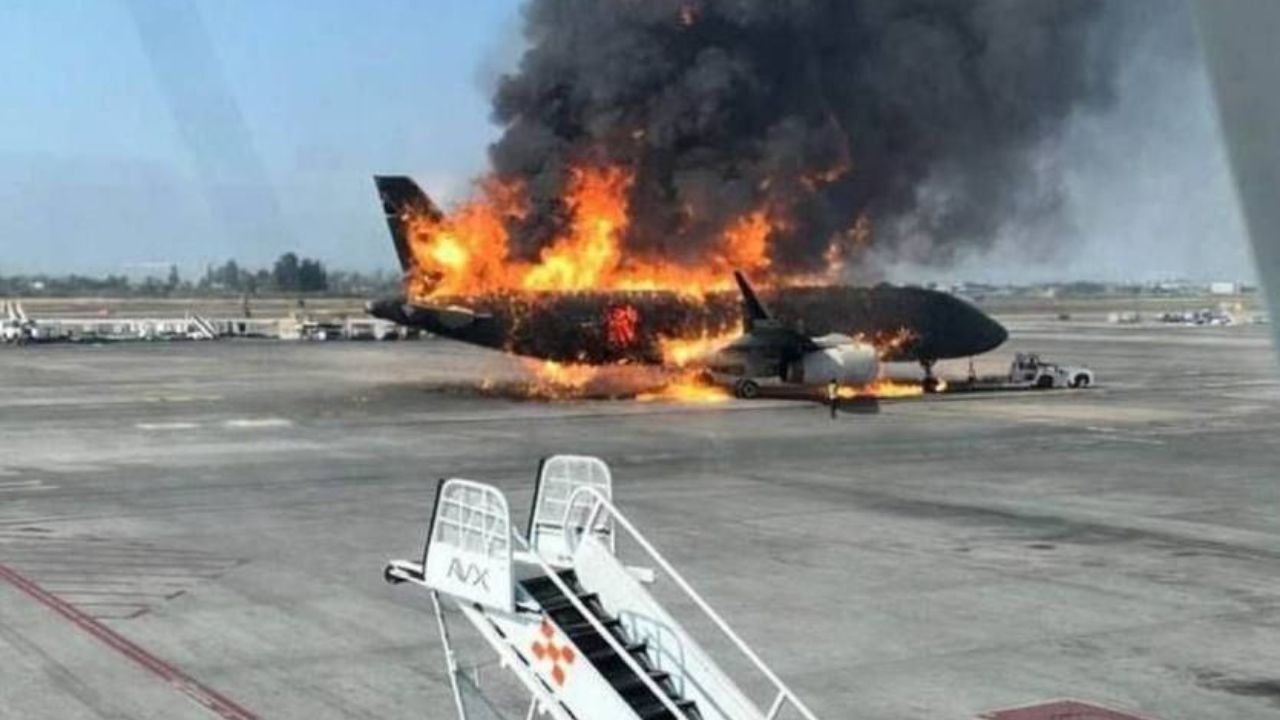
    After a thorough investigation into official statements and on the ground reports, the short answer is no. While the state of Jalisco is currently experiencing significant unrest and travel disruptions, the specific image of a burning plane is a product of modern technology rather than a physical attack on an aircraft.

    The Origins of the Viral Plane Fire Rumor

    The rumors began to gain traction on social media platforms like X and TikTok on February 22, 2026. Users shared high definition images showing what appeared to be a Volaris airlines jet engulfed in thick black smoke on a tarmac. The timing of the post coincided with a surge of genuine violence in the region, making the claim seem highly plausible to a global audience.

    However, the Embassy of Mexico in the United States and the management of the Guadalajara International Airport quickly intervened to set the record straight. Official statements confirmed that the image was entirely fake and had been generated using artificial intelligence. Authorities emphasized that no such incident occurred within the airport facilities and no Volaris aircraft had been targeted or damaged by fire.

    The Real Trigger: The Death of El Mencho

    To understand why the public was so quick to believe the hoax, one must look at the monumental event that actually took place. On Sunday, February 22, 2026, the Mexican military conducted a high stakes operation in the town of Tapalpa, Jalisco. The target was Nemesio Oseguera Cervantes, famously known as El Mencho, the supreme leader of the Jalisco New Generation Cartel (CJNG).

    During the raid, a fierce gun battle broke out between special forces and cartel members. El Mencho was critically wounded during the confrontation and reportedly died while being airlifted to Mexico City for medical treatment. As the leader of one of the most powerful and violent criminal organizations in the world, his death immediately sent shockwaves through the country, leading to a massive and coordinated retaliation by his followers.

    Retaliation and Narco Blockades Across Jalisco

    The chaos that followed the military operation was not fictional. In the hours following the announcement of the death of El Mencho, members of the CJNG implemented a tactic known as narcobloqueos or narco blockades. Gunmen seized buses, delivery trucks, and private vehicles, setting them on fire to block major highways and prevent the movement of federal troops.

    These burning blockades were reported in several key areas:

    • Guadalajara: The state capital saw multiple vehicles torched on main avenues.
    • Puerto Vallarta: This popular tourist destination was effectively cut off as entry points were blocked by flaming wreckage.
    • Guanajuato and Michoacán: The violence spilled over into neighboring states as the cartel flexed its regional influence.

    The sight of thick smoke billowing over city skylines was very real, which provided the perfect backdrop for misinformation to thrive.

    Panic at Guadalajara International Airport

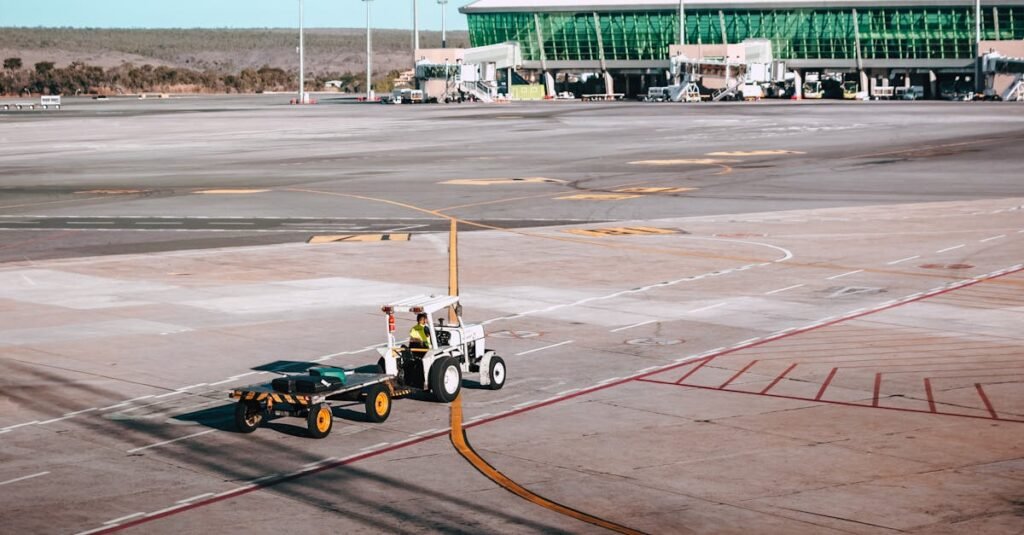
    A luggage cart on the airport tarmac near a modern terminal building under clear skies.

    While no plane was burned, the situation at the Guadalajara International Airport (GDL) was undeniably chaotic. As news of the clashes spread, panic gripped the terminal. Videos showed travelers sprinting through the concourse and ducking behind check-in counters as rumors of an active shooter circulated.

    Security forces, including the National Guard, were deployed to the airport to secure the perimeter. While there were reports of gunfire in the vicinity of the airport entrances, the interior of the facility remained under the control of authorities. Nevertheless, the psychological impact on passengers was profound, leading to a mass exodus from the terminal and a complete standstill of airport operations for several hours.

    Impact on International Flights and Travel

    The security crisis had an immediate effect on the aviation industry. Airlines from the United States and Canada were forced to make quick decisions to ensure the safety of their crews and passengers. Many flights bound for Guadalajara and Puerto Vallarta were diverted to other Mexican cities or returned to their points of origin.

    Key airline responses included:

    • Air Canada: Suspended all flights to Puerto Vallarta citing the ongoing security situation.
    • Alaska Airlines and United: Cancelled several scheduled departures and arrivals to the region.
    • Volaris: Despite being the subject of the AI hoax, the airline had to manage significant delays and cancellations due to the general unrest in Jalisco.

    The U.S. State Department issued an urgent security alert, advising American citizens in Jalisco, Michoacán, and Colima to shelter in place. Travelers were told to avoid travel to the region until the military had fully stabilized the situation.

    The Role of AI in Spreading Misinformation

    This incident serves as a stark reminder of how sophisticated AI-generated content can be used to escalate panic during a real-world crisis. The “burned plane” image was convincing enough to be picked up by several minor news outlets before being debunked. In a high-tension environment like a cartel war, the line between fact and fiction becomes dangerously thin.

    Verifying sources is now more critical than ever. During the events in Guadalajara, the most reliable information came directly from the official social media accounts of the Jalisco government and the airport authorities. They worked in real time to separate the physical reality of the road blockades from the digital fiction of the plane fire.

    Current Status of the Region

    As of February 23, 2026, the situation remains fluid but is slowly stabilizing. Federal forces have moved in to clear the burned vehicles from the highways and restore the flow of traffic. Schools in several municipalities were closed as a precaution, and many businesses chose to remain shuttered.

    The death of El Mencho represents a significant victory for the Mexican government under President Claudia Sheinbaum, as well as for U.S. intelligence agencies that had placed a 15 million dollar bounty on his head. However, experts warn that a power vacuum within the CJNG could lead to further internal infighting or external wars with rival cartels like the Sinaloa Cartel.

    Safety Advice for Those Currently in Mexico

    Close-up of airport departure board displaying flight details at JFK Airport, New York.

    If you are currently in the state of Jalisco or planning to travel there soon, it is vital to stay informed through official channels. The following steps are recommended:

    • Monitor Flight Status: Check directly with your airline before heading to the airport.
    • Avoid Road Travel: Do not attempt to drive between cities in Jalisco until the blockades are confirmed to be fully cleared.
    • Stay Indoors: Follow the advice of local authorities and the U.S. Embassy to shelter in place if violence is reported in your immediate area.
    • Verify Information: Do not resharing sensationalist images or videos without confirming their authenticity through reputable news organizations.
  • Tarmac Nightmare: Lufthansa Passengers Forced to Sleep on A320neo After Copenhagen Flight Axed

    Tarmac Nightmare: Lufthansa Passengers Forced to Sleep on A320neo After Copenhagen Flight Axed

    A routine short haul flight from Munich to Copenhagen turned into a grueling ordeal for over one hundred travelers this week. What was supposed to be a quick ninety minute hop across Europe transformed into an stationary overnight marathon on the tarmac. Passengers on Lufthansa flight LH2446 found themselves trapped inside an Airbus A320neo for nearly seven hours after their flight was cancelled due to a series of logistical failures and rigid airport curfews.

    The incident highlights a growing concern in the aviation industry regarding ground handling capabilities and the lack of contingency plans at major hubs. While flight cancellations are a common part of modern travel, the decision to keep passengers confined to a narrow body aircraft overnight has sparked outrage and raised serious questions about passenger rights and airline ethics.

    A Typical Evening Turns Into a Logistic Deadlock

    The trouble began on the evening of Thursday, February 19, 2026. Lufthansa flight LH2446 was scheduled to depart from Munich Airport at 9:30 PM with a planned arrival in Copenhagen by 11:05 PM. Like many flights during the busy winter season, the service was initially hit by rolling delays. Despite the uncertainty, airline staff proceeded with the boarding process, transporting the 123 passengers by bus to a remote parking stand where the Airbus A320neo was waiting.

    By the time everyone was seated, the departure window was rapidly closing. Munich Airport operates under a strict midnight curfew to minimize noise pollution for local residents. As the clock ticked toward 12:00 AM, it became clear that the aircraft would not be taking off. The flight was officially axed, leaving a cabin full of tired travelers expecting a quick bus ride back to the terminal and a hotel voucher. However, the nightmare was only just beginning.

    The Midnight Closure and the Vanishing Ground Crew

    In most scenarios, a cancelled flight at a major hub like Munich would result in passengers being deplaned within thirty minutes. In this instance, a catastrophic breakdown in communication occurred between Lufthansa and the airport ground services. As the crew attempted to call for buses to ferry the passengers back to the terminal, they were met with a shocking reality.

    By 2:00 AM, the flight crew had to deliver the news that no one wanted to hear. They informed the passengers that the airport had effectively closed for the night. More importantly, they claimed that all authorized bus drivers had already finished their shifts and gone home. Because the aircraft was parked on a remote stand, passengers were legally forbidden from walking across the active apron to the terminal due to strict security regulations. With no drivers to operate the buses and no legal way to walk off, the passengers were effectively locked inside the plane.

    Survival on a Short Haul Aircraft

    The Airbus A320neo is a marvel of modern engineering, but it is not designed to function as a hotel. Unlike long haul wide body jets, these regional aircraft are built for efficiency on short routes. This means the seats are designed with a tight pitch of roughly thirty inches, and the cabin lacks the amenities required for a comfortable night of sleep.

    Passengers reported a lack of basic supplies. Since the flight was only intended to last ninety minutes, the galley was stocked with minimal food and beverages. There were no pillows, blankets, or amenity kits available to soften the experience of sleeping upright in economy class seats. The crew reportedly provided updates every half hour, but as the night wore on, the atmosphere in the cabin grew increasingly tense and claustrophobic.

    Legal Limbo on the Tarmac

    During the early morning hours, some passengers reportedly asked if they could simply exit the aircraft and wait on the ground or attempt the walk to the terminal building. The crew remained firm, citing international aviation law and airport safety protocols. Accessing the apron without a designated escort or vehicle is a significant security violation that could result in heavy fines or arrests for both the passengers and the airline staff.

    This legal deadlock meant that even though the terminal was visible in the distance, it might as well have been on another continent. The travelers were forced to endure the cold Munich night inside the pressurized tube, waiting for the first shift of ground staff to arrive at dawn.

    The Dawn Rescue and Rebooking Chaos

    The ordeal finally came to an end in the early morning hours of Friday when the first wave of airport workers returned to duty. Buses eventually arrived to collect the exhausted travelers and return them to the terminal. However, the end of the “tarmac prison” was merely the start of a new set of challenges.

    Many passengers were rebooked on the earliest available flight to Copenhagen, which was scheduled for 6:40 AM.Adding insult to injury, that flight was also delayed by nearly an hour. After spending the entire night in a cramped seat without proper rest or nutrition, the travelers finally reached Denmark nearly twelve hours behind schedule.

    Lufthansa and Munich Airport Under Fire

    The backlash against the German flag carrier has been swift. Critics argue that a major airline operating out of its primary hub should have the influence and resources to find at least one bus driver in an emergency. The fact that over one hundred people were forced to sleep on a plane because of a “lack of buses” at one of Europe’s busiest airports is being viewed as a systemic failure.

    Lufthansa has since attributed the incident to a combination of weather related delays and an acute shortage of apron bus drivers. However, aviation experts suggest that the strict adherence to labor hours and airport curfews may have taken precedence over basic passenger welfare.

    Passenger Rights and Compensation

    Under European law, specifically the regulation known as EC 261, passengers are entitled to significant protections during flight disruptions. In a case like this, each passenger is likely eligible for at least 250 Euros in compensation for the delay. Furthermore, the airline is legally required to provide “duty of care,” which includes meals, refreshments, and hotel accommodation.

    By failing to provide a hotel and instead keeping passengers on the aircraft, Lufthansa may face additional legal scrutiny. Legal experts suggest that the “inhumane” conditions of being trapped on a stationary plane without adequate facilities could lead to further claims beyond the standard delay payouts.

    Lessons for the Future of Aviation

    This incident serves as a stark reminder of the fragility of the global aviation network. When one link in the chain breaks be it a crew shortage, a curfew, or a lack of ground transportation then the entire system can collapse, leaving the customer to bear the brunt of the failure.

    For travelers, it underscores the importance of knowing your rights and perhaps carrying a few extra essentials even on the shortest of flights. For airlines, it is a loud wake up call that digital tools and automated systems are no substitute for effective crisis management and human empathy.

  • “Stolen” Seats? American Airlines Faces Backlash After Downgrading Paying First Class Travelers for Deadheading Pilots

    “Stolen” Seats? American Airlines Faces Backlash After Downgrading Paying First Class Travelers for Deadheading Pilots

    The friendly skies have felt a little more turbulent recently, and it has nothing to do with the weather. A series of viral incidents has sparked a heated national conversation regarding passenger rights, airline labor contracts, and the hierarchy of the modern cabin. At the center of this storm is American Airlines, which recently made headlines after high profile passengers reported being removed from their paid first class seats to accommodate off duty crew members.

    This practice, known in the industry as deadheading, has left many travelers wondering how a confirmed, paid ticket can be overridden by an internal airline policy. To understand why this is happening and what your rights are as a consumer, one must look at the intersection of union agreements, federal regulations, and the fine print of the ticket you buy.

    The Viral American Airlines Incident That Sparked the Debate

    The conversation reached a fever pitch in February 2026 when comedian Jim Breuer shared a frustrated account of his experience on a flight from Honolulu. Breuer and his wife had purchased first class tickets, a significant expense intended to ensure comfort on a long haul journey. However, shortly before boarding, they were informed that they were being downgraded to the economy cabin.

    The reason provided at the gate was not a mechanical failure or an aircraft swap. Instead, the seats were required for two pilots who needed to be repositioned for work. While the airline offered a standard compensation package, the discrepancy between the price of a first class ticket and the refund offered sparked an outcry.

    Breuer described the experience as feeling like his seats were stolen, a sentiment that resonated with thousands of travelers online. This incident served as a catalyst for a deeper look into how often this happens and why the airline prioritizes its employees over its highest paying customers in these specific scenarios.

    What Exactly Is a Deadheading Pilot?

    To the average passenger, seeing a pilot in uniform sitting in first class might seem like a simple perk of the job. However, the term deadheading refers to a specific operational necessity. A deadheading pilot is not commuting to work on their own time; they are being moved by the airline to a different city to operate a subsequent flight.

    Operational Necessity versus Luxury

    If a pilot is scheduled to fly a plane from Phoenix to London, but they are currently in Honolulu, the airline must get them to Phoenix. If that pilot does not arrive on time and properly rested, the Phoenix flight might be canceled,affecting hundreds of other passengers. Because of this, airlines view the movement of crew as a critical operational priority.

    The Impact of the 2023 Labor Agreement

    The reason these downgrades are becoming more visible is tied to the collective bargaining agreement ratified by American Airlines pilots in 2023. This contract, valued at billions of dollars, included significant “quality of life” provisions. One of those provisions mandates that for certain long distance or transoceanic flights, deadheading pilots must be accommodated in the highest class of service available.

    Prior to this contract, pilots were often placed in whatever seat was left over. Under the new rules, their right to a first class seat is contractually guaranteed, even if it means moving a passenger who has already paid for that seat.

    Why Elite Status Does Not Always Protect You

    For years, the conventional wisdom for frequent flyers was that holding elite status, such as Executive Platinum or Concierge Key, acted as a shield against involuntary downgrades. While status still helps in many overbooking situations, the deadheading pilot policy operates on a different logic.

    In the American Airlines internal priority system, deadheading pilots on qualifying routes are often coded with a higher priority than even the most loyal frequent flyers. If a flight is full and a crew member must be moved for operational reasons, the airline looks at the last people to join the first class cabin or those without specific protections.Unfortunately, even those who paid full cash for their tickets can find themselves at the bottom of the priority list when a contractual crew requirement is triggered.

    The Legal Reality: The Contract of Carriage

    When you purchase an airline ticket, you are not just buying a seat; you are entering into a legal agreement known as the Contract of Carriage. This document is notoriously long and filled with dense terminology, but it is the ultimate authority on what an airline can and cannot do.

    What the Fine Print Says

    Most major airlines include clauses in their Contract of Carriage that allow them to change seat assignments or even downgrade passengers for operational reasons. These reasons can include:

    • Safety requirements
    • Weather conditions
    • Equipment changes (switching to a smaller plane)
    • Operational necessity (such as moving crew)

    Because the passenger agrees to these terms at the time of purchase, the airline is generally protected from breach of contract claims as long as they provide the required compensation for the downgrade.

    Is It Illegal?

    While it feels unfair to the consumer, the practice is not illegal under current United States law. The Department of Transportation (DOT) has strict rules regarding “bumping” passengers from a flight entirely, which usually requires the airline to seek volunteers first and pay significant compensation. However, the rules for involuntary downgrades are less rigid. The DOT primarily requires that the airline refund the difference in fare between the two cabins.

    Compensation: What Are You Actually Owed?

    If you find yourself standing at a gate being told your first class seat is no longer yours, the immediate concern is often financial. American Airlines typically offers a standard “customer service” gesture on the spot, such as a flight voucher or a fixed amount of cash, but this is separate from your legal right to a refund.

    The Fare Difference

    The most important thing to know is that the airline must refund the difference in price. However, calculating this difference can be tricky. Airlines often use the fare that was available at the time of your original booking. If you bought a first class ticket for $2,000 and the economy fare at that time was $500, you are owed $1,500.

    Vouchers versus Cash

    Gate agents will frequently offer travel vouchers worth $500 or $1,000 to encourage passengers to accept the downgrade quietly. It is important to remember that you can often accept the voucher and still claim the fare difference refund later. Experts suggest documenting the names of the agents you speak with and keeping all original receipts to make the claims process smoother.

    How to Protect Your Seat

    Empty airplane interior highlighting rows of seats with touchscreens, offering a modern in-flight experience.

    While no strategy is 100% foolproof when a pilot contract is involved, there are steps you can take to minimize the risk of being the one chosen for a downgrade.

    • Check In Early: Airlines often look at the “last in, first out” rule. Passengers who check in at the 24 hour mark are less likely to be moved than those who check in at the airport.
    • Avoid “Upgrade” Scams: If you paid for your seat with cash, you generally have a stronger position than someone who was upgraded for free due to status. However, in the Jim Breuer case, even cash payers were affected.
    • Fly Non-Transoceanic Routes: The most aggressive pilot seating requirements usually apply to international flights or long hauls to places like Hawaii and Alaska. On shorter domestic hops, pilots are often assigned to economy first and only move up if seats are empty.
    • Monitor Your Reservation: Use the airline app to check your seat assignment frequently in the 24 hours leading up to your flight. If you see your seat has been changed, call the airline immediately to see if you can be moved to a different flight with first class availability.

    The Future of Passenger Rights

    The backlash from recent incidents has caught the attention of consumer advocacy groups and some lawmakers. There is a growing movement to pressure the Department of Transportation to modernize the rules regarding involuntary downgrades.

    Advocates argue that as airlines negotiate higher pay and better perks for their staff, those costs and inconveniences should not be directly offloaded onto the paying public. Until the regulations change, however, the pilot contract remains a powerful force that can override even the most expensive ticket.

    For now, travelers must remain vigilant. While American Airlines continues to navigate the PR fallout of these viral stories, the operational reality of moving crew members remains a priority. The best defense for any traveler is to know the rules, stay calm at the gate, and ensure that every dollar of the fare difference is recovered if the worst should happen.

    For now, travelers must remain vigilant. While American Airlines continues to navigate the PR fallout of these viral stories, the operational reality of moving crew members remains a priority. The best defense for any traveler is to know the rules, stay calm at the gate, and ensure that every dollar of the fare difference is recovered if the worst should happen.

  • Why Was Delta Passenger Arrested in Memphis? The Shocking Flight 82 Biting Incident Explained

    Why Was Delta Passenger Arrested in Memphis? The Shocking Flight 82 Biting Incident Explained

    On February 17, 2026, a routine afternoon at Memphis International Airport turned into a chaotic scene that has since captured national attention. The incident occurred on Delta Air Lines Flight 82, which was scheduled to fly from Memphis to Atlanta. What was supposed to be a standard boarding process escalated into a violent confrontation involving a passenger named Jessica Thomas, a flight attendant, and local law enforcement officers.

    The Initial Disturbance on Flight 82

    The trouble began around midday while the aircraft was still parked at Gate 12. According to reports from the Memphis Police Department, the situation ignited when 29 year old Jessica Thomas became involved in a physical altercation with a Delta crew member. Witnesses and police accounts suggest that Thomas struck a flight attendant in the face while the plane was preparing for departure.

    The motive behind the initial strike remains unclear in public reports, but the impact was immediate. Flight crew members followed standard safety protocols by notifying airport security and local law enforcement. This type of physical aggression toward airline staff is a serious offense under federal and local laws, leading to an immediate halt in the pre-flight procedures.

    Escalation and the Biting Incident

    When Memphis police officers arrived at the gate and boarded the aircraft to detain Thomas, the situation grew significantly more volatile. Law enforcement officials stated that Thomas became irate and resisted their attempts to take her into custody. The struggle moved from the cabin toward the jet bridge as officers worked to move her away from the other passengers.

    During this physical struggle, the confrontation reached a shocking peak. Police allege that Jessica Thomas bit one of the responding officers on the arm. In addition to the biting, she reportedly kicked a second officer in both legs. The aggressive behavior required multiple officers to eventually gain control and remove her from the airport terminal.

    Formal Charges and Legal Consequences

    A gavel striking a sound block, symbolizing justice and legal authority in a courtroom setting.

    Following the incident, Thomas was transported to the Shelby County Jail. The legal repercussions for the midday outburst are substantial. She currently faces several serious charges, which include:

    • Two counts of assault on a first responder
    • One count of assault (related to the flight attendant)
    • Disorderly conduct

    Authorities set her bond at $2,500. Court records indicate that she was scheduled for an initial appearance on Friday, February 20, 2026. Because the incident occurred on an aircraft, there is often the potential for federal involvement,though current charges are being handled at the local level in Shelby County.

    Impact on Delta Operations and Passengers

    One of the most surprising aspects of this story is how Delta Air Lines managed the operational fallout. In many cases of onboard violence, a flight might be cancelled or delayed for several hours to allow for evidence collection and crew reassignment. However, Flight 82 managed to depart Memphis only 37 minutes behind its original schedule.

    The airline received praise from industry observers for its quick recovery. The rapid intervention by the Memphis Police Department allowed the aircraft to be cleared quickly. While the flight attendant who was struck was understandably shaken, the remaining crew and passengers were able to continue the journey to Hartsfield Jackson International Airport in Atlanta without further disruption.

    A Growing Trend of Unruly Passengers

    The current arrest is part of a larger, more troubling pattern within the aviation industry. While air travel was once seen as a professional and orderly environment, the last several years have seen a significant rise in “air rage.” According to Federal Aviation Administration (FAA) data, unruly passenger incidents reached a historic peak in 2021 with nearly 6,000 reported cases. While that number has since decreased, the rate of incidents in 2026 remains nearly double what was seen in the pre-pandemic era of 2017 to 2019.

    The Anatomy of Air Rage

    Psychologists and aviation experts point to a “perfect storm” of stressors that contribute to these outbursts. The process of modern flying involves long queues, invasive security screenings, and crowded gate areas, all of which can push a passenger to their breaking point before they even step onto the aircraft. Once on board, factors such as limited personal space, recycled air, and the consumption of alcohol can further lower inhibitions and escalate minor frustrations into physical violence.

    In the case of Flight 82, the transition from a verbal dispute to a physical assault on a flight attendant and the subsequent biting of a police officer illustrates how quickly these situations can spiral. Experts note that many offenders are not “career criminals” but rather individuals experiencing temporary lapses in self-control due to travel fatigue or anxiety.

    Strengthening Enforcement and Penalties

    To combat this trend, the FAA has maintained a strict Zero Tolerance policy. Under current regulations, the agency can propose civil fines of up to $43,658 per violation. Because a single incident can involve multiple violations, such as interfering with a crew member and physically assaulting another, the total financial penalty can easily exceed $100,000 for a single flight.

    Beyond civil fines, the legal system is increasingly pursuing criminal charges. The FAA regularly refers the most serious cases to the FBI for federal prosecution, which can result in felony convictions and prison time. Additionally, the industry is seeing a renewed push for a centralized federal no fly list. Currently, if a passenger is banned by Delta, they might still be able to book a flight on a different carrier the next day. A centralized list would effectively bar high risk individuals from all commercial aviation.

    As the industry moves through 2026, the focus remains on protecting the “safety and health” of both passengers and crew. For such individuals, the consequences of a momentary outburst are life changing, involving jail time, massive legal fees, and a permanent mark on their criminal record.

    Safety Protocols and Airline Response

    Delta Air Lines has not released an extensive public statement regarding the specific condition of the flight attendant involved in the Memphis incident. However, the company maintains a strict zero tolerance policy regarding violence against its employees. Passengers who engage in such behavior are typically placed on internal no fly lists, which can permanently ban them from using the carrier in the future.

    For travelers, this incident serves as a stark reminder of the legal and social consequences of air rage. Attacking a first responder or a flight crew member carries heavy penalties, including significant jail time and hefty fines.

  • Why Was A JetBlue Passenger Arrested At Las Vegas Airport? All About The ‘Service Dog’ Paperwork Dispute

    Why Was A JetBlue Passenger Arrested At Las Vegas Airport? All About The ‘Service Dog’ Paperwork Dispute

    In the high-stress environment of a major international airport, tensions often run high, but a recent incident at Harry Reid International Airport (LAS) has left the public and travel industry professionals alike in a state of disbelief. On the night of February 2, 2026, a routine travel dispute between a passenger and JetBlue Airways staff escalated into a criminal case involving animal abandonment and a dramatic police intervention.

    The story, which has since gone viral, centers on a 2-year-old Goldendoodle and a passenger’s refusal to comply with federal and airline-specific service animal regulations. Here is the full breakdown of what transpired, the legal consequences, and the heartwarming update on the dog now known as “JetBlue.”

    The Initial Confrontation: A Service Dog Paperwork Failure

    The trouble began shortly before midnight at the JetBlue ticket counter in Terminal 3. A 26-year-old traveler, identified in police logs as Germiran Bryson, arrived at the airport intending to fly with her Goldendoodle. Bryson claimed the animal was a trained service dog, which would typically allow the pet to fly in the cabin free of charge.

    However, airline staff quickly identified a critical issue: Bryson had not completed the mandatory online service animal documentation.

    JetBlue’s Service Animal Policy

    Under U.S. Department of Transportation (DOT) guidelines and JetBlue’s 2026 policies, passengers traveling with service animals must:

    1. Submit Documentation: Complete the DOT Service Animal Air Transportation Form at least 48 hours before the flight.
    2. Validation: The form must be submitted via the airline’s digital portal to ensure the animal is added to the reservation.
    3. Alternative Options: If paperwork is not completed, the animal is treated as a standard pet, which requires a $150 pet fee, a hard-sided carrier that fits under the seat, and a limit of one pet per passenger.

    When informed that her dog could not fly as a service animal without the pre-filed paperwork, Bryson was offered the choice to pay the fee or rebook her flight. She reportedly refused both options.

    A Shocking Decision: Abandonment at the Baggage Sizer

    What happened next was captured on airport surveillance footage and has become the focal point of public outrage. Rather than making arrangements for the dog’s care or staying behind, Bryson allegedly led the Goldendoodle to a metal carry-on baggage sizer near the ticket counter.

    Without a second glance, she tied the dog’s leash to the sizer and walked away, heading toward the Transportation Security Administration (TSA) checkpoint to catch her flight. Witnesses and airport employees watched in confusion as the dog sat alone in the middle of the busy terminal.

    The Police Intervention at Gate D1

    JetBlue employees acted immediately, notifying the Las Vegas Metropolitan Police Department (LVMPD). Officers tracked Bryson through the secure area of the airport and located her at Gate D1, waiting to board her flight.

    The “Tracking Device” Defense

    Body camera footage released by the LVMPD shows a startling exchange. When asked why she left her dog, Bryson claimed the animal had a “tracking device” and would simply “find its way home” to her. As officers attempted to escort her back, she became hostile and combative, leading to charges of animal abandonment and resisting a public officer.

    The Road to Recovery: A New Chapter for the Dog Named “JetBlue”

    While the legal proceedings against Bryson continue with a status check hearing scheduled for March 31, 2026 and the narrative has shifted toward a much more hopeful tone regarding the innocent victim of this dispute. After being abandoned at the ticket counter, the 2-year-old Goldendoodle was initially taken into custody by Animal Protective Services. Per Nevada law, a mandatory 10-day hold was placed on the dog to allow the owner a final chance to reclaim him. When the period passed with no word from Bryson, he was signed over to the Retriever Rescue of Las Vegas (RRLV).

    The rescue group, moved by the dog’s resilience and the location of his rescue, officially renamed him “JetBlue.”Since entering foster care, the pup has undergone a complete medical overhaul, including vaccinations and neutering. Despite the trauma of being tied to a metal post and left in a crowded terminal, rescuers describe him as an exceptionally “affectionate, gentle, and social” animal who holds no grudges against the humans he meets.

    An Outpouring of Community Support and Global Interest

    The story of “JetBlue” has resonated far beyond the borders of Nevada. According to Danielle Roth, founder of Retriever Rescue of Las Vegas, the organization has been overwhelmed by the public’s response. In the weeks following the viral footage, the rescue received nearly 200 adoption applications from across the country. In a poetic twist of fate, several of those applications came from the very Las Vegas police officers and TSA agents who were on the scene the night of the abandonment.

    This massive surge in interest has allowed the rescue to be incredibly selective, ensuring that “JetBlue” is placed in a “forever home” that prioritizes stability and companionship. The rescue has used this spotlight to remind the public that while “JetBlue” is a “celebrity” rescue, thousands of other animals face similar abandonment issues at airports and shelters every day. They hope his story encourages a broader movement toward responsible pet ownership and adoption.

    Lessons in Responsible Travel and Animal Welfare

    This incident serves as a crucial case study for pet owners navigating the increasingly strict world of air travel. The $150 fee Bryson refused to pay has now resulted in multiple misdemeanor charges and a permanent criminal record. Beyond the legalities, the “JetBlue” case highlights the ethical responsibility of pet owners. Experts stress that animals are not luggage; they are sentient beings that experience confusion and fear when separated from their owners in high-stress environments.

    As “JetBlue” prepares to move into his new permanent home this Saturday, the message from the LVMPD remains clear: “Please don’t abandon your dog at the airport or anywhere else.” There are always resources, rescues, and temporary boarding facilities available for those who find themselves in a bind. For the Goldendoodle once left behind at a baggage sizer, the future finally looks bright, filled with the promise of a family that will never walk away.