Category: Aircraft

  • United 787 Engine Fire at LAX: Terrifying Video Shows Passengers Flee in Slides, All We Know So Far

    United 787 Engine Fire at LAX: Terrifying Video Shows Passengers Flee in Slides, All We Know So Far

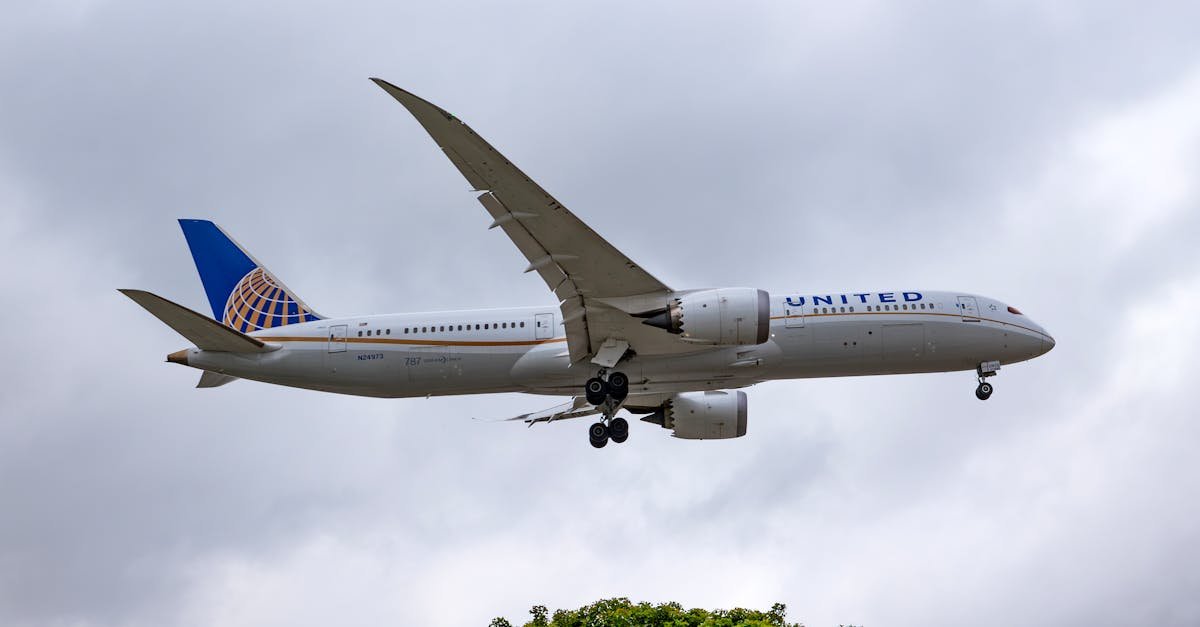
    A routine Monday morning at Los Angeles International Airport turned into a scene of panic and adrenaline when a United Airlines flight was forced to make a desperate return. Passengers aboard United Flight 2127 were settled in for a cross-country journey to Newark, New Jersey, when a mechanical failure transformed their trip into a survival situation. The aircraft, a modern Boeing 787-9 Dreamliner, suffered a significant engine issue shortly after takeoff that led to a full scale emergency response on the tarmac of one of the busiest airports in the world.

    Moments of Terror in the Sky

    The flight departed from LAX around 10:43 AM local time. For the first few minutes, everything seemed normal as the wide-body jet climbed over the Pacific Ocean. However, as the plane reached an altitude of approximately 18,000 feet, the situation changed rapidly. Crew members and passengers on the left side of the aircraft noticed something was wrong with the General Electric GEnx engine.

    Reports from inside the cabin describe a series of thuds followed by the sight of smoke. The flight crew acted immediately by declaring a “Mayday” and requesting an urgent return to Los Angeles. Air traffic controllers cleared a path, grounding other departing flights to ensure the crippled Dreamliner could get back to the ground as quickly as possible. The tension inside the cabin was palpable as the pilots performed a steep turn to align with the runway, all while dealing with a fire indication in the cockpit.

    The Landing and Sudden Evacuation

    By 11:20 AM, the United 787 touched down on Runway 25L. While the landing was technically successful, the danger was far from over. As the plane slowed down on the taxiway, black smoke began to billow from the left engine. Ground crews and Los Angeles Fire Department units were already in position, having been alerted during the plane’s descent.

    Initially, the plan appeared to involve a controlled deplaning using mobile stairs. One set of stairs was even positioned at the front door. But as the smoke thickened and the threat of an active fire grew, the captain made the call for a full emergency evacuation. This is the moment that has captured the attention of the world through viral video footage.

    Sprinting for Safety on the Tarmac

    In the footage captured by onlookers and aviation enthusiasts, the emergency slides on the right side of the aircraft can be seen deploying in rapid succession. The crew specifically chose not to use the left side exits to keep passengers away from the smoking engine.

    The video shows a stream of people sliding down the inflatable chutes. Unlike many recent aviation incidents where passengers have been criticized for grabbing their luggage, the people on Flight 2127 seemed to understand the gravity of the situation. They left everything behind. Once their feet hit the pavement, they didn’t look back. Passengers were seen sprinting across the taxiway, driven by the sight of smoke and the fear of a potential explosion.

    The evacuation was a textbook example of efficiency. Reports indicate that over 250 people cleared the aircraft in less than sixty seconds. This speed is critical in aviation safety, as fire can compromise the fuselage in a very short amount of time.

    A Miracle of Zero Major Injuries

    Despite the chaotic nature of the exit and the speed at which people were running, the outcome was remarkably positive. United Airlines confirmed that 256 passengers and 12 crew members were on board. Out of all those people, only one minor injury was reported, a small cut to a passenger’s finger.

    The lack of injuries is a testament to the training of the United Airlines flight attendants. They are trained to shout commands and push people toward the slides to prevent a bottleneck at the doors. In a situation where every second counts, their ability to maintain order saved lives and prevented the kind of trampling accidents that often occur during mass panics.

    Federal Investigation into the Boeing 787
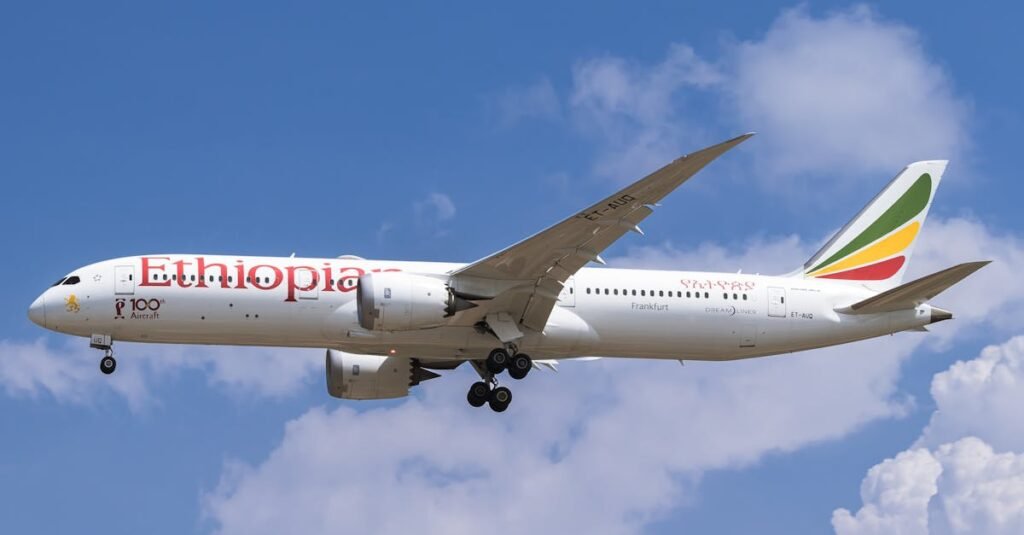
    Side view of Ethiopian Airlines Boeing 787 flying against a blue sky with clouds.

    The Federal Aviation Administration and the National Transportation Safety Board are now looking into the cause of the United 787 engine fire. The aircraft involved, registered as N24972, is a relatively modern piece of equipment. Investigators will focus on whether the fire was caused by a bird strike, a mechanical fatigue failure, or a maintenance oversight.

    The left engine remained the focus of fire crews for over an hour after the landing. Firefighters continued to douse the engine housing with water and foam to ensure that hidden hot spots did not reignite the fuel lines. The plane will likely remain grounded at LAX for an extensive period as investigators dismantle the engine to find the root cause of the failure.

    Impact on LAX Operations

    The emergency landing caused significant ripples through the air travel network. The FAA issued a temporary ground stop for all flights heading into LAX while the taxiway was cleared and the emergency was managed. This resulted in delays for thousands of travelers across the country.

    While the ground stop was lifted by early afternoon, Runway 25L remained closed for several hours. This particular runway is a primary artery for the airport, and its closure forced controllers to reroute traffic, leading to a backlog of departures. United Airlines worked quickly to bus the evacuated passengers back to the terminal, where they were provided with food, water, and eventually, seats on a replacement aircraft to finish their journey to Newark.

    Safety Lessons from Flight 2127

    Aviation experts are already pointing to this incident as a success story in terms of safety protocol. The decision to evacuate on the side opposite the fire is a standard but vital procedure. Furthermore, the fact that passengers followed instructions and abandoned their carry on bags played a massive role in the high speed of the evacuation.

    When people stop to grab laptops or suitcases from overhead bins, they block the aisles. In a real fire, those extra seconds can be the difference between life and death due to smoke inhalation. The imagery of passengers running away from the United 787 serves as a stark reminder of why these rules exist.

    What Happens Next for the Passengers

    For the 256 people who were on that flight, the day will be remembered as a brush with disaster. United Airlines has stated that it is cooperating with all authorities and taking care of the needs of the affected travelers. Most of the passengers were eventually placed on a different plane to continue to the East Coast, though some opted to stay in Los Angeles or find alternative travel arrangements after the traumatic experience.

    The airline will also have to deal with the logistical nightmare of returning the luggage left on the original plane. Because the aircraft is now part of an active federal investigation, it may be some time before passengers are reunited with their personal belongings.

    Looking Toward the Investigation Results

    In the coming weeks, the data from the flight data recorder and the cockpit voice recorder will be analyzed. This information will tell the story of exactly what the pilots saw and felt in the moments leading up to the landing. For now, the focus remains on the bravery of the crew and the quick thinking of the first responders who prevented a bad situation from becoming a tragedy.

    The aviation community will be watching closely to see if there are any fleet wide implications for the Boeing 787 or the GEnx engines. Until then, the dramatic footage of the evacuation stands as a powerful visual of a crisis managed with professional precision.
  • Boeing 777-9: Why This Simulator ‘Green Light’ is the Breakthrough the Program Desperately Needed

    Boeing 777-9: Why This Simulator ‘Green Light’ is the Breakthrough the Program Desperately Needed

    In the high-stakes chess game of global aerospace, Boeing has just made a move that many industry insiders believe could be the most significant turning point for the 777X program in years.

    On February 19, 2026, the aviation giant announced it had received initial qualification from both the Federal Aviation Administration (FAA) and the European Union Aviation Safety Agency (EASA) for its 777-9 training devices. At first glance, a “simulator certificate” might seem like a dry, technical checkbox. However, for a program that has been haunted by half a decade of delays, billion-dollar charges, and regulatory skepticism, this “green light” is the structural support Boeing desperately needed to keep its 2027 delivery promises.

    Beyond the Cockpit: Why This Qualification Matters Now

    The Boeing 777-9 is not just another airplane; it is a massive technological leap designed to be the world’s largest and most efficient twin-engine jet. But with great innovation comes great regulatory scrutiny. Since the grounding of the 737 MAX years ago, the “trust gap” between Boeing and global regulators has made the certification of the 777X one of the most difficult processes in aviation history.

    Securing initial qualification for the training devices means that the FAA and EASA have formally agreed that the digital representation of the 777-9 is accurate enough to train human beings. It signals that the aircraft’s flight laws, systems logic, and handling characteristics have reached a level of design stability. You cannot train a pilot on a “moving target”; the fact that regulators have put their stamp on these simulators suggests that the final version of the actual aircraft is finally coming into focus.

    The “Gatwick Gateway”: A Global Training Hub

    The qualified devices are currently housed at Boeing’s Training Campus in Gatwick, United Kingdom. Developed in a decade-long partnership with CAE, these aren’t just video games with fancy chairs. They are multi-million dollar “Full-Flight Simulators” (FFS) that use gaming-engine-powered visuals (specifically Epic Games’ Unreal Engine) to replicate every vibration, cloud, and mechanical quirk a pilot might encounter.+2

    Solving the “Pilot Bottleneck” Before it Starts

    One of the biggest risks for any new aircraft launch is “Operational Readiness.” An airline can have ten brand-new jets sitting on the tarmac, but they are expensive lawn ornaments if there are no certified pilots to fly them.

    By qualifying the simulators now roughly a year before the first expected deliveries to launch customer Lufthansa Boeing has successfully decoupled the pilot training timeline from the final aircraft certification timeline.

    • Validation of Courseware: Regulators will now use these sims to “test the test.” They will ensure the training manuals and procedures are safe before pilots ever step inside.
    • Instructor Preparation: Lead pilots from airlines like Emirates, Qatar Airways, and Cathay Pacific can begin their instructor training, ensuring a “train-the-trainer” effect is in place by 2027.
    • Reduced Risk for Airlines: This move allows airlines to plan their crew rosters with precision, removing a massive variable from their multi-billion-dollar fleet strategies.

    Inside the 777-9 Flight Deck: What’s New?

    The qualification of these devices is particularly vital because the 777-9 introduces features that have never existed in a commercial widebody before. The simulator allows pilots to master these innovations in a zero-risk environment:

    1. The Folding Wingtip Controls

    The 777X’s signature feature is its massive carbon-fiber wing with folding tips. This allows the giant to fit into standard airport gates designed for smaller planes. In the simulator, pilots must learn the specific logic of the folding mechanism—ensuring the tips are extended and locked before takeoff and folded immediately after landing.+1

    2. Touchscreen Avionics

    Following the lead of the 787 Dreamliner but taking it a step further, the 777-9 features large-format touchscreen displays. Pilots must build “muscle memory” for navigating these menus during high-pressure situations, such as engine failures or severe weather diversions.

    3. Dual Head-Up Displays (HUD)

    While many modern planes have a HUD for the captain, the 777-9 offers an option for both the pilot and co-pilot to have “eyes-out” data projection. Mastering the coordination between two pilots using HUDs requires specific, high-fidelity simulator hours.

    The Financial Stakes: Stopping the Bleeding

    To understand why this is a “desperate” breakthrough, one only needs to look at Boeing’s balance sheet. The 777X program has already incurred over $15 billion in pre-tax charges. Every month the program is delayed, Boeing loses hundreds of millions in storage costs, labor, and potential penalty payments to frustrated customers.

    By hitting this simulator milestone, Boeing is signaling to the market and its investors that the program is finally moving out of the “developmental chaos” phase and into the “operational execution” phase. It provides a tangible counter-narrative to the headlines of cracks in engine thrust links or uncommanded pitch events that have plagued the program’s past.

    The Road to 2027: What Happens Next?

    While the simulator qualification is a victory, the 777-9 still has a “mountain of work” ahead (as Boeing CEO Kelly Ortberg recently noted). Here is the expected roadmap:

    1. First Production Flight (April 2026): Boeing is currently preparing the first “production-standard” 777X (destined for Lufthansa) for its first flight. This is a critical requirement for final FAA certification.
    2. Courseware Approval: Regulators will spend the coming months flying the Gatwick simulators to approve the specific curriculum pilots will use.
    3. Global Rollout: Beyond Gatwick, CAE is already installing simulators in Frankfurt (for Lufthansa) and Singapore (to serve the Asia-Pacific market).
    4. Type Certification (Late 2026): The final stamp of approval for the actual airplane to carry passengers.

    A New Chapter for the 777X

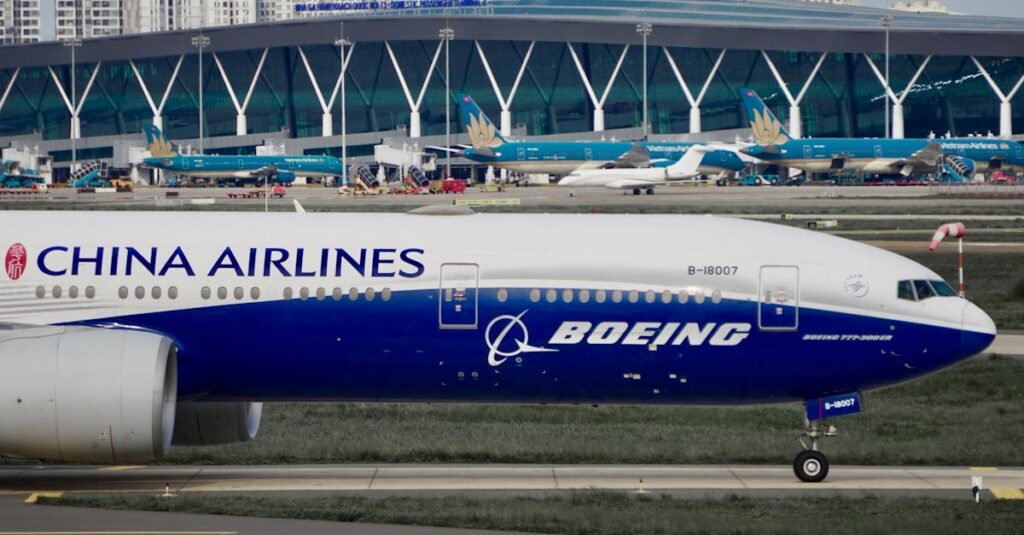
    Close-up of a Boeing 777 by China Airlines taxiing at an airport terminal.

    The “green light” for the 777-9 training devices is more than just a technical permit; it is a symbol of stability. It proves that the “digital twin” of the world’s most anticipated widebody is now a reality, even as the physical fleet continues its rigorous flight testing.

    For the pilots who will eventually command this folding-wing giant, the journey doesn’t start in the clouds it starts in a high-tech box in Gatwick. And for Boeing, that box might just be the most important tool they have to rebuild their reputation and finally deliver on the future of long-haul travel.

  • When Will Southwest Debut the Boeing 737 MAX 7? All We Know So Far

    When Will Southwest Debut the Boeing 737 MAX 7? All We Know So Far

    For nearly seven years, the aviation world and specifically Southwest Airlines has been playing a high-stakes game of “wait and see” with the Boeing 737 MAX 7. As the smallest member of the MAX family, the aircraft was originally intended to be the workhorse that would modernize Southwest’s short-haul fleet by 2019. However, a whirlwind of regulatory shifts, technical redesigns, and production hurdles has pushed that dream further down the runway.

    As of early 2026, the fog is finally beginning to lift. While the airline remains “optimistic,” the target for the official debut has moved to early 2027. This article dives deep into why the timeline shifted, the technical “fix” that saved the program, and what this means for the future of the world’s largest all-737 operator.

    The New Timeline: From Certification to Service

    To understand when you’ll actually step on board a Southwest MAX 7, we have to distinguish between “certification” and “entry into service.” They are not the same thing.

    2026: The Year of the FAA

    Southwest CEO Bob Jordan recently updated investors and analysts, stating that the airline now expects the Federal Aviation Administration (FAA) to grant the MAX 7 its type certification around August 2026. This follows a “rigorous testing” phase that Boeing has been conducting throughout late 2025 and the beginning of 2026.

    2027: The Passenger Debut

    Even if Boeing hands over the keys in late 2026, Southwest cannot simply start selling tickets. The airline requires a buffer of roughly six months to:

    • Train Pilots: Thousands of pilots must be familiarized with the specific nuances of the MAX 7 variant.
    • Maintenance Induction: Maintenance crews need to integrate the new airframe into their rigorous safety schedules.
    • Proving Runs: The airline must conduct its own non-passenger flights to satisfy operational requirements.

    Consequently, Southwest has officially adjusted its fleet planning to target Q1 2027 for the first commercial passenger flight of the Boeing 737 MAX 7.

    Why the Delay? The Engine Anti-Ice Hurdle

    The primary “roadblock” that haunted the MAX 7 for the last two years wasn’t the flight control software (MCAS) that grounded the fleet in 2019. Instead, it was a specialized hardware issue involving the Engine Anti-Ice (EAI) system.

    The Overheating Risk

    During the certification process, regulators discovered a potential flaw: under specific atmospheric conditions (dry, cold air), if a pilot left the engine anti-ice system on for too long, the heat could cause the carbon-composite engine inlets to overheat. This posed a structural risk to the engine housing.

    The Permanent Fix

    Boeing initially sought a temporary exemption to allow the plane to fly while they worked on a fix. However, following the high-profile door-plug incident on an Alaska Airlines flight in early 2024, the FAA and Boeing shifted to a “safety first” culture. Boeing withdrew the exemption request and spent 2025 engineering a permanent hardware redesign. This new system, completed in late 2025, is what is currently being flight-tested to ensure the MAX 7 meets the most modern safety standards.

    Southwest’s Pivot: The “MAX 8” Strategy

    Southwest is not just sitting idly by while Boeing works. To prevent a shortage of seats during the peak 2025 and 2026 travel seasons, the airline has had to get creative with its order book.

    In recent SEC filings (including the 10-K released in February 2026), Southwest revealed it has converted dozens of MAX 7 orders into the larger MAX 8.

    • The Benefit: It allows Southwest to continue growing its capacity and retiring its oldest aircraft.
    • The Trade-off: The MAX 8 is larger and carries more passengers (175 seats vs. 150 on the MAX 7). While great for high-traffic routes, it is less efficient for the “long and thin” routes that the MAX 7 was designed to dominate.

    How Will the “Baby Boeing” Impact Southwest

    Why is Southwest so committed to the MAX 7 despite nearly a decade of delays? The answer lies in the airline’s fundamental business model: point-to-point, high-efficiency travel.

    1. Replacing the 737-700

    Southwest still operates over 300 of the older Boeing 737-700s. These aircraft are the backbone of their fleet, but they are aging. The MAX 7 is the direct successor, offering:

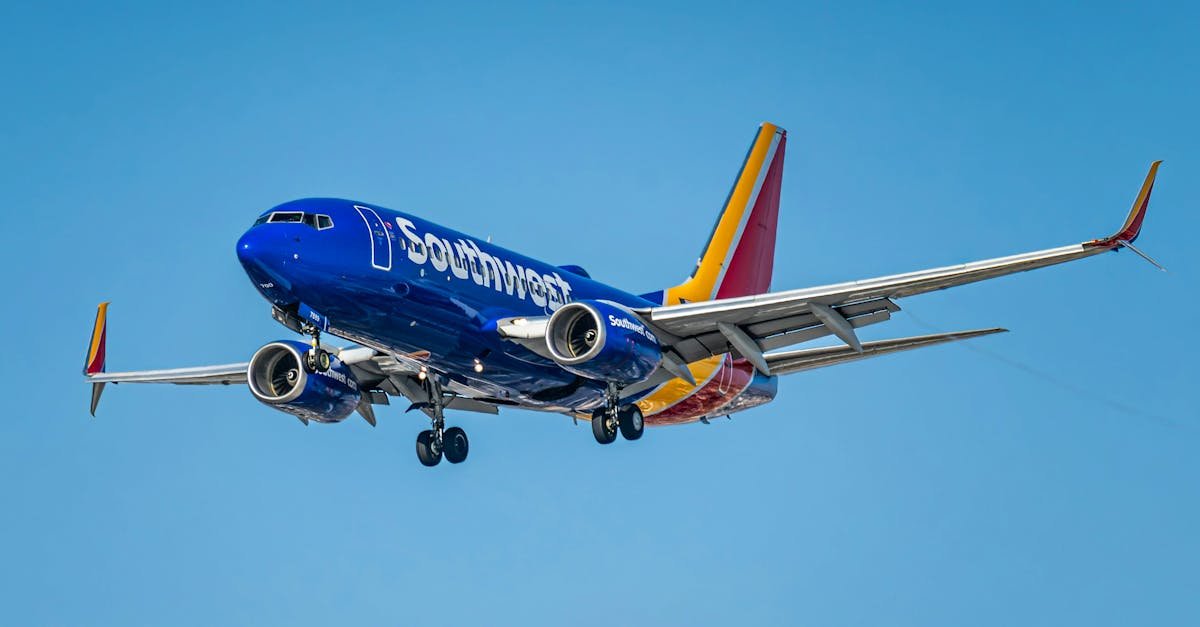
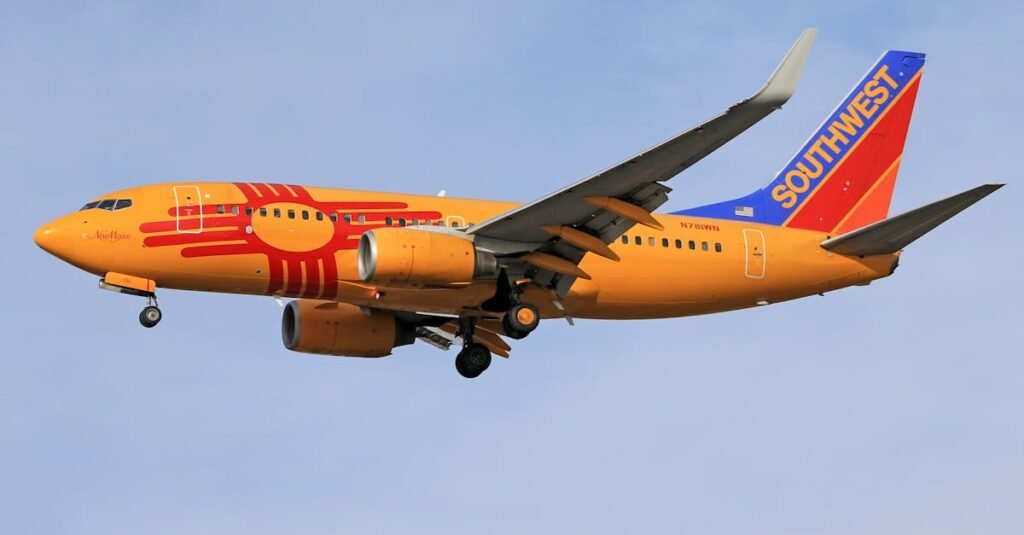
    A Southwest Airlines jet with special livery flying against a blue sky, showcasing aviation technology and travel vibrancy.
    • 18% lower fuel burn per seat.
    • Significantly lower carbon emissions, helping the airline hit its 2030 sustainability goals.

    2. Range and “Thin” Routes

    The MAX 7 has an incredible range of nearly 3,800 nautical miles which is about 1,000 more than the -700. This allows Southwest to fly from mid-continent U.S. cities to Hawaii, or deep into the Caribbean and Central America, without needing a “hub” or a larger, half-empty plane.

    3. Operational Commonality

    By staying with an all-737 fleet, Southwest saves hundreds of millions of dollars in training, spare parts, and crew scheduling. They simply cannot afford to switch to an Airbus A220 without upending their entire cost structure.

    Challenges Remaining for 2026 and 2027

    While the outlook is positive, the “Early 2027” debut is not yet set in stone. Several factors could still sway the timeline:

    • Production Caps: The FAA still maintains a production cap on Boeing (currently around 42 aircraft per month) as it monitors quality control. If Boeing cannot ramp up production by late 2026, Southwest may see its delivery slots pushed back.
    • The “2031 Deadline”: Southwest has set a hard target to retire all 737 Next Generation (NG) aircraft by 2031. To hit this, they need to take delivery of roughly one MAX 7 every week for the next five years which a massive logistical undertaking.
    • Regulatory Scrutiny: The FAA is operating under a “zero-shortcut” policy. Any minor anomaly found during the summer 2026 flight tests could result in a multi-month delay.

    The Strategic Path Forward for the Southwest Fleet

    The arrival of the MAX 7 in 2027 represents more than just a new plane; it is the linchpin of Southwest’s broader business transformation. As the airline moves toward assigned seating and an enhanced cabin experience in 2026, the MAX 7 will be the first aircraft to enter the fleet fully equipped with these new standards from day one. This includes the high-speed USB-A and USB-C power ports, larger overhead “Space Bins,” and the quieter engine profile that passengers have come to expect from the MAX 8.

    From a network perspective, the delay has acted as a bottleneck for Southwest’s “long and thin” route ambitions. While the MAX 8 is perfect for heavy-demand routes like Las Vegas to Phoenix, the MAX 7 is the surgical tool required to make smaller markets profitable over long distances. For example, direct flights from mid-sized cities in the Midwest to Hawaii or deeper into Central America become much more economically viable with a 150-seat aircraft that burns significantly less fuel.

    Furthermore, the 2027 debut aligns with Southwest’s aggressive goal to be an all-MAX operator by 2031. To achieve this, the airline must maintain a seamless “delivery machine” with Boeing. Any further slippage beyond early 2027 would not just delay a debut it would threaten the airline’s long-term cost-reduction targets and its ability to compete against carriers with newer, more diverse fleets. For now, the “August 2026 certification” remains the date to watch.

  • Air India Crash Safety: Why Seat 11A Isn’t a Magic Number Expert Explains The Myth

    Air India Crash Safety: Why Seat 11A Isn’t a Magic Number Expert Explains The Myth

    Aviation history is full of narrow escapes and inexplicable survival stories, but few have captured the public imagination like the legend of Seat 11A. For decades, a quiet whisper has circulated among frequent flyers and nervous travelers alike: if you want to survive the unthinkable, book the eleventh row, window seat on the left.

    This “miracle seat” folklore recently resurfaced with a vengeance following the Air India crash in Ahmedabad. As details of the wreckage emerged, one detail stood out like a beacon of hope, the sole survivor was reportedly seated in 11A. But is there a scientific basis for this, or are we simply looking for patterns in the chaos?

    Former National Transportation Safety Board (NTSB) investigator Gregory Feith and the Flight Safety Foundation argue that survival isn’t about a lucky number; it’s about physics, preparation, and a concept known as “exit accessibility.”

    The Origin of the 11A Legend: From Thailand to Air India Ahmedabad Crash

    The myth of 11A didn’t start with Air India. It actually dates back to December 1998, when Thai Airways Flight TG261 crashed during a monsoon in Surat Thani, Thailand. Among the survivors was Thai pop star James Ruangsak Loychusak. In an uncanny twist of fate, Ruangsak was seated in 11A.

    When the Air India flight crashed nearly 27 years later in June 2025, and a British national named Vishwash Kumar Ramesh emerged as the lone survivor from seat 11A, the internet went into a frenzy. Ruangsak himself posted on social media, calling the coincidence “chilling.”

    To the casual observer, it looks like a supernatural pattern. To an investigator like Gregory Feith, it’s a statistical anomaly that masks a much more practical reality.

    Why Experts Say Seat Numbers Are Deceptive

    In an interview with WIRED, Gregory Feith was quick to dismantle the “magic seat” theory. The primary reason seat numbers are irrelevant is aircraft variability.

    • Varying Layouts: Seat 11A on a Boeing 787 Dreamliner is in a completely different physical location than 11A on an Airbus A320 or a smaller regional jet. On some planes, 11A is in the front of the cabin; on others, it’s directly over the wing.
    • The “Wing Box” Factor: In the case of the Air India crash, seat 11A happened to be situated near the wing box—the structural heart of the aircraft. This area is reinforced to support the weight of the wings and engines,making it one of the most rigid parts of the fuselage.
    • Impact Dynamics: Survival often depends on how the plane breaks apart. If a plane impacts nose-first, the front (where 11A often sits) is the most dangerous. If the tail strikes first, the rear becomes the “impact zone.”

    The “Five Row Rule”: The Real Key to Survival

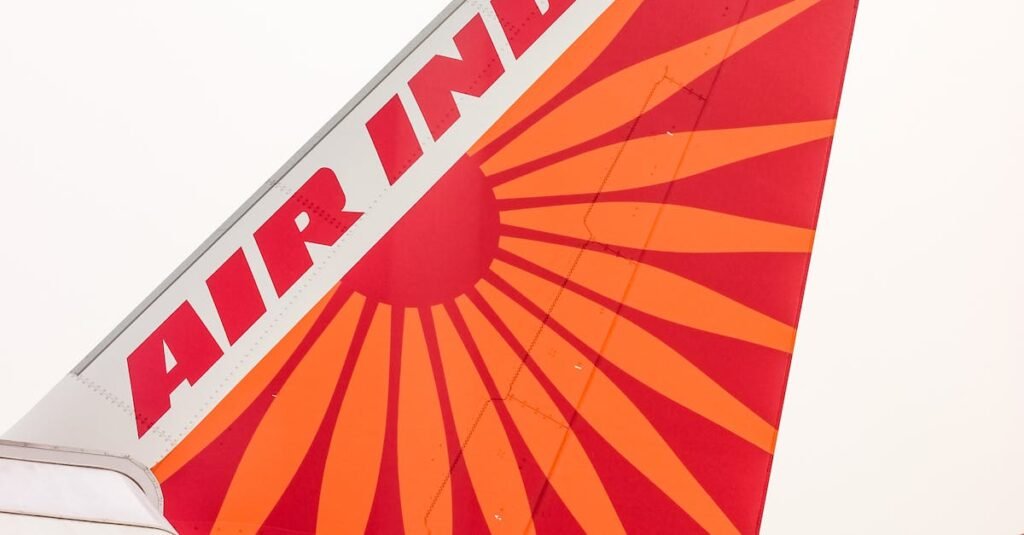
    Close-up of Air India's aircraft tail fin featuring the iconic red and orange design.

    If you ask an investigator like Feith where the safest place to sit is, he won’t give you a number. He’ll give you a distance. Research from the University of Greenwich, which analyzed over 100 plane crashes, found that passengers sitting within five rows of an emergency exit have significantly higher survival rates.

    Feith’s advice is famously simple: Count the rows.

    1. Locate your nearest exits: Find the one in front of you and the one behind you.
    2. Count the seats: Physically touch the headrests as you walk to your seat.
    3. Why it works: In a crash involving smoke or fire, visibility is often zero. If you have “muscle memory” of the exact number of rows to the door, you can feel your way to safety while others are lost in the dark.

    The Statistics: Front vs. Back vs. Middle

    While every crash is unique, historical data does suggest some general trends. According to a 35-year study of NTSB data by Popular Mechanics, survival rates vary by cabin section:

    Cabin SectionAverage Survival Rate
    Rear Third (Behind the Wing)69%
    Middle Third (Over the Wing)56%
    Front Third (First/Business Class)49%

    The tail of the plane often acts as a “crumple zone,” absorbing energy while the front takes the brunt of the initial impact. However, the Flight Safety Foundation warns that these are just averages. In a water landing (ditching), the tail may sink first, making the front more advantageous.

    Survival is a Mindset, Not a Row Number

    Gregory Feith emphasizes that the “miracle” of survival is often a combination of luck and preparedness. Passengers who survive aren’t just lucky; they are often the ones who:

    • Keep their shoes on: You cannot run across burning debris or jagged metal in socks or flip-flops.
    • Avoid synthetic fabrics: Nylon and polyester melt in high heat. Cotton, wool, and leather offer a few extra seconds of protection.
    • Watch the briefing: Knowing how to operate a specific exit door—which can weigh up to 40 pounds—is vital.

    “The best place to sit is where you can reach an exit,” Feith told WIRED. “It’s not about mythology; it’s about accessibility.”

    Beyond the Folklore: Your Real-World Survival Strategy

    While the legend of Seat 11A makes for a gripping headline and a fascinating coincidence across decades of aviation history, it serves better as a dinner party story than a safety manual. Relying on a “magic number” provides a false sense of security that can lead to complacency. In the high-stakes environment of an emergency evacuation, seconds are the only currency that matters. As Gregory Feith and the Flight Safety Foundation emphasize, survival is an active process, not a passive seat assignment.

    The true lesson of the Air India crash and the survivors who preceded it isn’t about where you sit, but how prepared you are to move. Aviation safety is an evolving science of structural engineering, cabin materials, and human behavior. By shifting your focus from “lucky” numbers to practical steps like knowing the exact row count to your nearest exit and staying mindful during taxi and takeoff you trade superstition for a tangible advantage. The next time you board, remember that the “safest” seat on the plane is the one occupied by a passenger who knows exactly where the door is, even in the dark.

  • Why Spirit’s Youngest A320neos Are Worth More in Parts Than in the Air?

    Why Spirit’s Youngest A320neos Are Worth More in Parts Than in the Air?

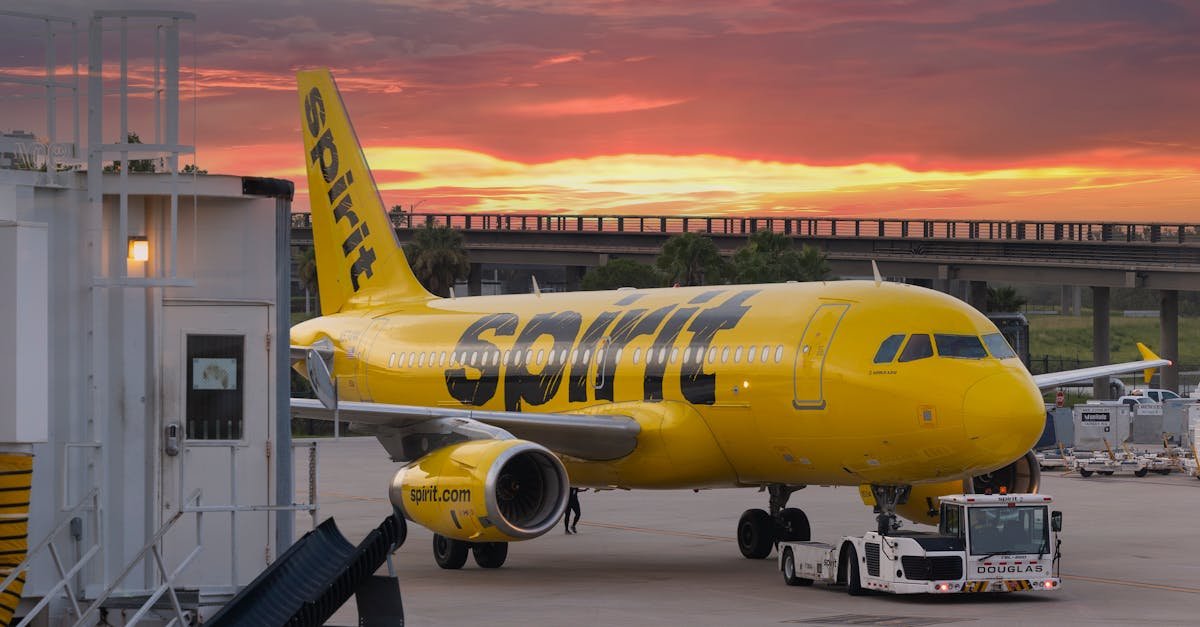
    The aviation world recently witnessed a “canary in the coal mine” moment that has left industry veterans and casual observers alike scratching their heads. Two Airbus A320neos, formerly operated by the ultra-low-cost carrier Spirit Airlines, were sold not to another airline, but to a disassembly firm.

    At just four and three-and-a-half years old, these aircraft (registrations N950NK and N959NK) are practically brand new. In a normal market, a four-year-old jet is in its prime, with at least two decades of flying ahead of it. However, in the current economic climate of 2026, these state-of-the-art machines are being towed to the desert in Goodyear, Arizona, to be systematically dismantled.

    It sounds like a financial tragedy, but for the owners, it is a calculated masterstroke. Here is the deep dive into why these modern marvels are worth significantly more as a pile of parts than as flying assets.

    1. The Pratt & Whitney “Engine Crisis”

    The primary catalyst for this early retirement is the Pratt & Whitney PW1100G Geared Turbofan (GTF) engine.While revolutionary in its fuel efficiency, the GTF has been plagued by a series of manufacturing defects most notably the “powder metal” issue discovered in late 2023. Microscopic contaminants in the metal used for high-pressure turbine disks led to a massive global recall.

    By early 2026, the backlog for engine shop visits has reached a breaking point. Airlines are seeing “Aircraft on Ground” (AOG) times stretching past 300 days just to get an engine inspected or repaired. For a struggling carrier like Spirit, having a jet sit idle for a year while still paying lease fees is a fast track to liquidation.

    2. The Bankruptcy Math: Liquidity is King

    Spirit Airlines’ ongoing Chapter 11 restructuring (initiated in August 2025) has forced the company to make brutal decisions. As part of their court-supervised survival plan, Spirit is aggressively “right-sizing” its fleet.

    In bankruptcy, cash is the only currency that matters. The airline had two choices with these specific A320neos:

    • Option A: Keep the planes, pay the high monthly leases, and wait indefinitely for engine parts that might not arrive for a year.
    • Option B: Sell the aircraft to asset managers like EirTrade Aviation and RESIDCO, who are willing to pay a premium for the “instant” parts they can harvest.

    By choosing Option B, Spirit sheds debt and gains immediate liquidity to fund its remaining operations.

    3. The Power Player: Who is EirTrade Aviation?

    While the teardown of a four-year-old jet might seem like a desperate act of salvage to the public, for EirTrade Aviation, it is a high-stakes chess move. Headquartered in Dublin, Ireland, EirTrade has rapidly ascended as a global leader in aviation asset management and “end-of-life” solutions. However, in 2026, their definition of “end-of-life” has evolved. By partnering with the aviation lessor RESIDCO to acquire Spirit’s N950NK and N959NK, EirTrade isn’t just acting as a recycler; they are acting as a vital organ in the aviation supply chain.

    EirTrade’s expertise lies in monetization. They specialize in identifying aircraft that are underperforming as flying assets but overperforming as a collection of high-demand parts. In recent years, they made headlines as the first aftermarket company to manage the disassembly of a Boeing 787. Now, with the Spirit A320neo acquisition, they are doubling down on “new vintage” aircraft. Their strategy is clear: by harvesting parts from nearly new airframes, they ensure their inventory contains the highest-quality rotables (parts that can be repeatedly overhauled) that meet the very latest modification standards.

    The company’s operation is a logistical powerhouse. Once these Spirit jets are dismantled in the dry, preservative air of Goodyear, Arizona, every single bolt, sensor, and circuit board is cataloged and shipped to EirTrade’s massive distribution hub in Dallas, Texas. From this central point, they can provide rapid support to airlines across North and South America. In an era where a missing $500 sensor can ground a $100 million jet for weeks, EirTrade’s ability to provide “instant” certified parts makes them one of the most influential players in the 2026 MRO (Maintenance, Repair, and Overhaul) landscape.

    4. The “Used Serviceable Material” (USM) Gold Mine

    There is a massive shortage of spare parts for the A320neo family. Because so many engines are grounded, other airlines are desperate for Used Serviceable Material (USM) certified parts that can be swapped in immediately to get a plane back in the sky.

    When EirTrade dismantles these Spirit jets, they aren’t just looking at the engines. They are harvesting:

    • LRUs (Line Replaceable Units): Modular components like actuators, sensors, and flight computers that can be swapped in minutes.
    • BFE (Buyer Furnished Equipment): High-end interior components, seats, and avionics.
    • Landing Gear: Often worth millions on the secondary market for airlines approaching their first major overhaul cycle.

    In 2026, the “sum of the parts” for an A320neo has officially eclipsed the value of the whole, thanks to a starving supply chain.

    5. A Record-Breaking Teardown

    To put this in perspective, the previous “youngest” aircraft to be scrapped were a pair of six-year-old IndiGo A321neos.Spirit has shattered that record by nearly three years. This marks a fundamental shift in aviation economics; we are no longer just scrapping “old” planes. We are harvesting “new” technology to keep the rest of the global fleet from collapsing under the weight of maintenance backlogs.

    6. The Environmental and Operational Paradox

    Beautiful natural scene of a blue sky filled with wispy white clouds, perfect for background or nature-themed projects.

    There is a bitter irony here. The A320neo was designed to be the “greenest” narrow-body in the sky, offering a 15–20% reduction in fuel burn. By scrapping them at four years old, the industry is essentially throwing away the most fuel-efficient tools it has.

    However, from an operational standpoint, a plane that cannot fly is 0% efficient. By sacrificing these two aircraft, EirTrade can provide the parts necessary to return dozens of other grounded A320neos to service. It is a form of “aviation triage” sacrificing the few to save the many.

    Conclusion: A New Era of Asset Management

    The teardown of Spirit’s A320neos is a stark reminder that in aviation, value is determined by utility, not age. If an aircraft cannot generate revenue due to engine delays, its only remaining value is the “DNA” inside its wings and fuselage.

    As Spirit continues its journey through bankruptcy and the Pratt & Whitney crisis lingers into 2027, these “premature” retirements may become the new normal. For now, the parts from N950NK and N959NK will be headed to a warehouse in Dallas, destined to keep the rest of the world’s A320neos flying.

  • Air Canada Confirms Airbus A350-1000 Order to Modernize Long-Haul Fleet Starting 2030

    Air Canada Confirms Airbus A350-1000 Order to Modernize Long-Haul Fleet Starting 2030

    Air Canada has taken a major step toward reshaping its long-haul future. The airline has confirmed an order for eight Airbus A350-1000 aircraft, along with options for eight more, with deliveries expected to begin in 2030.

    This move signals more than just a fleet upgrade. It reflects a long-term strategy focused on growth, sustainability, passenger comfort, and strengthening Canada’s global connections.

    A Strategic Investment in the Future

    At first glance, an order for eight aircraft might seem modest. But in the world of widebody jets, especially next-generation long-haul aircraft, this is a powerful investment.

    The Airbus A350-1000 is one of the most advanced commercial aircraft flying today. By choosing this model, Air Canada is preparing for the next phase of international travel demand. The airline is positioning itself to:

    • Expand international routes
    • Replace older widebody aircraft
    • Improve fuel efficiency
    • Reduce emissions
    • Enhance passenger comfort

    Deliveries starting in 2030 give the airline flexibility to align with future market conditions while securing production slots early.

    Meet the Airbus A350-1000

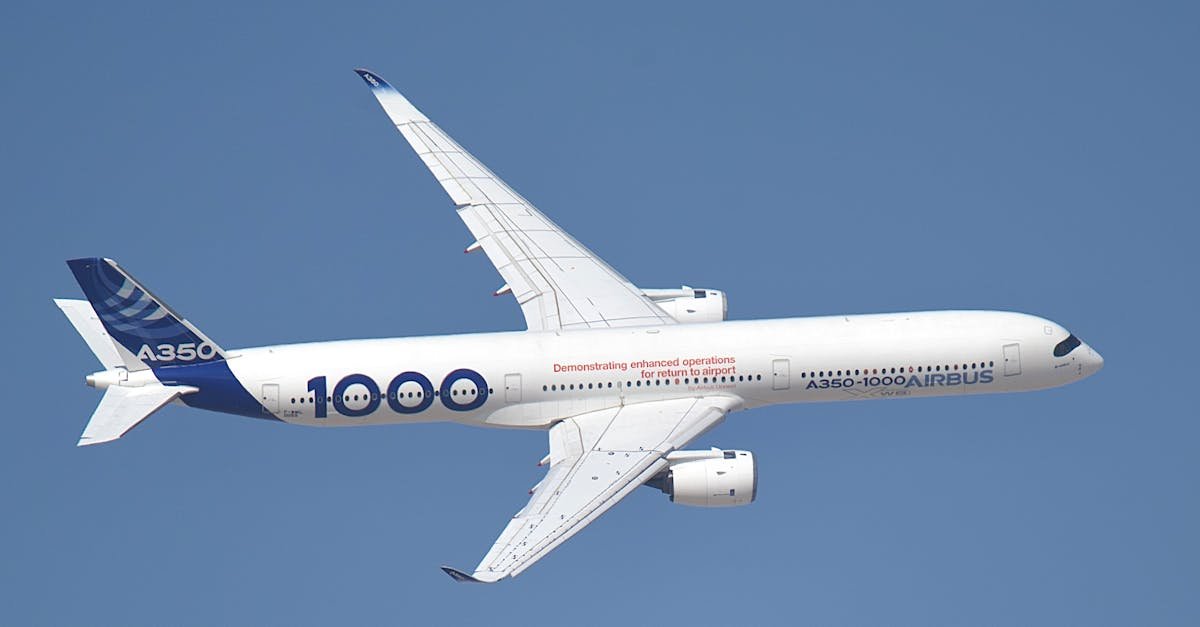
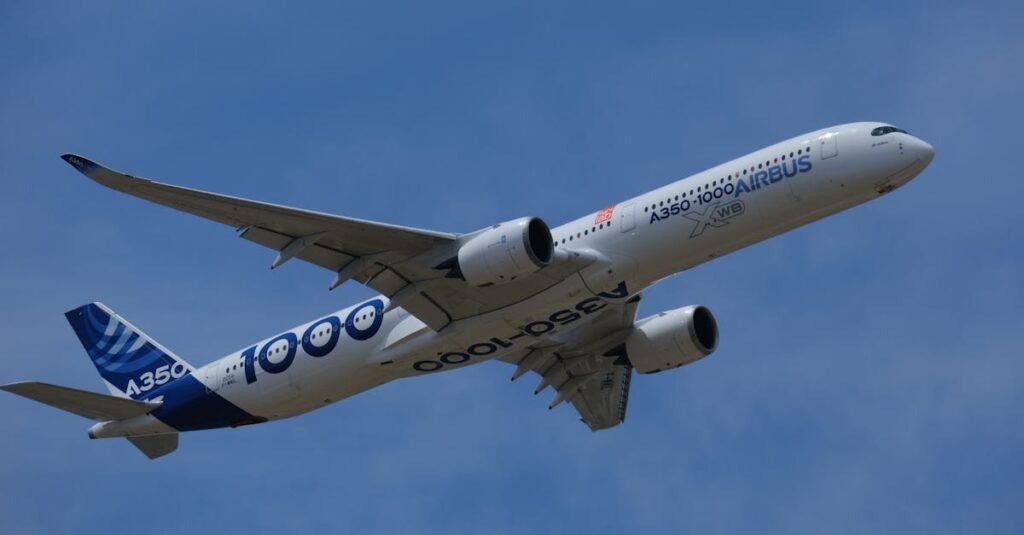
    Dynamic view of Airbus A350-1000 XWB flying against a clear blue sky, showcasing its modern design.

    The Airbus A350-1000 is the largest variant of the A350 family. It is designed for ultra-long-haul routes and high-capacity international travel.

    Key Features of the A350-1000:

    • Built with lightweight composite materials
    • New-generation Rolls-Royce engines
    • Improved aerodynamics
    • Lower fuel consumption compared to older widebodies
    • Reduced noise footprint

    The aircraft typically seats between 350 and 410 passengers, depending on configuration. For Air Canada, this opens the door to serving high-demand global destinations more efficiently.

    How This Fits Into Air Canada’s Current Fleet

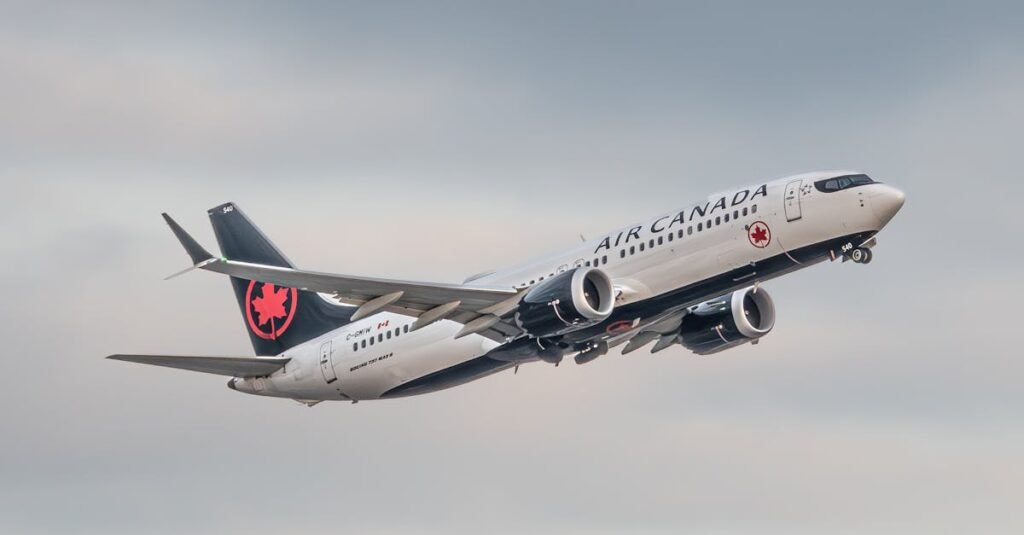
    Air Canada Boeing 737 Max takes to the sky, showcasing flight and travel.

    Air Canada already operates a diverse fleet that includes:

    • Airbus A220-300
    • Airbus A320
    • Airbus A321
    • Airbus A330-300
    • Boeing 737 MAX 8
    • Boeing 777-200LR
    • Boeing 777-300ER
    • Boeing 787-8
    • Boeing 787-9

    The addition of the A350-1000 complements the airline’s existing widebody fleet, particularly the Boeing 787 Dreamliners and 777 aircraft. Over time, the A350-1000 could replace older Boeing 777 models or support growth on major international routes.

    This balanced mix of Airbus and Boeing aircraft also provides operational flexibility and competitive leverage.

    Why the A350-1000 Matters for Long-Haul Routes

    Long-haul flying is complex and expensive. Airlines must balance fuel costs, passenger demand, range capability, and environmental regulations.

    The A350-1000 is ideal for:

    • Non-stop flights between Canada and Asia
    • Transatlantic routes to Europe
    • High-capacity services to the Middle East
    • Potential ultra-long-haul destinations

    With its extended range, the aircraft can connect distant cities without refueling stops. That means shorter travel times and greater convenience for passengers.

    Sustainability and Environmental Impact

    Sustainability is no longer optional in aviation. Governments, investors, and travelers are demanding cleaner operations.

    The A350-1000 supports Air Canada’s environmental goals by:

    • Consuming significantly less fuel per seat
    • Producing lower CO₂ emissions
    • Generating less noise around airports

    New-generation engines and lightweight composite materials play a key role in reducing environmental impact. As older aircraft retire, the overall fleet becomes more efficient and environmentally friendly.

    For an airline operating across vast distances like Canada, fuel efficiency directly impacts both costs and sustainability performance.

    Passenger Experience: What Travelers Can Expect

    Interior of a well-lit airplane cabin showing the overhead safety signs and passenger seating.

    Modern travelers expect more than just transportation. Comfort, connectivity, and cabin design matter.

    The A350 family is known for:

    • Larger windows
    • Improved cabin air quality
    • Higher ceilings
    • Reduced cabin noise
    • Advanced mood lighting

    Passengers often report feeling less fatigue on long-haul flights aboard A350 aircraft compared to older models. For Air Canada, this provides an opportunity to enhance its premium product, including business class and premium economy offerings.

    A Competitive Move in Global Aviation

    Air Canada competes with major international airlines on long-haul routes. Having state-of-the-art aircraft strengthens its position against global carriers operating modern fleets.

    By securing the A350-1000, Air Canada aligns itself with other leading airlines that have invested in next-generation widebody aircraft.

    This order also signals confidence in long-term international travel growth, even as the aviation industry continues to recover and adapt to changing global dynamics.

    The Importance of the 8 Options

    Beyond the eight firm orders, Air Canada has secured options for eight additional A350-1000 aircraft.

    Options provide flexibility. If travel demand grows faster than expected, the airline can exercise these options and expand its fleet further. If market conditions change, the airline is not obligated to take them.

    This strategy allows Air Canada to manage risk while keeping expansion opportunities open.

    Economic Impact and Canadian Connectivity

    As Canada’s flag carrier, Air Canada plays a critical role in connecting the country to global markets.

    New wide-body aircraft means:

    • Increased tourism capacity
    • Stronger trade connections
    • More direct international routes
    • Job creation in aviation and related sectors

    Investing in modern aircraft ensures Canada remains competitive in international air travel and cargo transportation.

    Looking Ahead to 2030 and Beyond

    Although deliveries begin in 2030, the decision made today shapes the airline’s future for decades.

    Aircraft typically remain in service for 20 to 30 years. This means the A350-1000 could define Air Canada’s long-haul operations well into the 2050s.

    The aviation industry is constantly evolving, but one thing remains clear: efficiency, sustainability, and passenger comfort drive fleet decisions.

    Air Canada’s A350-1000 order checks all three boxes.

    Final Thoughts

    Air Canada’s confirmation of eight Airbus A350-1000 aircraft, with options for eight more, marks a significant milestone in the airline’s modernization journey.

    This is not just a fleet update. It is a strategic investment in:

    • Long-haul growth
    • Environmental responsibility
    • Enhanced passenger experience
    • Global competitiveness

    As deliveries begin in 2030, travelers, investors, and industry observers will be watching closely. The Airbus A350-1000 represents the next chapter in Air Canada’s international ambitions one built on innovation, efficiency, and long-term vision.

    The skies over the next decade are set to become even more advanced, and Air Canada is clearly preparing to lead the way. 

  • Why did the Police Investigate a Jet2 Aircraft at Glasgow Airport

    Why did the Police Investigate a Jet2 Aircraft at Glasgow Airport

    Police carried out investigations on two aircraft at Glasgow Airport after reports of suspicious activity raised concerns. One of the aircraft involved belonged to Jet2. The police action caught attention after officers and forensic teams were seen around the planes on the airport runway.

    Authorities later confirmed that the investigation was part of an ongoing enquiry. While the presence of police caused some concern among passengers, officials were quick to reassure the public that there was no danger and that airport operations continued as normal.

    What Happened at Glasgow Airport?

    The investigation took place at Glasgow Airport when police were alerted to a matter that required further checks. Two aircraft were secured so officers could carry out detailed inspections. One of the planes was operated by Jet2, a popular airline used by many UK holidaymakers.

    Police vehicles and forensic teams were seen near the aircraft, which led to questions from travelers and airport staff. However, the situation was handled calmly, and the area remained under control during the investigation.

    Why Were the Jet2 Aircraft Searched?

    Police have not shared full details about why the aircraft were searched. They stated only that the action was linked to an ongoing investigation. In situations like this, officers may search planes to gather evidence, follow up on intelligence, or check reports made earlier.

    It is common for police to limit what they share while an investigation is active. This helps ensure that enquiries are not affected and that all legal steps are followed correctly.

    Was There Any Risk to Passengers?

    Interior view of airplane cabin with passengers seated and flight attendant in aisle.

    Officials confirmed there was no threat to passengers, staff, or the wider public. Airport authorities worked closely with police to make sure safety procedures were followed at all times.

    Passengers at the airport were advised that flights were operating normally. There were no reports of evacuations or major delays caused by the investigation, which helped reduce disruption for travelers.

    How Did Jet2 Respond?

    Jet2 confirmed that it was cooperating fully with the police. The airline said customer safety was its top priority and that it was assisting officers with their enquiries.

    The company also reassured passengers that its services were continuing as planned. By working closely with authorities, Jet2 helped ensure that the situation was dealt with quickly and professionally.

    Did Flights Get Delayed?

    There were no major delays linked directly to the police activity. Glasgow Airport continued to operate as normal while officers carried out their work.

    Airport staff kept passengers informed and ensured that security and safety procedures remained in place. Once the initial investigation on the aircraft was completed, police activity at the site was reduced.

    Why Do Police Carry Out Aircraft Investigations?

    Police vehicle parked on an urban street outside a London building

    Police investigations involving aircraft are not common, but they do happen when necessary. These checks can be related to security concerns, reports of illegal items, or other matters that need careful examination.

    Forensic teams may inspect different parts of a plane to collect evidence. This process can take time, but it is done carefully to ensure accuracy and safety.

    What Happens Next?

    Police have described the matter as ongoing, meaning further enquiries could still take place. This might include interviews, additional checks, or reviewing collected evidence.

    More information is likely to be shared only if it becomes relevant to the public. Until then, authorities have stressed that there is no cause for concern.

    Complete Gist of The Incident

    The police investigation involving two Jet2 aircraft at Glasgow Airport was handled calmly and professionally. While the sight of police and forensic teams raised questions, officials were clear that there was no risk to the public.

    Both the airport and Jet2 worked closely with police to ensure safety and limit disruption. As the investigation continues, passengers are encouraged to rely on official updates and trusted news sources for accurate information.

  • Why Air India Grounded Its Boeing 787 Dreamliner: Full Story Explained

    Why Air India Grounded Its Boeing 787 Dreamliner: Full Story Explained

    An Air India Boeing 787 Dreamliner was taken out of service after a pilot noticed a possible problem with a fuel control switch. The flight had come from London and landed in Bengaluru. After landing, the pilot told the airline that a fuel control switch might not be working properly. The airline removed the aircraft from service so technicians could check it carefully. 

    Some news reports say the switch moved from the normal “RUN” position to “CUTOFF” while the crew was starting the engines. Other reports describe the pilot spotting a loose or faulty locking mechanism after landing. Both accounts point to the same thing: the fuel control switch did not behave as expected, so the airline acted cautiously and grounded the jet. 

    Why the switch matters

    A fuel control switch is a small but very important part of the engine controls. When it is in “RUN,” fuel flows to the engine and the engine can keep working. If the switch goes to “CUTOFF,” the fuel flow stops and the engine will shut down. That is why pilots and engineers pay close attention to these switches. Because the risk involves engine power, any unusual movement or failure is taken very seriously. 

    The grounding also comes at a sensitive time. Last year, investigators found that movement of a fuel control switch was linked to a fatal crash of an Air India Dreamliner. That earlier accident raised public concern and put extra focus on any new reports involving fuel switches. Airlines and regulators now treat even small hints of trouble with extra caution. 

    What steps are being taken by Air India

    Air India said it reported the issue to the aviation regulator and to Boeing, the plane’s maker. The regulator in India, the body that oversees airline safety will likely follow standard procedures: inspect the grounded plane, review the maintenance and flight records, and decide whether other aircraft need checks. Boeing and maintenance teams will examine the switch and the system around it to find the exact cause. 

    The airline’s move to ground the jet is a normal safety step. Grounding a single aircraft so teams can inspect and fix a possible fault prevents risk to passengers and crew while the problem is being understood. It is also meant to reassure the public that safety comes first.

    What this means for passengers and flights

    Interior view of an airplane cabin with passengers seated, showcasing air travel experience.

    If you were booked on that aircraft, Air India will put you on another plane or offer an alternative route. If more planes need inspections, some flights might be delayed or re-scheduled; airlines usually try to limit disruption. Remember, such checks are done to keep flying safe ever though delays and changes are inconvenient but are part of the safety system working as it should. 

    Clear and simple takeaway

    A fuel control switch problem led Air India to ground a Dreamliner after a pilot reported the issue. The airline, the regulator, and the plane maker are involved and will investigate. This is a routine but important safety response to stop and check than to risk a harder problem in flight.

    If you want the latest updates, check official Air India statements or reliable news sites, because investigators will release findings when they are sure of the facts.

  • WATCH: Airbus Beluga ST Takes Its Final Flight, Marking the End of an Era

    WATCH: Airbus Beluga ST Takes Its Final Flight, Marking the End of an Era

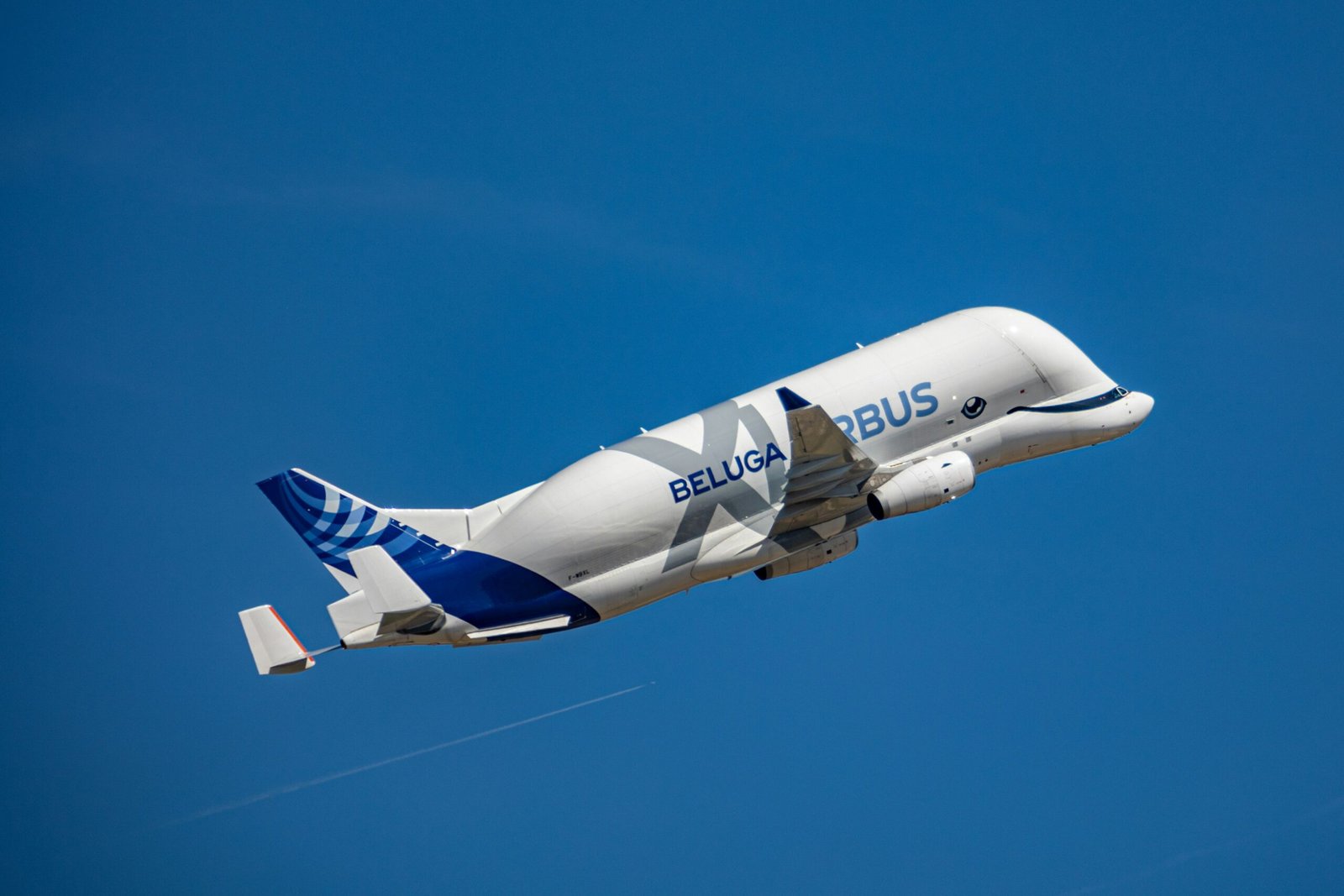
    On January 29, 2026, aviation enthusiasts and Airbus teams alike witnessed an emotional moment in aerospace history. The beloved Airbus Beluga ST, one of the most recognizable and unusual aircraft ever to grace the skies completed its final flight before retirement. After decades of service, the distinctive “whale of the skies” touched down at Hawarden (Broughton) Airfield in North Wales, marking the end of a remarkable chapter in European aviation. 

    This final sortie wasn’t just another landing; it was a salute to an aircraft that had quietly shaped how modern aircraft are produced. Crowds gathered to watch the Beluga ST’s farewell flypast, capturing footage that spread quickly across social platforms.

    Why the Airbus Beluga ST Was Built: A Logistics Revolution

    Airbus did not have an easy challenge in the early 1990s. Its factories were spread across multiple European countries — with wings built in the UK, fuselage sections in Germany, nose sections in France, and final assembly in Toulouse, France, or Hamburg, Germany. Transporting large, delicate aircraft components between these sites by road or rail was time-consuming and inefficient. 

    Before the Beluga, Airbus relied on converted 1940s-era cargo planes called Super Guppies to ferry oversized parts. These quirky aircraft had done heroic service but were costly to operate and limited in capacity. Airbus recognised that a modern, larger aircraft was essential to support growing production demands. The solution was the bespoke A300-600ST Super Transporter, later nicknamed the Beluga for its striking resemblance to the white whale. 

    From Maiden Flight to Production Essential

    Construction of the first Beluga ST began in September 1992, and the aircraft made its maiden flight on September 13, 1994. Following around 400 hours of rigorous testing, it was certified and ready for service by late 1995. Airbus built a total of five Beluga ST aircraft, each one taking roughly three years to complete from start to finish. 

    The Airbus Beluga ST became indispensable to Airbus’s logistics network. Its cavernous cargo bay could carry oversized parts, such as fuselage sections and wings, that would simply not fit into standard freighter aircraft. It flew regularly between Airbus production hubs across Europe, with some estimates suggesting up to 60 flights a week during peak periods. 

    Iconic Missions Beyond Airbus

    Although designed primarily for internal logistics, the Beluga ST’s capabilities were quickly recognised for special missions. Over the years, it transported large artwork, industrial machinery, complete helicopters, and even satellite parts. These unique flights showcased the aircraft’s unmatched ability to handle outsized and irregular cargo. 

    The Arrival of the BelugaXL and the Transition

    By the early 2010s, Airbus’s production needs had expanded beyond what the original Beluga ST fleet could efficiently serve. Antonio challenges, such as transporting the larger components of newer aircraft like the A350, demanded greater capacity. In response, Airbus launched the BelugaXL programme in 2014. 

    Based on the larger A330-200 airframe, the BelugaXL offers approximately 30% more cargo capacity than its predecessor. It features a redesigned fuselage and modernised systems, enabling it to carry larger parts, including two A350 wings at once — something the Beluga ST could not do. By mid-2024, the BelugaXL fleet was complete and fully operational, taking over the Super Transporter’s role in supporting Airbus’s manufacturing logistics. 

    A Lasting Legacy

    With Airbus’s transition to a newer fleet, the original Beluga STs have gradually been retired. The aircraft that completed its final flight on January 29 with registration F-GSTF has now joined the growing list of retired Beluga STs stored or preserved. 

    But Airbus isn’t ready to let these icons fade quietly. The company is exploring ways to place the retired Beluga ST aircraft in museums, educational displays, and public exhibitions. These placements would allow future generations to appreciate the engineering ingenuity and logistical impact of these extraordinary machines. 

    Airbus penned a tribute on social media and wrote:

    What This Means for Aviation

    The Airbus Beluga ST may no longer be needed in day-to-day operations, but its legacy continues. It represents a pivotal innovation in aerospace logistics, a tailor-made solution that enabled Airbus to streamline production and compete on the global stage. As a trailblazer in its role, it earned its place not only on airshow flight lines and enthusiast calendars but also in aviation history.

  • NASA Plane Sparks Flames During Emergency Landing at Ellington Airport, Crew Escapes Unharmed

    NASA Plane Sparks Flames During Emergency Landing at Ellington Airport, Crew Escapes Unharmed

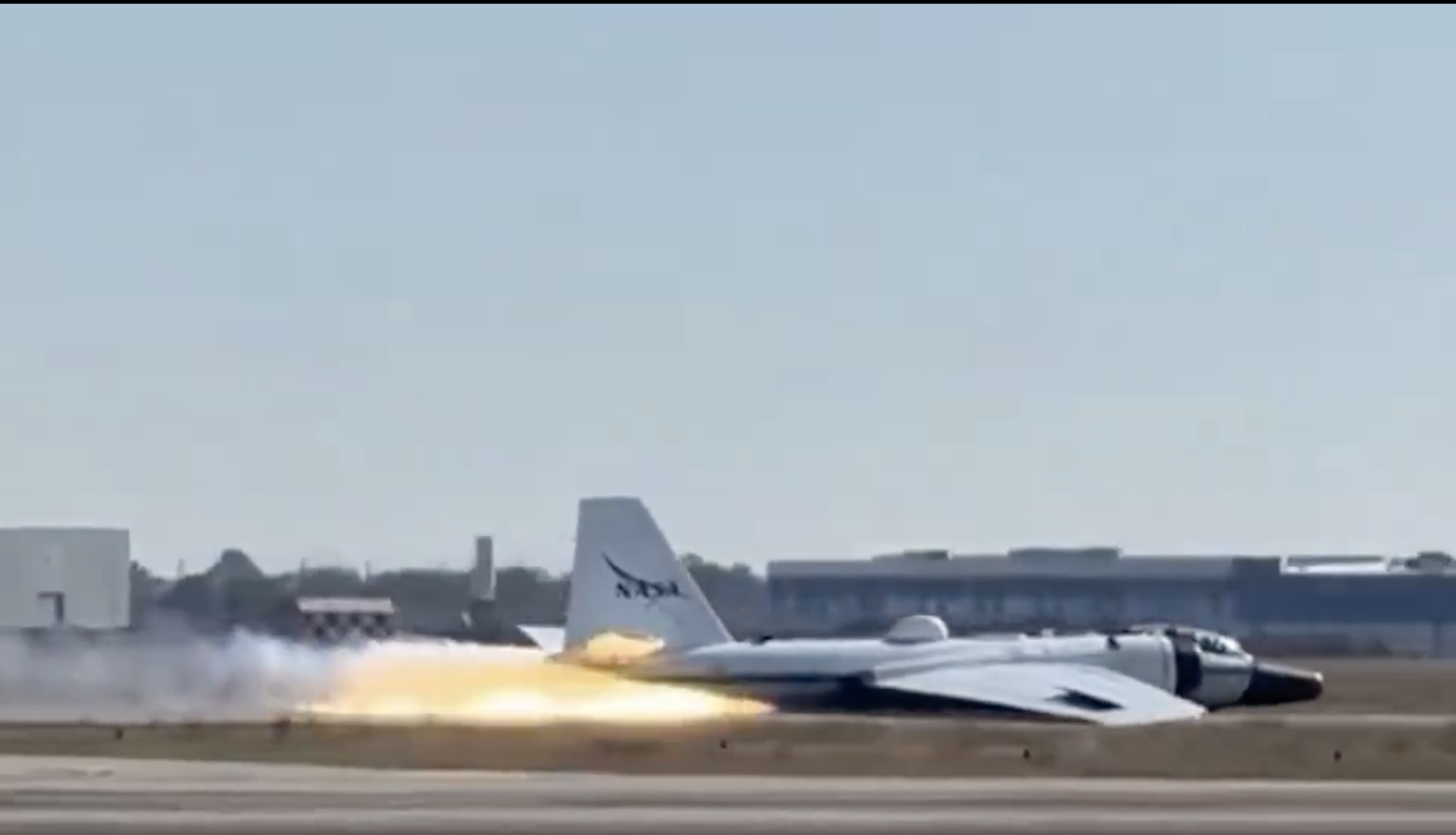
    A NASA Plane used for research faced an emergency landing at Ellington Airport because its landing gear failed to operate after a mechanical malfunction. The video shows the plane landing on its belly which created sparks and flames and thick smoke that followed behind it as it moved down the runway. The dangerous situation ended in success when both crew members escaped without injuries.

    The incident captured immediate public interest because of its visual strength and because NASA aircraft emergency landings happen so infrequently. The officials proved that they managed the terrifying situation through their safe and effective professional procedures.

    Landing Gear Failure Triggers Belly Landing

    The aircraft involved was a NASA WB-57, a high-altitude research plane that has supported scientific missions for decades. During its approach to Ellington Airport, the crew discovered that the landing gear would not deploy due to a mechanical malfunction.

    With limited options available, the pilots prepared for a controlled belly landing. Emergency crews were placed on standby along the runway as the aircraft lined up for touchdown. Such landings require precise control and careful coordination, especially in a plane designed for high-altitude research rather than commercial transport.

    Dramatic Video Of The Nasa Plane Shows Sparks and Flames

    Footage shared online captures the moment the NASA plane made contact with the runway. As the fuselage scraped along the pavement, sparks shot behind the aircraft and bright yellow flames flared underneath. Thick smoke quickly followed, while the wings visibly bounced on impact.

    The dramatic visuals sparked widespread reaction on social media, with many viewers expressing concern before learning that both crew members escaped unharmed.

    Crew Remains Calm and Exits Safely

    NASA officials praised the crew for maintaining control throughout the emergency landing. The aircraft eventually came to a complete stop as emergency responders rushed to the scene.

    Both crew members exited the NASA plane on their own and refused medical treatment, confirming they were not injured. Their safe escape underscored the importance of training and preparedness when dealing with unexpected mechanical failures.

    NASA WB-57 Aircraft Has Long Research History

    The WB-57 has been used for decades in high-altitude scientific research, including atmospheric studies and support for space-related missions. Its ability to operate at extreme altitudes makes it a valuable tool for NASA’s research programs.

    Incidents involving this aircraft are rare, making the emergency landing especially notable. NASA emphasized that the plane’s strong design and the crew’s experience played key roles in the successful outcome.

    Investigation Underway Into Mechanical Issue

    NASA confirmed that the landing gear malfunction will be fully investigated. Engineers will examine the aircraft to determine the exact cause of the failure and assess any damage sustained during the landing.

    Ellington Airport operations were temporarily affected as emergency crews secured the area and safety inspections were completed. Officials later confirmed that the situation was contained without further incident.

    A Reminder of Aviation Risk and Training

    While belly landings appear dangerous, aviation experts note they are often survivable when executed properly. Aircraft are designed with reinforced fuselages, and pilots regularly train for emergency scenarios.

    The NASA plane emergency landing in Texas highlights both the risks involved in aviation and the effectiveness of preparation under pressure. In the end, the most important outcome was clear, a dramatic incident that resulted in no injuries.