Tag: Airlines

  • Tarmac Nightmare: Lufthansa Passengers Forced to Sleep on A320neo After Copenhagen Flight Axed

    Tarmac Nightmare: Lufthansa Passengers Forced to Sleep on A320neo After Copenhagen Flight Axed

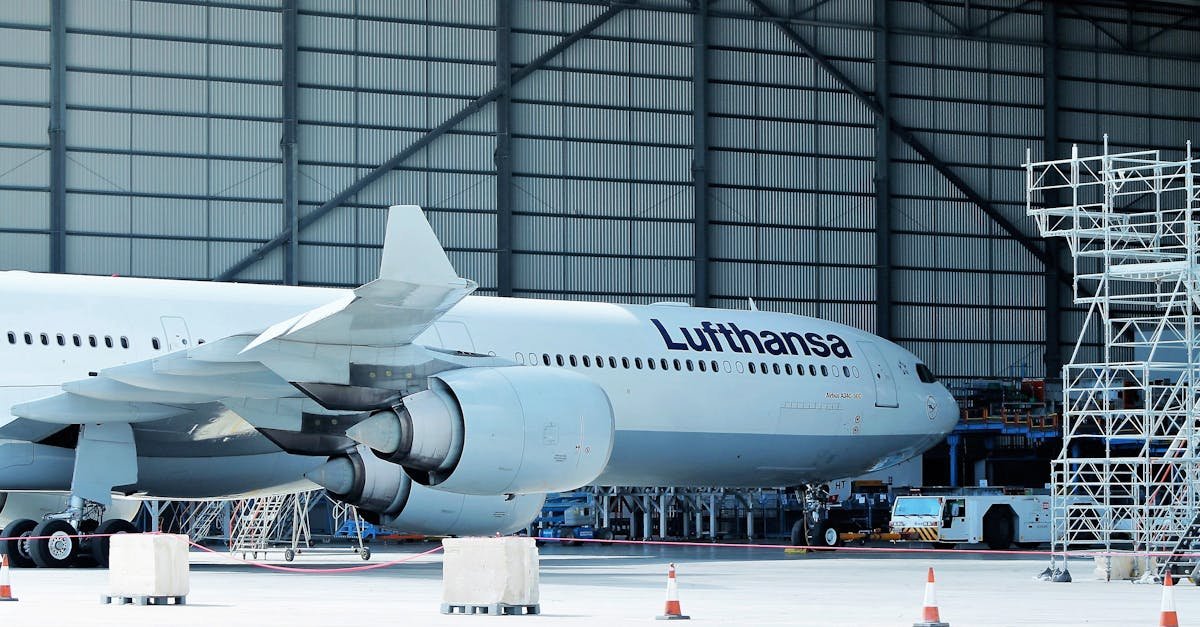
    A routine short haul flight from Munich to Copenhagen turned into a grueling ordeal for over one hundred travelers this week. What was supposed to be a quick ninety minute hop across Europe transformed into an stationary overnight marathon on the tarmac. Passengers on Lufthansa flight LH2446 found themselves trapped inside an Airbus A320neo for nearly seven hours after their flight was cancelled due to a series of logistical failures and rigid airport curfews.

    The incident highlights a growing concern in the aviation industry regarding ground handling capabilities and the lack of contingency plans at major hubs. While flight cancellations are a common part of modern travel, the decision to keep passengers confined to a narrow body aircraft overnight has sparked outrage and raised serious questions about passenger rights and airline ethics.

    A Typical Evening Turns Into a Logistic Deadlock

    The trouble began on the evening of Thursday, February 19, 2026. Lufthansa flight LH2446 was scheduled to depart from Munich Airport at 9:30 PM with a planned arrival in Copenhagen by 11:05 PM. Like many flights during the busy winter season, the service was initially hit by rolling delays. Despite the uncertainty, airline staff proceeded with the boarding process, transporting the 123 passengers by bus to a remote parking stand where the Airbus A320neo was waiting.

    By the time everyone was seated, the departure window was rapidly closing. Munich Airport operates under a strict midnight curfew to minimize noise pollution for local residents. As the clock ticked toward 12:00 AM, it became clear that the aircraft would not be taking off. The flight was officially axed, leaving a cabin full of tired travelers expecting a quick bus ride back to the terminal and a hotel voucher. However, the nightmare was only just beginning.

    The Midnight Closure and the Vanishing Ground Crew

    In most scenarios, a cancelled flight at a major hub like Munich would result in passengers being deplaned within thirty minutes. In this instance, a catastrophic breakdown in communication occurred between Lufthansa and the airport ground services. As the crew attempted to call for buses to ferry the passengers back to the terminal, they were met with a shocking reality.

    By 2:00 AM, the flight crew had to deliver the news that no one wanted to hear. They informed the passengers that the airport had effectively closed for the night. More importantly, they claimed that all authorized bus drivers had already finished their shifts and gone home. Because the aircraft was parked on a remote stand, passengers were legally forbidden from walking across the active apron to the terminal due to strict security regulations. With no drivers to operate the buses and no legal way to walk off, the passengers were effectively locked inside the plane.

    Survival on a Short Haul Aircraft

    The Airbus A320neo is a marvel of modern engineering, but it is not designed to function as a hotel. Unlike long haul wide body jets, these regional aircraft are built for efficiency on short routes. This means the seats are designed with a tight pitch of roughly thirty inches, and the cabin lacks the amenities required for a comfortable night of sleep.

    Passengers reported a lack of basic supplies. Since the flight was only intended to last ninety minutes, the galley was stocked with minimal food and beverages. There were no pillows, blankets, or amenity kits available to soften the experience of sleeping upright in economy class seats. The crew reportedly provided updates every half hour, but as the night wore on, the atmosphere in the cabin grew increasingly tense and claustrophobic.

    Legal Limbo on the Tarmac

    During the early morning hours, some passengers reportedly asked if they could simply exit the aircraft and wait on the ground or attempt the walk to the terminal building. The crew remained firm, citing international aviation law and airport safety protocols. Accessing the apron without a designated escort or vehicle is a significant security violation that could result in heavy fines or arrests for both the passengers and the airline staff.

    This legal deadlock meant that even though the terminal was visible in the distance, it might as well have been on another continent. The travelers were forced to endure the cold Munich night inside the pressurized tube, waiting for the first shift of ground staff to arrive at dawn.

    The Dawn Rescue and Rebooking Chaos

    The ordeal finally came to an end in the early morning hours of Friday when the first wave of airport workers returned to duty. Buses eventually arrived to collect the exhausted travelers and return them to the terminal. However, the end of the “tarmac prison” was merely the start of a new set of challenges.

    Many passengers were rebooked on the earliest available flight to Copenhagen, which was scheduled for 6:40 AM.Adding insult to injury, that flight was also delayed by nearly an hour. After spending the entire night in a cramped seat without proper rest or nutrition, the travelers finally reached Denmark nearly twelve hours behind schedule.

    Lufthansa and Munich Airport Under Fire

    The backlash against the German flag carrier has been swift. Critics argue that a major airline operating out of its primary hub should have the influence and resources to find at least one bus driver in an emergency. The fact that over one hundred people were forced to sleep on a plane because of a “lack of buses” at one of Europe’s busiest airports is being viewed as a systemic failure.

    Lufthansa has since attributed the incident to a combination of weather related delays and an acute shortage of apron bus drivers. However, aviation experts suggest that the strict adherence to labor hours and airport curfews may have taken precedence over basic passenger welfare.

    Passenger Rights and Compensation

    Under European law, specifically the regulation known as EC 261, passengers are entitled to significant protections during flight disruptions. In a case like this, each passenger is likely eligible for at least 250 Euros in compensation for the delay. Furthermore, the airline is legally required to provide “duty of care,” which includes meals, refreshments, and hotel accommodation.

    By failing to provide a hotel and instead keeping passengers on the aircraft, Lufthansa may face additional legal scrutiny. Legal experts suggest that the “inhumane” conditions of being trapped on a stationary plane without adequate facilities could lead to further claims beyond the standard delay payouts.

    Lessons for the Future of Aviation

    This incident serves as a stark reminder of the fragility of the global aviation network. When one link in the chain breaks be it a crew shortage, a curfew, or a lack of ground transportation then the entire system can collapse, leaving the customer to bear the brunt of the failure.

    For travelers, it underscores the importance of knowing your rights and perhaps carrying a few extra essentials even on the shortest of flights. For airlines, it is a loud wake up call that digital tools and automated systems are no substitute for effective crisis management and human empathy.
  • When Will Southwest Debut the Boeing 737 MAX 7? All We Know So Far

    When Will Southwest Debut the Boeing 737 MAX 7? All We Know So Far

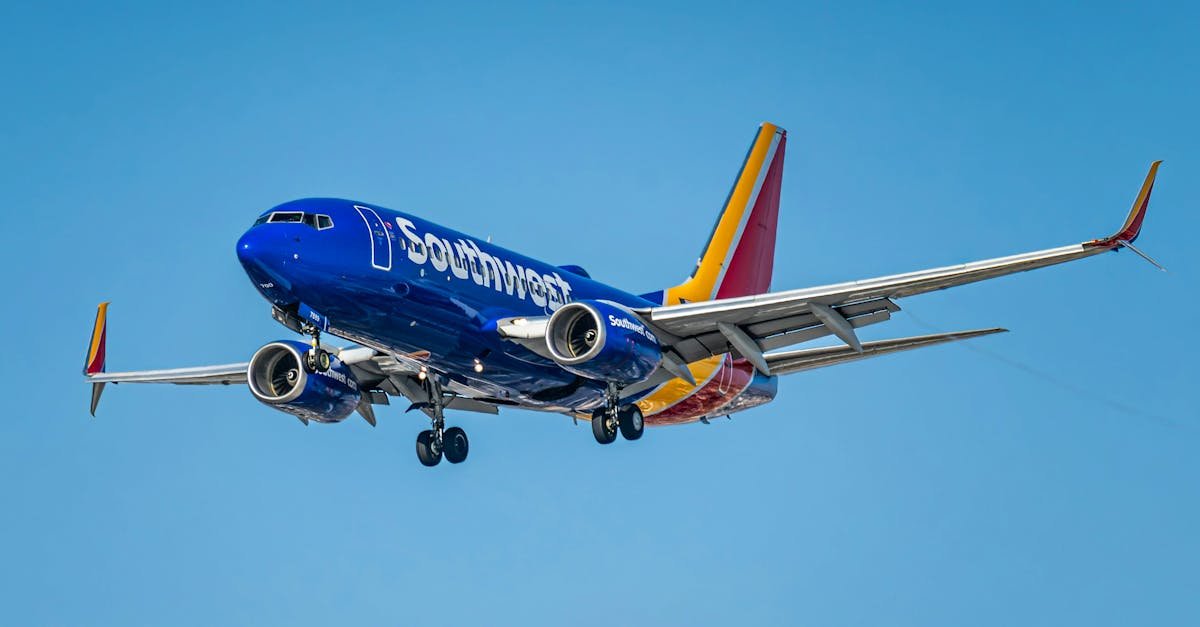
    For nearly seven years, the aviation world and specifically Southwest Airlines has been playing a high-stakes game of “wait and see” with the Boeing 737 MAX 7. As the smallest member of the MAX family, the aircraft was originally intended to be the workhorse that would modernize Southwest’s short-haul fleet by 2019. However, a whirlwind of regulatory shifts, technical redesigns, and production hurdles has pushed that dream further down the runway.

    As of early 2026, the fog is finally beginning to lift. While the airline remains “optimistic,” the target for the official debut has moved to early 2027. This article dives deep into why the timeline shifted, the technical “fix” that saved the program, and what this means for the future of the world’s largest all-737 operator.

    The New Timeline: From Certification to Service

    To understand when you’ll actually step on board a Southwest MAX 7, we have to distinguish between “certification” and “entry into service.” They are not the same thing.

    2026: The Year of the FAA

    Southwest CEO Bob Jordan recently updated investors and analysts, stating that the airline now expects the Federal Aviation Administration (FAA) to grant the MAX 7 its type certification around August 2026. This follows a “rigorous testing” phase that Boeing has been conducting throughout late 2025 and the beginning of 2026.

    2027: The Passenger Debut

    Even if Boeing hands over the keys in late 2026, Southwest cannot simply start selling tickets. The airline requires a buffer of roughly six months to:

    • Train Pilots: Thousands of pilots must be familiarized with the specific nuances of the MAX 7 variant.
    • Maintenance Induction: Maintenance crews need to integrate the new airframe into their rigorous safety schedules.
    • Proving Runs: The airline must conduct its own non-passenger flights to satisfy operational requirements.

    Consequently, Southwest has officially adjusted its fleet planning to target Q1 2027 for the first commercial passenger flight of the Boeing 737 MAX 7.

    Why the Delay? The Engine Anti-Ice Hurdle

    The primary “roadblock” that haunted the MAX 7 for the last two years wasn’t the flight control software (MCAS) that grounded the fleet in 2019. Instead, it was a specialized hardware issue involving the Engine Anti-Ice (EAI) system.

    The Overheating Risk

    During the certification process, regulators discovered a potential flaw: under specific atmospheric conditions (dry, cold air), if a pilot left the engine anti-ice system on for too long, the heat could cause the carbon-composite engine inlets to overheat. This posed a structural risk to the engine housing.

    The Permanent Fix

    Boeing initially sought a temporary exemption to allow the plane to fly while they worked on a fix. However, following the high-profile door-plug incident on an Alaska Airlines flight in early 2024, the FAA and Boeing shifted to a “safety first” culture. Boeing withdrew the exemption request and spent 2025 engineering a permanent hardware redesign. This new system, completed in late 2025, is what is currently being flight-tested to ensure the MAX 7 meets the most modern safety standards.

    Southwest’s Pivot: The “MAX 8” Strategy

    Southwest is not just sitting idly by while Boeing works. To prevent a shortage of seats during the peak 2025 and 2026 travel seasons, the airline has had to get creative with its order book.

    In recent SEC filings (including the 10-K released in February 2026), Southwest revealed it has converted dozens of MAX 7 orders into the larger MAX 8.

    • The Benefit: It allows Southwest to continue growing its capacity and retiring its oldest aircraft.
    • The Trade-off: The MAX 8 is larger and carries more passengers (175 seats vs. 150 on the MAX 7). While great for high-traffic routes, it is less efficient for the “long and thin” routes that the MAX 7 was designed to dominate.

    How Will the “Baby Boeing” Impact Southwest

    Why is Southwest so committed to the MAX 7 despite nearly a decade of delays? The answer lies in the airline’s fundamental business model: point-to-point, high-efficiency travel.

    1. Replacing the 737-700

    Southwest still operates over 300 of the older Boeing 737-700s. These aircraft are the backbone of their fleet, but they are aging. The MAX 7 is the direct successor, offering:

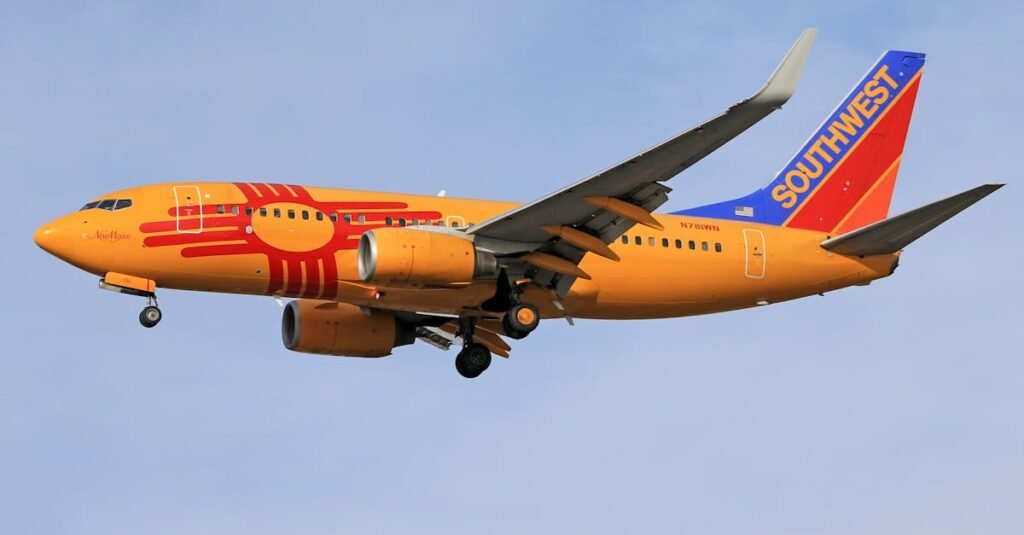
    A Southwest Airlines jet with special livery flying against a blue sky, showcasing aviation technology and travel vibrancy.
    • 18% lower fuel burn per seat.
    • Significantly lower carbon emissions, helping the airline hit its 2030 sustainability goals.

    2. Range and “Thin” Routes

    The MAX 7 has an incredible range of nearly 3,800 nautical miles which is about 1,000 more than the -700. This allows Southwest to fly from mid-continent U.S. cities to Hawaii, or deep into the Caribbean and Central America, without needing a “hub” or a larger, half-empty plane.

    3. Operational Commonality

    By staying with an all-737 fleet, Southwest saves hundreds of millions of dollars in training, spare parts, and crew scheduling. They simply cannot afford to switch to an Airbus A220 without upending their entire cost structure.

    Challenges Remaining for 2026 and 2027

    While the outlook is positive, the “Early 2027” debut is not yet set in stone. Several factors could still sway the timeline:

    • Production Caps: The FAA still maintains a production cap on Boeing (currently around 42 aircraft per month) as it monitors quality control. If Boeing cannot ramp up production by late 2026, Southwest may see its delivery slots pushed back.
    • The “2031 Deadline”: Southwest has set a hard target to retire all 737 Next Generation (NG) aircraft by 2031. To hit this, they need to take delivery of roughly one MAX 7 every week for the next five years which a massive logistical undertaking.
    • Regulatory Scrutiny: The FAA is operating under a “zero-shortcut” policy. Any minor anomaly found during the summer 2026 flight tests could result in a multi-month delay.

    The Strategic Path Forward for the Southwest Fleet

    The arrival of the MAX 7 in 2027 represents more than just a new plane; it is the linchpin of Southwest’s broader business transformation. As the airline moves toward assigned seating and an enhanced cabin experience in 2026, the MAX 7 will be the first aircraft to enter the fleet fully equipped with these new standards from day one. This includes the high-speed USB-A and USB-C power ports, larger overhead “Space Bins,” and the quieter engine profile that passengers have come to expect from the MAX 8.

    From a network perspective, the delay has acted as a bottleneck for Southwest’s “long and thin” route ambitions. While the MAX 8 is perfect for heavy-demand routes like Las Vegas to Phoenix, the MAX 7 is the surgical tool required to make smaller markets profitable over long distances. For example, direct flights from mid-sized cities in the Midwest to Hawaii or deeper into Central America become much more economically viable with a 150-seat aircraft that burns significantly less fuel.

    Furthermore, the 2027 debut aligns with Southwest’s aggressive goal to be an all-MAX operator by 2031. To achieve this, the airline must maintain a seamless “delivery machine” with Boeing. Any further slippage beyond early 2027 would not just delay a debut it would threaten the airline’s long-term cost-reduction targets and its ability to compete against carriers with newer, more diverse fleets. For now, the “August 2026 certification” remains the date to watch.