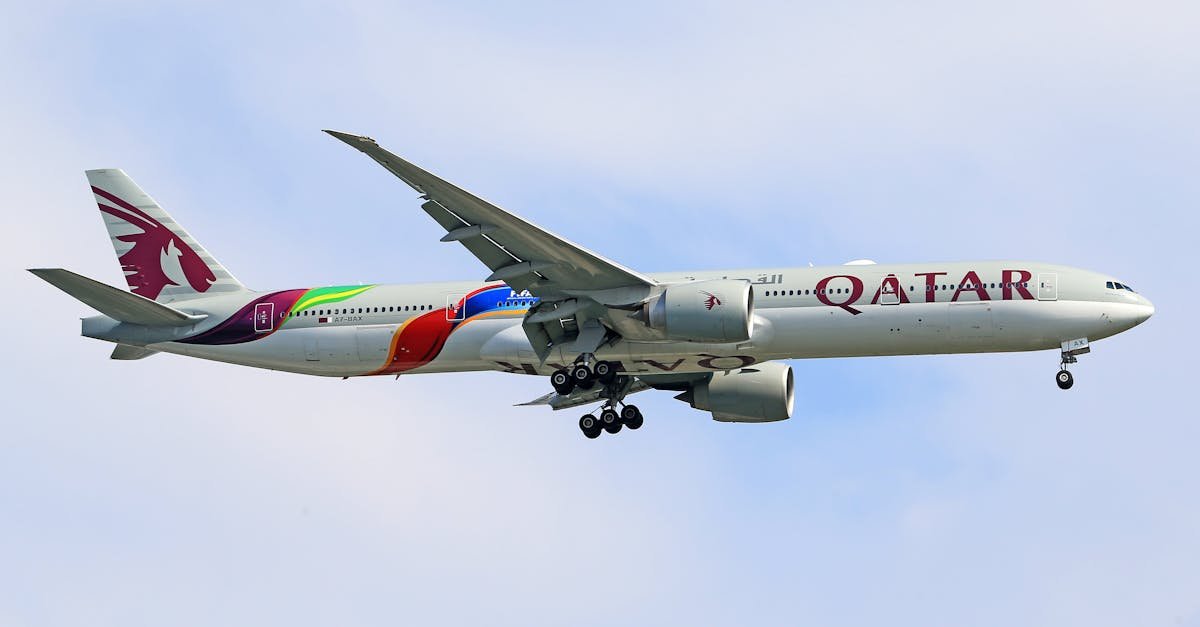
The quiet plains of eastern Spain are once again echoing with the roar of massive jet engines, but not for the reason local tourism boards might hope. Teruel Airport, a facility that famously became a ghost ward for the world’s grounded airliners during the pandemic, is seeing a sudden and dramatic influx of wide body aircraft. This time, the culprit is not a global health crisis but the escalating geopolitical conflict involving Iran. As nations scramble to shutter their airspace and airlines desperately redraw their flight maps, Teruel has reclaimed its title as the premier parking lot for the world’s most expensive stranded assets.
A Mass Exodus from the Middle East
The movement began in earnest on Friday when a fleet of nearly a dozen wide body jets descended upon the tarmac at Teruel. The majority of these aircraft wear the distinctive burgundy and white livery of Qatar Airways. Among the arrivals was the crown jewel of the fleet: an Airbus A380 superjumbo. The double decker giant touched down mid morning after a ferry flight from London, where it had been effectively cut off from its home base in Doha.
The A380 was followed closely by two Airbus A350s and a Boeing 787 Dreamliner by the late afternoon. For an airport that typically handles maintenance and long term storage at a measured pace, this sudden wave of high capacity arrivals feels like a flashback to the spring of 2020. By the end of Saturday, officials expect to have sheltered roughly 20 aircraft, with 17 of those belonging to Qatar Airways alone.
Why Teruel is the Chosen Sanctuary
It might seem strange to fly a multi million dollar jet thousands of miles to a remote part of Spain just to let it sit, but Teruel offers a very specific set of advantages that few other airports can match. Known formally as the Teruel Airport (TEV), it was never designed for passengers. There are no duty free shops or boarding gates here. Instead, it is a dedicated industrial hub for maintenance, repair, and overhaul (MRO).
The primary draw is the climate. Located at a high altitude in a semi arid region, Teruel provides an environment with very low humidity and almost no salt in the air. For an aircraft, moisture is the enemy, leading to corrosion in delicate engine parts and airframes. By parking in the dry Spanish interior, airlines can preserve their planes in a “ready to fly” state with far less intensive preservation work than would be required in a humid coastal city.
The Strategic Impact of Airspace Closures
The reason these planes are being moved is purely operational. The conflict with Iran has turned the Middle East into a patchwork of “no fly” zones. For a “super connector” airline like Qatar Airways, which relies on a hub and spoke model centered in Doha, these closures are catastrophic. When the corridors to the north and east are blocked, the airline is forced to fly massive detours, often adding hours to flight times and burning thousands of gallons of extra fuel.
In many cases, it simply becomes more cost effective to ground the largest, most fuel hungry aircraft and wait for the situation to stabilize. The A380, while a passenger favorite, is notoriously expensive to operate when routes are inefficient. By moving these jets to Teruel, Qatar Airways is essentially hitting the pause button on its most expensive assets while it waits for a safe path home to open up.
Reviving the Pandemic Boneyard
This isn’t the first time Teruel has stepped up during a global emergency. During the height of the COVID pandemic, the airport hosted approximately 140 aircraft at once. It became a viral sensation, with drone footage showing rows upon rows of Lufthansa, British Airways, and Air France jets parked wingtip to wingtip on the reddish soil.
While the numbers today are not yet at pandemic levels, the speed of the arrivals is what has caught industry observers off guard. During the pandemic, the grounding was a slow, agonizing process that lasted months. This time, the shift has happened in a matter of days. It highlights how vulnerable the global aviation network remains to regional instability. A single conflict can essentially sever the artery between Europe and Asia, leaving the world’s most advanced machines with nowhere to go.
Technical Challenges of Sudden Storage
Parking a plane isn’t as simple as turning off the ignition and walking away. Even in the ideal climate of Teruel, the aircraft require constant attention. Teams from Tarmac Aerosave, the company that manages the storage site, must perform rigorous “active storage” protocols. This includes:
- Sealing Openings: Every gap, from the massive engine intakes to the tiny pitot tubes that measure airspeed, must be covered to prevent birds or insects from nesting inside.
- Fluid Management: Fuel tanks must be kept at specific levels to prevent microbial growth, and hydraulic systems must be cycled periodically to keep seals from drying out.
- Tire Rotation: Because these planes weigh hundreds of tons, they cannot sit in one spot for too long or the tires will develop “flat spots.” Maintenance crews must occasionally tow the aircraft a few feet forward or backward to distribute the weight.
The Economic Ripple Effects
The arrival of these planes is a bittersweet boost for the local economy in the Aragon region. While it brings specialized jobs and maintenance revenue to the airport, it serves as a somber reminder of the volatility in the Middle East. For the airlines, every day a Boeing 787 or an Airbus A350 sits on the ground in Spain is a day it isn’t generating revenue. The lease payments, insurance, and maintenance costs continue regardless of whether the plane is carrying passengers or sitting in the desert sun.
Industry analysts are watching the situation closely. If more airlines begin to follow the lead of Qatar Airways and ferry their fleets to European storage hubs, it could signal that the industry expects the conflict to be a long term disruption rather than a brief skirmish.
Looking Toward the Horizon in Aragon
As the sun sets over the Teruel tarmac, the sight of 17 Qatari jets lined up against the Spanish hills is a powerful image of a world in flux. The airport has proven itself once again to be the world’s safety valve, a place where the giants of the sky can find refuge when the world below becomes too dangerous. For now, the crews at Teruel will keep the engines covered and the systems primed, waiting for the day when the skies over the Middle East are clear enough for these “big white birds” to finally head home
Leave a Reply