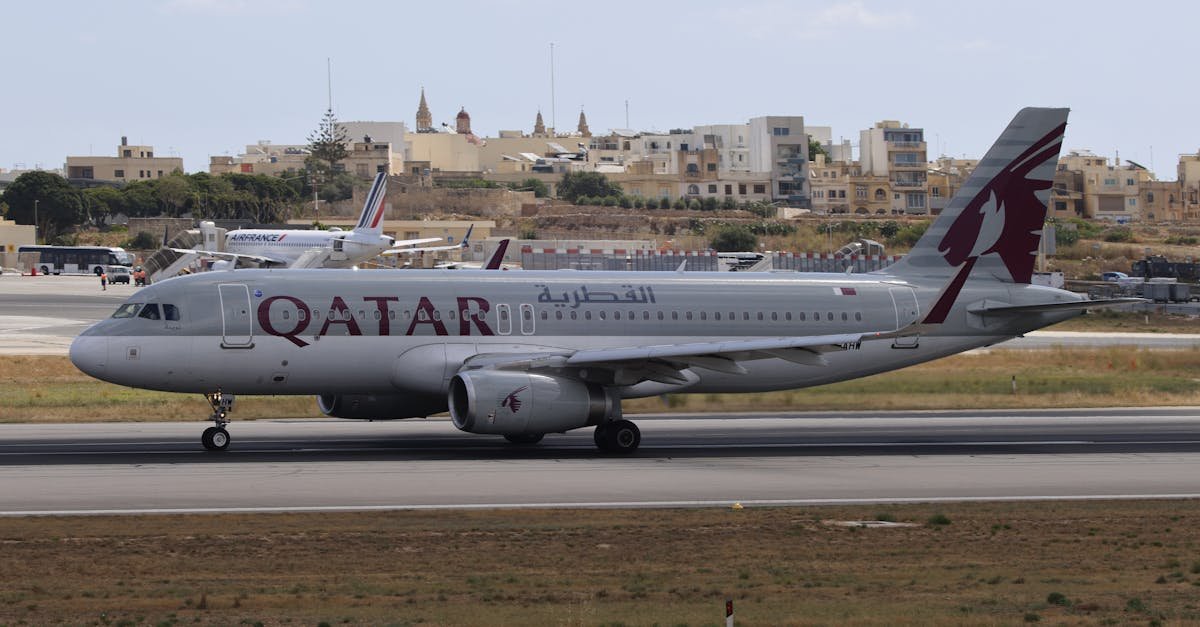
Tag: Qatar Airways

  • Qatar Airways Restores Atlanta & Boston Hubs in Massive 150-Destination Summer Push

    Qatar Airways Restores Atlanta & Boston Hubs in Massive 150-Destination Summer Push

    The global aviation landscape is witnessing a major shift as Qatar Airways prepares for a massive summer season. Starting June 16, 2026, the airline is officially resuming its highly anticipated flights to Atlanta and Boston. This move marks a significant recovery milestone after a period of operational adjustments due to regional airspace restrictions. For travelers in the United States, this announcement means more than just a few extra flights. It signifies the return of premium international travel options connecting the heart of the American South and the New England coast to over 150 destinations worldwide.

    The decision by Qatar Airways to prioritize these two American hubs highlights the strategic importance of the United States market. Atlanta, home to one of the busiest airports on the planet, serves as a massive gateway for both business and leisure traffic. Meanwhile, Boston remains a critical center for education, healthcare, and technology. By restoring these routes, Qatar Airways is ensuring that passengers from these regions have seamless access to the Middle East, Africa, and Asia through its award winning hub at Hamad International Airport in Doha.

    Understanding the Summer 2026 Flight Schedule

    The updated schedule for the summer of 2026 is designed to maximize convenience for passengers. Qatar Airways has meticulously planned the timing of these flights to ensure they align with peak travel demands. The resumption of service to Atlanta and Boston is part of a broader network restoration that includes other major global cities like Osaka, Adelaide, Auckland, Brussels, and Prague. This expansive growth allows the airline to maintain its position as a leading global carrier.

    Travelers booking flights for the summer season can expect a high frequency of service. The airline is committed to providing consistent and reliable options for those planning long distance trips. With the June 16 start date, families planning summer vacations and business professionals attending international conferences will have the flexibility they need. Qatar Airways has built a reputation for punctuality and service excellence, and the 2026 summer push is expected to uphold those high standards across all 150 destinations in the network.

    Flexibility and Freedom for Affected Passengers

    One of the most notable aspects of this announcement is the generous rebooking policy. Qatar Airways understands that previous airspace closures and flight suspensions caused significant disruption for many travelers. To address this, the airline is offering fee free rebooking for passengers who were impacted by the recent changes. This policy remains in effect through October 31, 2026, providing a wide window for travelers to reorganize their plans without financial penalty.

    This level of flexibility is relatively rare in the airline industry and demonstrates a strong commitment to customer satisfaction. Passengers can move their travel dates or even adjust their routes within the network to better suit their current needs. By removing the stress of rebooking fees, Qatar Airways is rebuilding trust with its loyal customer base. It shows that the airline values the long term relationship with its passengers over short term revenue from change fees.

    The Strategic Importance of the Atlanta Gateway

    Atlanta is often referred to as the gateway to the world, and for good reason. By reintroducing flights from Hartsfield Jackson Atlanta International Airport, Qatar Airways is tapping into a massive pool of travelers from across the Southeast. This route is particularly popular for those heading to destinations in India, Pakistan, and various parts of Africa. The connection through Doha provides a much more efficient alternative to traditional European layovers.

    The return to Atlanta also benefits the local economy. International flights bring in tourism, support cargo operations, and facilitate international business partnerships. Qatar Airways plays a vital role in this ecosystem by providing high quality cargo capacity alongside its passenger service. Whether it is moving perishable goods or high value technology, the reliability of the Qatar Airways cargo network is a major asset for businesses operating out of Georgia.

    Boston Connectivity and the New England Market

    Boston Logan International Airport serves as the primary jumping off point for travelers in Massachusetts and the surrounding New England states. The resumption of Qatar Airways flights to Boston is a welcome sight for the academic and scientific communities in the area. With dozens of world class universities and research institutions, there is a constant flow of students, professors, and researchers traveling between Boston and international destinations.

    The Boston to Doha route is famous for its comfort and efficiency. Passengers can enjoy the latest in flight entertainment and dining while crossing the Atlantic. Once they arrive in Doha, the transit experience at Hamad International Airport is designed to be as smooth as possible. For those traveling from Boston to places like Bangkok, Nairobi, or Mumbai, the streamlined connection offered by Qatar Airways remains one of the most popular choices in the market.

    Exploring 150 Destinations Across the Globe

    While the return to the United States is a headline story, the sheer scale of the Qatar Airways network is what truly sets it apart. Serving over 150 destinations means that a traveler in Atlanta can reach almost any corner of the globe with just one stop. This summer push includes a heavy focus on leisure destinations that are popular during the warmer months. From the historic streets of Prague to the scenic landscapes of New Zealand, the options are nearly limitless.

    The airline has also focused on expanding its footprint in Asia and Australia. The resumption of flights to Osaka and Adelaide provides critical links for trade and tourism. In Europe, the return to Brussels strengthens ties with the political heart of the continent. Every new route added or restored by Qatar Airways is a piece of a larger puzzle designed to make global travel more accessible and comfortable for everyone.

    Experience the Award Winning Service in the Skies

    What makes Qatar Airways stand out in a crowded market is the quality of the on board experience. Even on the longest flights from the United States to Doha, passengers are treated to a level of hospitality that has earned the airline numerous accolades. From the spacious seating in economy class to the revolutionary Qsuite in business class, every detail is carefully considered. The airline consistently wins awards for being the best in the world, and this summer 2026 expansion allows more people to experience that quality firsthand.

    The dining experience on Qatar Airways is another highlight. Menus are often designed by world renowned chefs and feature fresh, high quality ingredients. Passengers can enjoy a wide range of international cuisines, catering to various dietary preferences and cultural tastes. Combined with an extensive selection of movies, music, and games on the Oryx One entertainment system, the hours spent in the air pass by quickly and enjoyably.

    Looking Ahead to a Bright Future of Travel

    The restoration of flights to Atlanta and Boston is just the beginning of a new chapter for Qatar Airways. As the airline continues to navigate the complexities of global aviation, its focus remains on innovation and growth. By investing in newer, more fuel efficient aircraft and expanding its route map, the carrier is preparing for the future of sustainable and efficient travel. The 2026 summer schedule is a testament to the resilience of the aviation industry and the enduring desire of people to explore the world.

    As June 16 approaches, the excitement among travelers and aviation enthusiasts is palpable. The return of these key routes signifies a move toward more stable and predictable international travel. With the added security of fee free rebooking and the promise of a vast global network, Qatar Airways is well positioned to lead the way this summer. Travelers can look forward to a season of discovery, connection, and world class service as they take to the skies once again.
  • Qatar Airways Atlanta Incident: A350 Go-Around and Near Tail Strike Explained

    Qatar Airways Atlanta Incident: A350 Go-Around and Near Tail Strike Explained

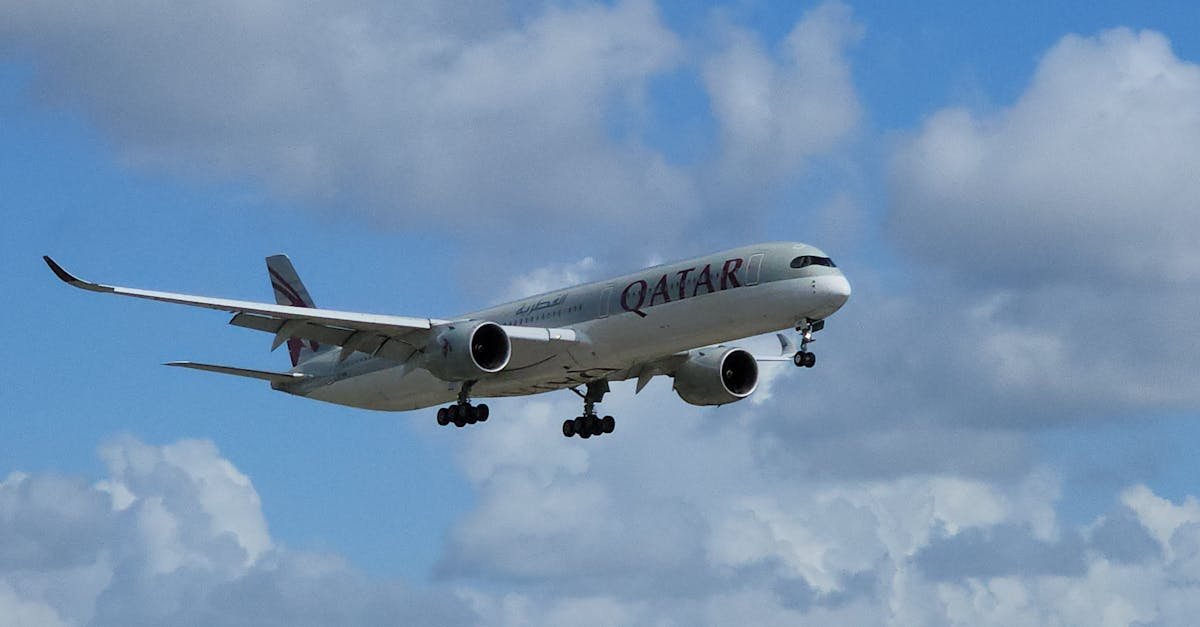
    Aviation is a field where safety protocols often look more dramatic to the public than they do to the professionals in the cockpit. On December 14, 2025, a specific event involving a Qatar Airways flight at Hartsfield-Jackson Atlanta International Airport became a major talking point across social media and news outlets. A high-quality video captured by an aviation enthusiast showed a massive Airbus A350-1000 battling powerful winds while attempting to touch down. For those watching from the ground, the sight of the aircraft tilting sharply and then suddenly climbing back into the clouds was startling. However, this moment was actually a textbook example of pilots choosing safety over a risky landing.

    The Dynamics of Flight QR755

    The flight in question, QR755, is a long-haul journey connecting Doha to Atlanta. After spending nearly sixteen hours in the air, the crew was faced with one of the most challenging environments for any pilot: strong, unpredictable crosswinds. Atlanta is a massive hub with complex wind patterns that can shift rapidly as aircraft descend toward the runway. As the Qatar Airways jet approached the tarmac, the wind began to push the airframe off its intended path.

    In aviation, the goal is always a stabilized approach. This means the plane must be at the correct speed, at the right altitude, and aligned perfectly with the runway centerline. If any of these factors vary too much, the pilots are trained to stop the landing immediately. For the Qatar Airways crew, the stability of the aircraft was compromised by the gusting winds. Rather than trying to force the plane onto the ground, they followed their training and initiated a go-around.

    Deciphering the Near Tail Strike

    The most talked about part of the viral video was how close the rear of the aircraft came to the pavement. This is known in the industry as a tail strike risk. During a go-around, the pilot must pull the nose of the plane up to begin a climb while simultaneously increasing engine power. Because the Airbus A350-1000 is an exceptionally long aircraft, its tail is much closer to the ground when the nose is raised at a high angle.

    When the Qatar Airways pilots hit the throttles and pitched the nose up to climb away from the Atlanta runway, the aircraft was already quite low. The combination of the necessary climb angle and the buffeting from the crosswinds created a visual that looked like the tail was only inches from scraping the concrete. While it was a tight margin, the airframe did not make contact. The pilots successfully transitioned the heavy jet from a landing configuration into a full climb, ensuring that the metal stayed off the ground.

    Why Go-Arounds Are Not Emergencies

    It is common for passengers or observers to feel a sense of panic when a plane suddenly pulls up and climbs away at the last second. In reality, a go-around is a routine safety maneuver. It is an everyday tool used by airlines like Qatar Airways to manage risk. Every pilot practices this move hundreds of times in simulators so that it becomes second nature during a real flight.

    A go-around can be triggered by many things. Sometimes another plane hasn’t cleared the runway in time. Other times, like in this Atlanta incident, the weather simply makes a safe touchdown impossible on the first try. By choosing to go around, the Qatar Airways pilots were actually preventing a potential accident. If they had tried to land while the wind was throwing the plane off balance, they could have suffered a hard landing or even a runway excursion.

    READ MORE: Tragedy at 30,000 Feet: Passenger Dies on Qantas Flight from New York to Auckland

    The Role of the Airbus A350 Technology

    The Airbus A350 is one of the most advanced commercial jets currently flying. It is built with sophisticated flight control systems that help pilots manage difficult weather. These systems provide real-time data about wind speed and direction, allowing the crew to make split-second decisions. When the Qatar Airways crew decided to abort the landing, the aircraft systems assisted by providing the necessary thrust and wing flap adjustments to ensure a clean exit from the approach.

    Even with all this technology, the human element remains vital. The pilots must remain calm and execute the maneuver precisely. On that day in Atlanta, the crew demonstrated high levels of professional skill. They maintained control of the aircraft throughout the high-pitch maneuver and followed the standard missed approach procedures to join the traffic pattern for another attempt.

    Weather Challenges at Hartsfield-Jackson

    Atlanta is the busiest airport in the world, and its layout is designed to handle a massive volume of traffic. However, weather remains the one factor that no airport can fully control. On the date of the Qatar Airways incident, the region was experiencing a weather system that brought gusty conditions. Crosswinds are particularly tricky because they hit the side of the aircraft, trying to push it like a sail.

    Pilots use a technique called a crab to land in these conditions, where the nose points into the wind while the plane travels straight down the runway path. If a gust is too strong or if the wind shifts right at the moment of touchdown, the risk increases. The Qatar Airways flight encountered exactly this kind of volatility. The decision to go around was a proactive way to wait for a more stable window of wind.

    Safety as a Constant Priority

    Following the event, Qatar Airways released statements emphasizing that the safety of their passengers and crew is always the top priority. The airline viewed the maneuver as a standard response to the conditions at hand. This perspective is shared by aviation regulators and safety experts worldwide. While the video was dramatic and quickly went viral, the actual outcome was exactly what is supposed to happen in a modern aviation safety system.

    The aircraft eventually landed safely in Atlanta after the go-around, with no injuries or damage reported. This highlights the effectiveness of the training programs that Qatar Airways uses for its flight crews. Every time a pilot chooses to go around instead of risking an unstable landing, it is a win for flight safety.

    Lessons from the Flight Deck

    The Atlanta incident serves as a great reminder of the hidden work that goes into every flight. While passengers in the cabin might have felt a sudden jolt and the roar of the engines as the plane climbed, the pilots were simply following a well-defined script. For Qatar Airways, maintaining a reputation for safety means empowering their pilots to make these tough calls without hesitation.

    In the world of social media, a video can make a routine safety procedure look like a near disaster. However, the reality is much more boring and professional. The pilots saw a situation that didn’t meet their strict safety criteria, they hit the go-around buttons, and they flew the plane back into the sky. It was a successful day of flying that proved the systems meant to protect travelers are working exactly as intended.

    Managing Public Perception of Aviation Events

    As more people carry high-quality cameras and track flights in real-time, we are seeing more of these incidents being shared online. It is important for the public to understand that what looks scary from the ground is often the safest possible action being taken by the crew. The Qatar Airways flight in Atlanta didn’t crash because the pilots were skilled enough to know when to stop trying to land.

    Understanding the mechanics of a go-around and the geometry of a large plane like the A350 helps demystify these events. Instead of seeing a narrow escape, we should see a high-functioning team of professionals doing their jobs at the highest level. The next time you are on a flight and the pilot decides to climb away at the last minute, you can take comfort in knowing that you are in the hands of someone who values your safety more than the flight schedule.

  • Aviation Crisis: Qatar Airways A380s and A350s Diverted to Teruel Storage Hub

    Aviation Crisis: Qatar Airways A380s and A350s Diverted to Teruel Storage Hub

    The quiet plains of eastern Spain are once again echoing with the roar of massive jet engines, but not for the reason local tourism boards might hope. Teruel Airport, a facility that famously became a ghost ward for the world’s grounded airliners during the pandemic, is seeing a sudden and dramatic influx of wide body aircraft. This time, the culprit is not a global health crisis but the escalating geopolitical conflict involving Iran. As nations scramble to shutter their airspace and airlines desperately redraw their flight maps, Teruel has reclaimed its title as the premier parking lot for the world’s most expensive stranded assets.

    A Mass Exodus from the Middle East

    The movement began in earnest on Friday when a fleet of nearly a dozen wide body jets descended upon the tarmac at Teruel. The majority of these aircraft wear the distinctive burgundy and white livery of Qatar Airways. Among the arrivals was the crown jewel of the fleet: an Airbus A380 superjumbo. The double decker giant touched down mid morning after a ferry flight from London, where it had been effectively cut off from its home base in Doha.

    The A380 was followed closely by two Airbus A350s and a Boeing 787 Dreamliner by the late afternoon. For an airport that typically handles maintenance and long term storage at a measured pace, this sudden wave of high capacity arrivals feels like a flashback to the spring of 2020. By the end of Saturday, officials expect to have sheltered roughly 20 aircraft, with 17 of those belonging to Qatar Airways alone.

    Why Teruel is the Chosen Sanctuary

    It might seem strange to fly a multi million dollar jet thousands of miles to a remote part of Spain just to let it sit, but Teruel offers a very specific set of advantages that few other airports can match. Known formally as the Teruel Airport (TEV), it was never designed for passengers. There are no duty free shops or boarding gates here. Instead, it is a dedicated industrial hub for maintenance, repair, and overhaul (MRO).

    The primary draw is the climate. Located at a high altitude in a semi arid region, Teruel provides an environment with very low humidity and almost no salt in the air. For an aircraft, moisture is the enemy, leading to corrosion in delicate engine parts and airframes. By parking in the dry Spanish interior, airlines can preserve their planes in a “ready to fly” state with far less intensive preservation work than would be required in a humid coastal city.

    The Strategic Impact of Airspace Closures

    The reason these planes are being moved is purely operational. The conflict with Iran has turned the Middle East into a patchwork of “no fly” zones. For a “super connector” airline like Qatar Airways, which relies on a hub and spoke model centered in Doha, these closures are catastrophic. When the corridors to the north and east are blocked, the airline is forced to fly massive detours, often adding hours to flight times and burning thousands of gallons of extra fuel.

    In many cases, it simply becomes more cost effective to ground the largest, most fuel hungry aircraft and wait for the situation to stabilize. The A380, while a passenger favorite, is notoriously expensive to operate when routes are inefficient. By moving these jets to Teruel, Qatar Airways is essentially hitting the pause button on its most expensive assets while it waits for a safe path home to open up.

    Reviving the Pandemic Boneyard

    This isn’t the first time Teruel has stepped up during a global emergency. During the height of the COVID pandemic, the airport hosted approximately 140 aircraft at once. It became a viral sensation, with drone footage showing rows upon rows of Lufthansa, British Airways, and Air France jets parked wingtip to wingtip on the reddish soil.

    While the numbers today are not yet at pandemic levels, the speed of the arrivals is what has caught industry observers off guard. During the pandemic, the grounding was a slow, agonizing process that lasted months. This time, the shift has happened in a matter of days. It highlights how vulnerable the global aviation network remains to regional instability. A single conflict can essentially sever the artery between Europe and Asia, leaving the world’s most advanced machines with nowhere to go.

    Technical Challenges of Sudden Storage

    Parking a plane isn’t as simple as turning off the ignition and walking away. Even in the ideal climate of Teruel, the aircraft require constant attention. Teams from Tarmac Aerosave, the company that manages the storage site, must perform rigorous “active storage” protocols. This includes:

    • Sealing Openings: Every gap, from the massive engine intakes to the tiny pitot tubes that measure airspeed, must be covered to prevent birds or insects from nesting inside.
    • Fluid Management: Fuel tanks must be kept at specific levels to prevent microbial growth, and hydraulic systems must be cycled periodically to keep seals from drying out.
    • Tire Rotation: Because these planes weigh hundreds of tons, they cannot sit in one spot for too long or the tires will develop “flat spots.” Maintenance crews must occasionally tow the aircraft a few feet forward or backward to distribute the weight.

    The Economic Ripple Effects

    The arrival of these planes is a bittersweet boost for the local economy in the Aragon region. While it brings specialized jobs and maintenance revenue to the airport, it serves as a somber reminder of the volatility in the Middle East. For the airlines, every day a Boeing 787 or an Airbus A350 sits on the ground in Spain is a day it isn’t generating revenue. The lease payments, insurance, and maintenance costs continue regardless of whether the plane is carrying passengers or sitting in the desert sun.

    Industry analysts are watching the situation closely. If more airlines begin to follow the lead of Qatar Airways and ferry their fleets to European storage hubs, it could signal that the industry expects the conflict to be a long term disruption rather than a brief skirmish.

    Looking Toward the Horizon in Aragon

    As the sun sets over the Teruel tarmac, the sight of 17 Qatari jets lined up against the Spanish hills is a powerful image of a world in flux. The airport has proven itself once again to be the world’s safety valve, a place where the giants of the sky can find refuge when the world below becomes too dangerous. For now, the crews at Teruel will keep the engines covered and the systems primed, waiting for the day when the skies over the Middle East are clear enough for these “big white birds” to finally head home