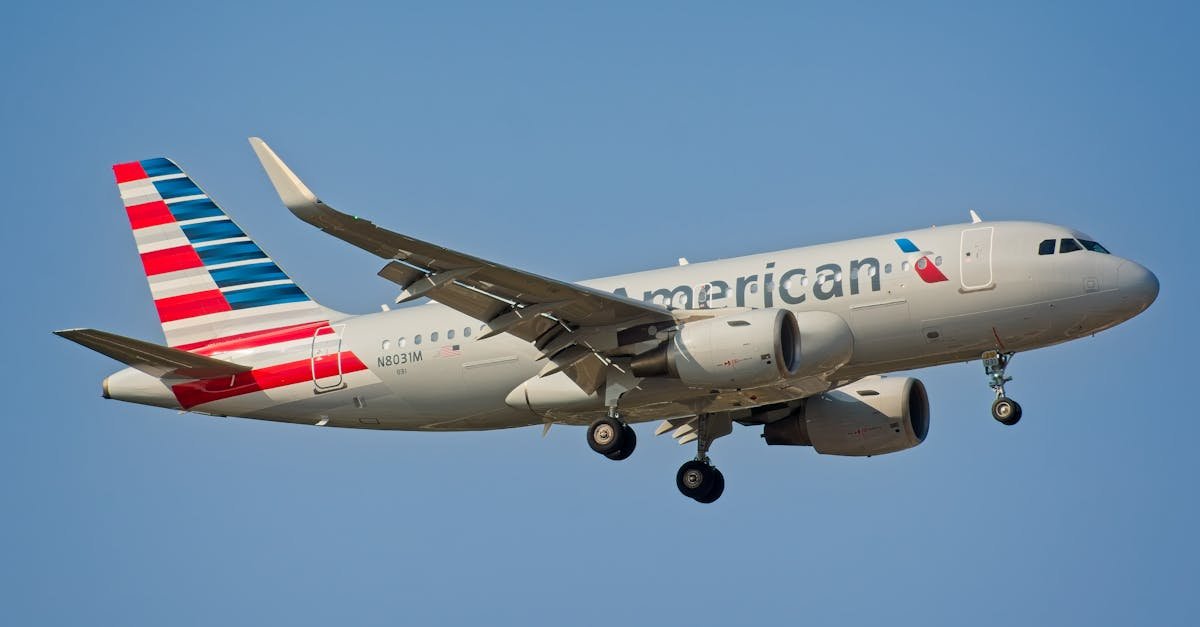
American Airlines has officially responded to the wave of rumors regarding a potential merger with United Airlines,putting an end to days of industry speculation. The airline released a clear and firm statement late Friday, confirming that it is not currently participating in or considering any such deal. This news comes after reports suggested that leadership at United Airlines had approached government officials to explore the possibility of a massive consolidation within the aviation sector.
The official word from American Airlines clarifies that they are not engaged in any discussions and have zero interest in merging with their long-standing competitor. This stance is rooted in concerns about market competition and the impact such a massive shift would have on passengers. By speaking out now, American Airlines has drawn a definitive line in the sand, choosing to prioritize its own strategic path rather than pursuing a merger that would fundamentally rewrite the rules of the sky.
The Origin of the United Merger Rumors
The chatter started earlier this week when news leaked that Scott Kirby, the chief executive of United Airlines, had reportedly pitched the idea of a merger to the administration. These discussions apparently took place behind closed doors, suggesting that the industry might be ready for another major round of consolidation. Given that American Airlines and United are two of the largest players in the global aviation market, even the whisper of a tie-up was enough to send shockwaves through the financial markets and travel circles.
Industry insiders spent much of the week debating whether such a move was even feasible. Many looked toward the current political climate and regulatory landscape to see if a deal of this magnitude could survive legal challenges.While United seemed to be testing the waters, American Airlines remained quiet for several days before finally delivering its blunt rejection of the concept. The delay in the response led some to wonder if American Airlines was weighing the benefits, but the final statement left no room for ambiguity.
Why American Airlines Rejects the Idea
In its formal communication, American Airlines highlighted that a merger with United would be bad for the competitive nature of the industry. The airline pointed out that combining these two massive networks would likely lead to fewer choices for travelers and could potentially drive up ticket prices across the board. American Airlines expressed that maintaining a healthy, competitive environment is essential for the long term health of the aviation sector.
Furthermore, American Airlines noted that such a deal would be inconsistent with its understanding of antitrust laws and the current administration’s approach to business oversight. By aligning its rejection with federal policy, American Airlines signaled that it does not believe a merger of this scale would ever receive the necessary green light from regulators. Instead of spending years in courtrooms fighting for a deal that might never happen, American Airlines is choosing to focus on its own operations and growth.
Impact on the Aviation Competitive Landscape
The US airline industry is already dominated by a small group of major carriers, often referred to as the Big Four. If American Airlines were to merge with United, it would create a behemoth that dwarfs every other competitor in the world. This combined entity would control an unprecedented number of gates, flight paths, and slots at major international hubs like Chicago, Dallas, and New York.
For smaller airlines and low cost carriers, the prospect of an American Airlines and United merger was particularly alarming. A giant of that size would have immense power to set prices and dictate market trends, making it difficult for smaller companies to survive. By walking away from the table, American Airlines has essentially preserved the current balance of power, ensuring that the marketplace remains fragmented enough to allow for continued competition.
Regulatory Hurdles and Legal Barriers
Even if American Airlines had been interested, the path to a merger would have been incredibly difficult. Antitrust regulators have become increasingly skeptical of large scale mergers in recent years, especially those that involve vital infrastructure like air travel. A deal between American Airlines and United would have triggered intense scrutiny from the Department of Justice and various state attorneys general.
Legal experts suggested that the combined airline would have been forced to give up a significant number of its most valuable routes and airport assets to win approval. Such concessions might have stripped away the very benefits that would make a merger attractive in the first place. American Airlines likely realized that the juice was not worth the squeeze, recognizing that the legal battle alone could take years and cost millions in fees without any guarantee of success.
Strategic Focus on Internal Growth
Rather than looking outward for growth through acquisitions, American Airlines is doubling down on its internal goals.The company stated that its primary focus remains on executing its own strategic objectives. This includes modernizing its fleet, improving the customer experience, and strengthening its financial position after the turbulent years following the global pandemic.
American Airlines has been working hard to streamline its operations and improve its reliability. By focusing on its own strengths, American Airlines aims to win over more customers and build a more resilient business model. This internal focus allows the company to move faster and adapt to market changes without the massive distraction that comes with integrating another airline’s employees, technology, and aircraft.
Customer and Labor Union Perspectives
Passengers generally view airline mergers with a degree of skepticism, often associating them with higher prices and reduced service quality. The firm “no” from American Airlines is likely to be welcomed by traveler advocacy groups who were worried about the loss of a major competitor. Keeping American Airlines and United as separate entities ensures that both companies must continue to compete for the loyalty of the flying public.
Labor unions also play a massive role in these decisions. Merging two of the largest workforces in the world is a logistical nightmare that involves reconciling different seniority lists, pay scales, and benefit packages. The pilots’ union at American Airlines had previously expressed some intrigue regarding the rumors, mainly as a way to see improvements in management performance. However, the official stance from American Airlines now provides clarity for thousands of employees who were worried about their job security and future under a new corporate structure.
Future of Industry Consolidation
While American Airlines has closed the door on a United deal, it doesn’t mean that consolidation in the industry is dead.The airline mentioned that changes in the broader marketplace might still be necessary. This suggests that while a mega merger of the two largest carriers is off the table, smaller acquisitions or strategic partnerships could still happen in the future.
The aviation industry is constantly evolving, and companies are always looking for ways to gain an edge. American Airlines will continue to evaluate its position in the market and look for opportunities that align with its long term vision. For now, however, that vision does not include a partnership with United.
Standing Strong in a Shifting Market
The decision by American Airlines to break its silence and reject the merger talk is a sign of confidence. It shows that the leadership team believes in the current path of American Airlines and sees a future where they can succeed as an independent entity. In a world where bigger is often seen as better, American Airlines is betting on its ability to compete on its own terms.
The aviation world will undoubtedly keep a close eye on both companies as they navigate the remainder of the year. For travelers, the immediate takeaway is that the status quo remains. You will still see American Airlines and United competing for your business at the airport, which is exactly how the leadership at American Airlines believes it should be. By shutting down these rumors, American Airlines has provided the stability and clarity that the market, the employees, and the customers needed.
Leave a Reply