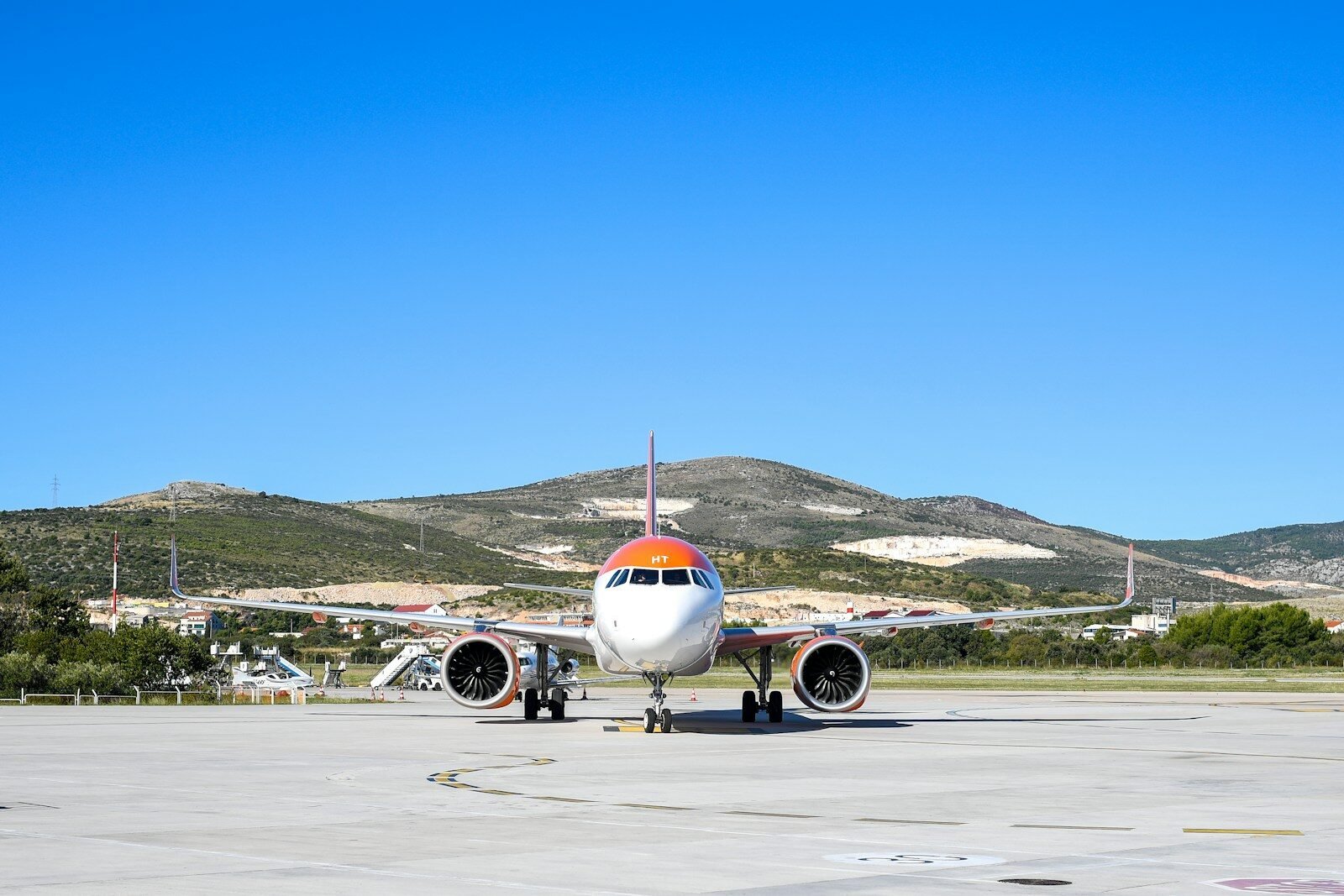
A regular international flight from the coastal city of Split to Frankfurt turned into a highly stressful situation for everyone on board. Croatia Airlines flight OU412 was scheduled for a routine early afternoon departure when the unexpected occurred. During the initial acceleration phase along the tarmac, the operating Airbus A220-300 experienced a sudden deviation from its path. The plane veered off the paved surface and shifted onto the adjacent grass field while the flight crew worked intensely to bring the multi-ton jetliner to a complete stop.+1
Initial reports from eyewitnesses and flight tracking data indicated that the takeoff roll was rapidly aborted. The high-speed rejection of takeoff is one of the most demanding maneuvers a pilot can face. In this specific case, the aircraft shifted significantly to one side of the centerline. Local airport administrators and emergency teams responded instantly to the scene to assess the condition of the plane and check on the well-being of the passengers and airline crew.+2
The airport authority quickly confirmed that the runway excursion occurred during the high-speed portion of the takeoff run. Security footage and ground-level recordings that emerged soon after showed the modern single-aisle jet resting with its landing gear deeply set into the soft grassy ground. This placement immediately disrupted the operational flow at the coastal airport, halting arriving and departing air traffic.
Examining the Ground Event Mechanics
To fully understand what happened to Croatia Airlines A220-300 aborted takeoff and runway veer analysis, it helps to break down the physical sequence of events on the airfield. When a pilot initiates a rejected takeoff at high speeds, they must balance several critical forces simultaneously. These include aerodynamic braking, mechanical wheel braking, and thrust reversers. If an issue occurs that impacts directional control, maintaining a straight path becomes an immediate challenge.
In the case of this flight, the aircraft veered off the side of the runway during its acceleration phase. As the jet departed the paved surface, it encountered various pieces of essential airfield infrastructure. The airframe made contact with a vertical marker board and several runway edge lights. These impacts caused noticeable structural damage to the lower sections of the plane, though the main fuselage and passenger cabin stayed completely intact.+1
The transition from a smooth, paved runway to rough ground introduces immense stress to the landing gear assembly. When a jetliner hits soft earth at high speeds, the resistance increases drastically. This can cause the nose gear or main gear to sink, which complicates efforts to steer the plane safely. The pilots had to utilize all available stopping mechanisms to prevent the aircraft from traveling further into the grass perimeter.
Damage Assessment and Fleet Context
The airframe involved in this weekend incident is a relatively new addition to the national carrier. Registered as 9A-CAN, this specific Airbus A220-300 was delivered to the airline in June 2025 as a core part of its comprehensive fleet modernization strategy. This new generation of aircraft is highly valued for its fuel efficiency, quiet cabin experience, and advanced digital flight control systems. Seeing such a new airframe involved in a runway excursion caught the immediate attention of the regional aviation community.
A closer look at the physical aftermath revealed that the contact with airfield signs and edge illumination left clear marks. Technicians noted scraping and impact damage on the lower fuselage sections and around the landing gear bays. Ground crews had to carefully check whether the debris from the broken marker boards had caused secondary damage to the twin Pratt & Whitney engines or the composite wings.
The airframe remained grounded on the grass for several hours while airport technical services worked out a plan to safely tow it away. Moving a modern passenger jet from a mud or grass surface requires specialized tracking mats and heavy recovery vehicles to avoid causing additional stress to the landing gear struts. This recovery process required the temporary closure of the entire airport, forcing inbound international flights to divert to alternative regional gateways.
Passenger Safety and Crew Emergency Procedures
Despite the dramatic nature of the ground event, the outcome highlighted the effectiveness of modern aviation training. There were 130 passengers and 5 crew members on board flight OU412 during the incident. The cabin crew consisted of two pilots in the flight deck and three flight attendants in the main cabin. Immediately after the aircraft came to a halt on the grass, the crew began executing their emergency disembarkation protocols.+1
The crew managed to get all 132 passengers out of the aircraft without a single injury being reported. Everyone was quickly guided away from the grounded plane and transferred safely to the main passenger terminal building. Inside the terminal, the airline provided comfort, food, and alternative travel arrangements to Frankfurt for those affected by the delays.+1
Aviation safety groups often emphasize that a successful high-speed rejected takeoff relies heavily on quick pilot decision-making. The flight crew has only a few seconds to recognize a problem, decide to abort, and apply maximum braking pressure. In this case, the pilot actions ensured that the runway deviation did not turn into a more severe accident, keeping the passenger cabin safe from catastrophic impact.
Investigating Potential Causative Factors
Whenever a modern jetliner leaves the runway during takeoff, an official multi-agency investigation is launched. For this specific event, the Croatian Civil Aviation Agency alongside the Air, Maritime and Railway Accident Investigation Agency took charge of the scene. Investigators are looking at a wide variety of data sources to build an accurate picture of what happened to Croatia Airlines A220-300 aborted takeoff and runway veer analysis.
One primary area of interest will be the digital flight data recorder and the cockpit voice recorder, often called the black boxes. These systems track hundreds of parameters per second, including engine thrust settings, steering inputs, braking pressure, and aerodynamic sensor readings. Investigators will check if a sudden asymmetrical thrust condition occurred, where one engine produces more power than the other, causing the plane to pull to one side.
The team will also analyze environmental and pavement conditions at the time of the event. Wind speed, wind gusts, and any contaminants on the runway surface can play a role in how a plane handles at high speeds. Mechanical components will face deep scrutiny too, including the nose-wheel steering system, the brake units, and the tires to see if a hardware failure contributed to the directional drift.
Looking Ahead to Safety Lessons
The findings from this runway excursion will eventually be shared with international aviation bodies and the aircraft manufacturer. Any lessons learned from the mechanical or procedural data will help update training programs for pilots worldwide who operate the Airbus A220 platform. For the airline, the focus remains on repairing their new airframe and returning it to service while maintaining their strict safety standards.
This incident serves as a strong reminder of why strict aviation protocols exist. While runway excursions present real risks, the structural design of modern aircraft and the rigorous training of flight crews help ensure that passengers can walk away uninjured when things go wrong on the ground.
Leave a Reply