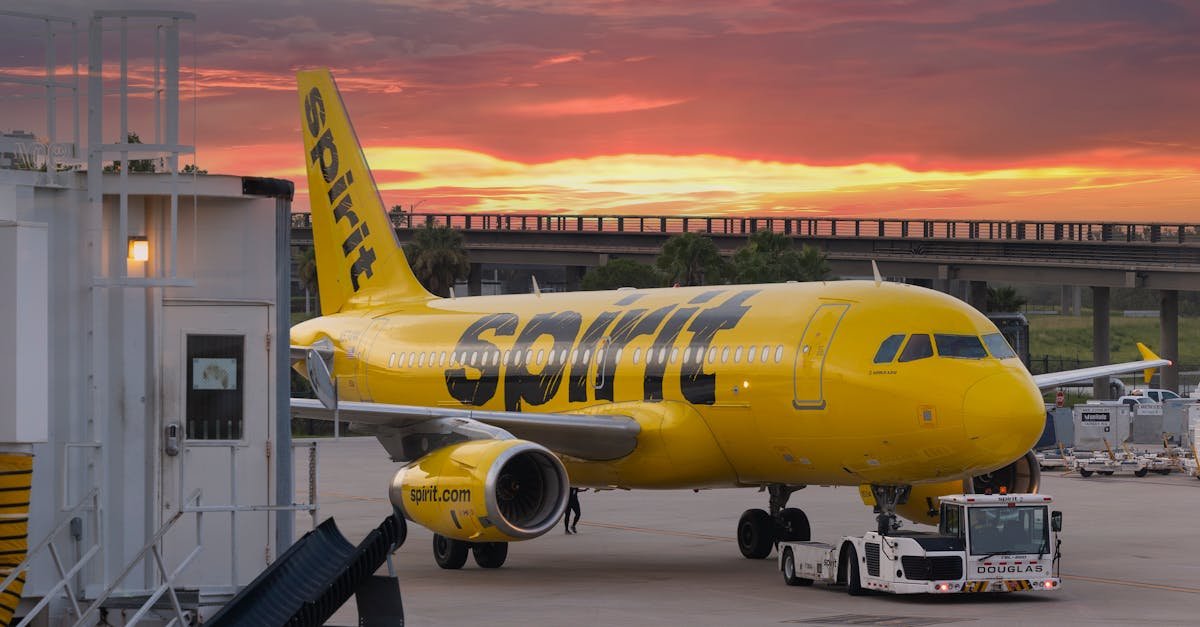
The aviation world recently witnessed a “canary in the coal mine” moment that has left industry veterans and casual observers alike scratching their heads. Two Airbus A320neos, formerly operated by the ultra-low-cost carrier Spirit Airlines, were sold not to another airline, but to a disassembly firm.
At just four and three-and-a-half years old, these aircraft (registrations N950NK and N959NK) are practically brand new. In a normal market, a four-year-old jet is in its prime, with at least two decades of flying ahead of it. However, in the current economic climate of 2026, these state-of-the-art machines are being towed to the desert in Goodyear, Arizona, to be systematically dismantled.
It sounds like a financial tragedy, but for the owners, it is a calculated masterstroke. Here is the deep dive into why these modern marvels are worth significantly more as a pile of parts than as flying assets.
1. The Pratt & Whitney “Engine Crisis”
The primary catalyst for this early retirement is the Pratt & Whitney PW1100G Geared Turbofan (GTF) engine.While revolutionary in its fuel efficiency, the GTF has been plagued by a series of manufacturing defects most notably the “powder metal” issue discovered in late 2023. Microscopic contaminants in the metal used for high-pressure turbine disks led to a massive global recall.
By early 2026, the backlog for engine shop visits has reached a breaking point. Airlines are seeing “Aircraft on Ground” (AOG) times stretching past 300 days just to get an engine inspected or repaired. For a struggling carrier like Spirit, having a jet sit idle for a year while still paying lease fees is a fast track to liquidation.
2. The Bankruptcy Math: Liquidity is King
Spirit Airlines’ ongoing Chapter 11 restructuring (initiated in August 2025) has forced the company to make brutal decisions. As part of their court-supervised survival plan, Spirit is aggressively “right-sizing” its fleet.
In bankruptcy, cash is the only currency that matters. The airline had two choices with these specific A320neos:
- Option A: Keep the planes, pay the high monthly leases, and wait indefinitely for engine parts that might not arrive for a year.
- Option B: Sell the aircraft to asset managers like EirTrade Aviation and RESIDCO, who are willing to pay a premium for the “instant” parts they can harvest.
By choosing Option B, Spirit sheds debt and gains immediate liquidity to fund its remaining operations.
3. The Power Player: Who is EirTrade Aviation?
While the teardown of a four-year-old jet might seem like a desperate act of salvage to the public, for EirTrade Aviation, it is a high-stakes chess move. Headquartered in Dublin, Ireland, EirTrade has rapidly ascended as a global leader in aviation asset management and “end-of-life” solutions. However, in 2026, their definition of “end-of-life” has evolved. By partnering with the aviation lessor RESIDCO to acquire Spirit’s N950NK and N959NK, EirTrade isn’t just acting as a recycler; they are acting as a vital organ in the aviation supply chain.
EirTrade’s expertise lies in monetization. They specialize in identifying aircraft that are underperforming as flying assets but overperforming as a collection of high-demand parts. In recent years, they made headlines as the first aftermarket company to manage the disassembly of a Boeing 787. Now, with the Spirit A320neo acquisition, they are doubling down on “new vintage” aircraft. Their strategy is clear: by harvesting parts from nearly new airframes, they ensure their inventory contains the highest-quality rotables (parts that can be repeatedly overhauled) that meet the very latest modification standards.
The company’s operation is a logistical powerhouse. Once these Spirit jets are dismantled in the dry, preservative air of Goodyear, Arizona, every single bolt, sensor, and circuit board is cataloged and shipped to EirTrade’s massive distribution hub in Dallas, Texas. From this central point, they can provide rapid support to airlines across North and South America. In an era where a missing $500 sensor can ground a $100 million jet for weeks, EirTrade’s ability to provide “instant” certified parts makes them one of the most influential players in the 2026 MRO (Maintenance, Repair, and Overhaul) landscape.
4. The “Used Serviceable Material” (USM) Gold Mine
There is a massive shortage of spare parts for the A320neo family. Because so many engines are grounded, other airlines are desperate for Used Serviceable Material (USM) certified parts that can be swapped in immediately to get a plane back in the sky.
When EirTrade dismantles these Spirit jets, they aren’t just looking at the engines. They are harvesting:
- LRUs (Line Replaceable Units): Modular components like actuators, sensors, and flight computers that can be swapped in minutes.
- BFE (Buyer Furnished Equipment): High-end interior components, seats, and avionics.
- Landing Gear: Often worth millions on the secondary market for airlines approaching their first major overhaul cycle.
In 2026, the “sum of the parts” for an A320neo has officially eclipsed the value of the whole, thanks to a starving supply chain.
5. A Record-Breaking Teardown
To put this in perspective, the previous “youngest” aircraft to be scrapped were a pair of six-year-old IndiGo A321neos.Spirit has shattered that record by nearly three years. This marks a fundamental shift in aviation economics; we are no longer just scrapping “old” planes. We are harvesting “new” technology to keep the rest of the global fleet from collapsing under the weight of maintenance backlogs.
6. The Environmental and Operational Paradox

There is a bitter irony here. The A320neo was designed to be the “greenest” narrow-body in the sky, offering a 15–20% reduction in fuel burn. By scrapping them at four years old, the industry is essentially throwing away the most fuel-efficient tools it has.
However, from an operational standpoint, a plane that cannot fly is 0% efficient. By sacrificing these two aircraft, EirTrade can provide the parts necessary to return dozens of other grounded A320neos to service. It is a form of “aviation triage” sacrificing the few to save the many.
Conclusion: A New Era of Asset Management
The teardown of Spirit’s A320neos is a stark reminder that in aviation, value is determined by utility, not age. If an aircraft cannot generate revenue due to engine delays, its only remaining value is the “DNA” inside its wings and fuselage.
As Spirit continues its journey through bankruptcy and the Pratt & Whitney crisis lingers into 2027, these “premature” retirements may become the new normal. For now, the parts from N950NK and N959NK will be headed to a warehouse in Dallas, destined to keep the rest of the world’s A320neos flying.
Leave a Reply