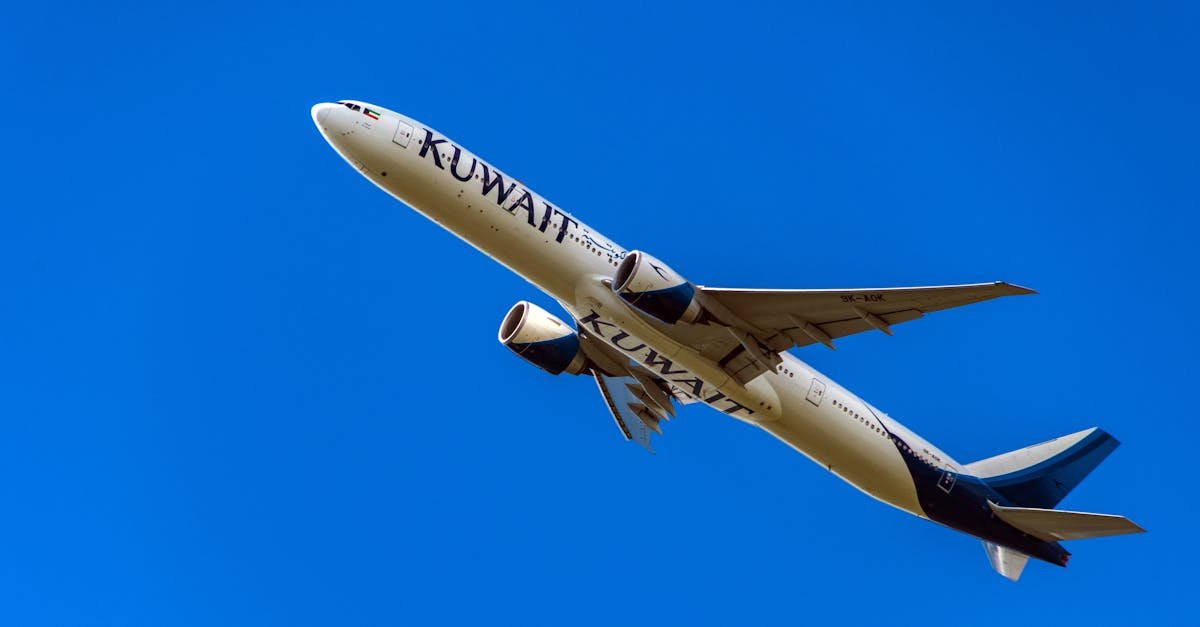
A recent landing at Amsterdam Schiphol Airport involving a Kuwait Airways Boeing 777-300ER has become a major talking point in the aviation community. While thousands of flights land safely at Schiphol every week, this specific arrival highlighted the incredible thin line between a routine touchdown and a serious accident. The aircraft, a massive long-haul jet known for its reliability, encountered a significant challenge during its final moments in the air. Thanks to a sophisticated onboard safety system, what could have been a disastrous tail strike or a full aerodynamic stall was narrowly avoided.
The Sequence of Events at Schiphol Airport
The flight was progressing normally as it approached the runway in Amsterdam. Pilots on a Kuwait Airways aircraft of this size are highly trained to manage the complex dynamics of a heavy wide-body jet. However, as the plane crossed the runway threshold, the landing flare was initiated much earlier than recommended. In aviation, the flare is the maneuver where the nose is raised slightly to break the descent and ensure a smooth touchdown.
By starting this maneuver too high and too aggressively, the Kuwait Airways jet began to bleed off speed far too quickly. As the airspeed dropped below safe limits, the wings began to lose their ability to generate enough lift to support the massive weight of the Boeing 777. Instead of settling gently onto the pavement, the aircraft started to sink rapidly while the nose was pointed dangerously high toward the sky.
Understanding the Aerodynamics of a Near Stall
When a plane like the ones operated by Kuwait Airways enters an excessive pitch-up attitude at low speeds, it nears a condition called a stall. This does not mean the engines stop working. Instead, it means the air can no longer flow smoothly over the wings. At Schiphol, the high angle of the fuselage meant the aircraft was acting like a giant barn door in the wind, creating immense drag.
As the speed fell, the rate of descent increased. This is a terrifying situation for any flight crew because the natural instinct is to pull back on the stick to stop the sinking feeling. However, pulling back further in a low-speed situation only makes the stall worse and increases the risk of the back of the plane hitting the ground. This is where the engineering of the Kuwait Airways fleet proved its worth.
How Tail Strike Protection Intervened
The Boeing 777-300ER used by Kuwait Airways is equipped with a fly-by-wire system that includes a specific safety feature known as Tail Strike Protection. This system is a silent guardian that monitors the height of the aircraft, its pitch rate, and its proximity to the runway. As the Kuwait Airways pilots pulled back on the controls, the computer realized that the current path would result in the rear fuselage slamming into the runway.
The system took over by electronically limiting the elevator movement. Even though the pilots may have been asking for more nose-up pitch, the computer refused the command to protect the structural integrity of the Kuwait Airways jet.By forcing the nose back down slightly, the system allowed the plane to regain a tiny bit of energy and ensured that the wheels touched the ground before the tail could make contact.
The Role of Pilot Training and Technology
No airline wants to find its aircraft in such a precarious position, but the incident involving Kuwait Airways serves as a masterclass in why modern safety tech exists. Pilots at Kuwait Airways undergo rigorous simulator training to handle precisely these kinds of energy-management issues. While human error in the timing of a flare can happen due to fatigue, optical illusions, or sudden wind shifts, the technology acts as a final safety net.
In this instance, the Kuwait Airways crew had to manage a very “floaty” aircraft that suddenly lost its buoyancy. The 777-300ER is a very long airplane, and the distance between the main landing gear and the tail is significant. A few degrees of extra pitch can be the difference between a safe landing and millions of dollars in structural damage. The intervention of the protection logic kept the Kuwait Airways flight within the safe envelope of operation.
Why Long Aircraft Are More Susceptible
The Boeing 777-300ER is a stretched version of the original 777 design. Because it is so long, Kuwait Airways and other operators must be extremely mindful of the geometry of the aircraft during takeoff and landing. When the nose is raised, the tail swings downward toward the ground like a see-saw.
At Amsterdam, the combination of low airspeed and a high sink rate meant the Kuwait Airways aircraft was in a “high alpha” state. In simpler terms, the plane was tilted so far back that the tail was only a few feet from the ground while the wheels were still in the air. If not for the automated flight control laws, the Kuwait Airways tail would have likely scraped the runway, leading to an immediate grounding and a massive repair bill.
Examining the Conditions at Amsterdam Schiphol
Schiphol is known for its unpredictable weather and shifting winds. While the exact weather data at the time of the Kuwait Airways incident is still being reviewed, pilots often deal with “gusty” conditions that can cause an aircraft to balloon or sink during the flare. If a pilot over-corrects for a sudden gust, they might end up with the nose too high.
Observers who witnessed the Kuwait Airways landing noted that the plane seemed to hang in the air for a moment before the pitch was abruptly corrected by the onboard systems. This abrupt correction is a hallmark of the computer stepping in to say “no more.” It is a testament to the safety culture at Kuwait Airways that their fleet is equipped with the latest versions of this protective software.
The Importance of Stabilized Approaches
Every landing at an international hub involves a concept called a stabilized approach. For a Kuwait Airways flight, this means being at the right speed, on the right path, and with the right engine power by the time the plane is 1,000 feet above the ground. If any of these factors are off, the landing can become a struggle.
In the case of this landing at Schiphol, the approach might have started out perfectly stable, but the transition from the approach to the flare is where the trouble began. The aviation industry uses these moments as learning opportunities.Kuwait Airways will likely use the flight data recorder information from this event to help other pilots understand how to avoid similar energy-state errors in the future.
Beyond the Landing Gear
When a tail strike is prevented, it is not just about avoiding a loud noise or a few sparks. A tail strike can compromise the pressure vessel of the aircraft. If a Kuwait Airways jet were to hit its tail and then take off again without realizing the damage, the results could be catastrophic during pressurization at high altitudes.
By preventing the contact entirely, the Boeing system ensured that the Kuwait Airways airframe remained airworthy.This saved the airline from an expensive “ferry flight” for repairs and kept the passengers safe from any secondary risks. It also prevented the closure of one of Schiphol’s busy runways, which would have caused a ripple effect of delays for hours.
Future Safety Improvements for the Fleet
As technology evolves, Kuwait Airways continues to benefit from software updates that make these wide-body jets even smarter. The 777 series has one of the best safety records in history, and incidents like the one in Amsterdam show why. The plane is designed to help the pilot when things go wrong.
The interaction between the human in the cockpit and the software in the electronics bay is a delicate balance. In this Schiphol landing, the software did exactly what it was programmed to do. It allowed Kuwait Airways to land the plane safely despite a momentary lapse in the ideal landing technique. As we look toward the future of flight, this kind of “envelope protection” will only become more common, ensuring that even when mistakes are made, they don’t turn into tragedies.
Lessons Learned from the Schiphol Incident
The aviation world will continue to look at the footage and data from this Kuwait Airways landing for years to come. It serves as a reminder that even the most experienced pilots on the most advanced planes must remain vigilant during the most critical phases of flight. The touchdown is the final hurdle of every journey, and as this Kuwait Airways flight showed, the aircraft’s own brain is often its best defense against the unexpected.
Safety remains the top priority for Kuwait Airways, and the successful recovery from this near-stall situation proves that the layers of safety in modern aviation are working. From the design of the Boeing wings to the lines of code in the flight computer, every piece of the puzzle came together to ensure the flight ended with a safe taxi to the gate rather than a call to emergency services.
Leave a Reply