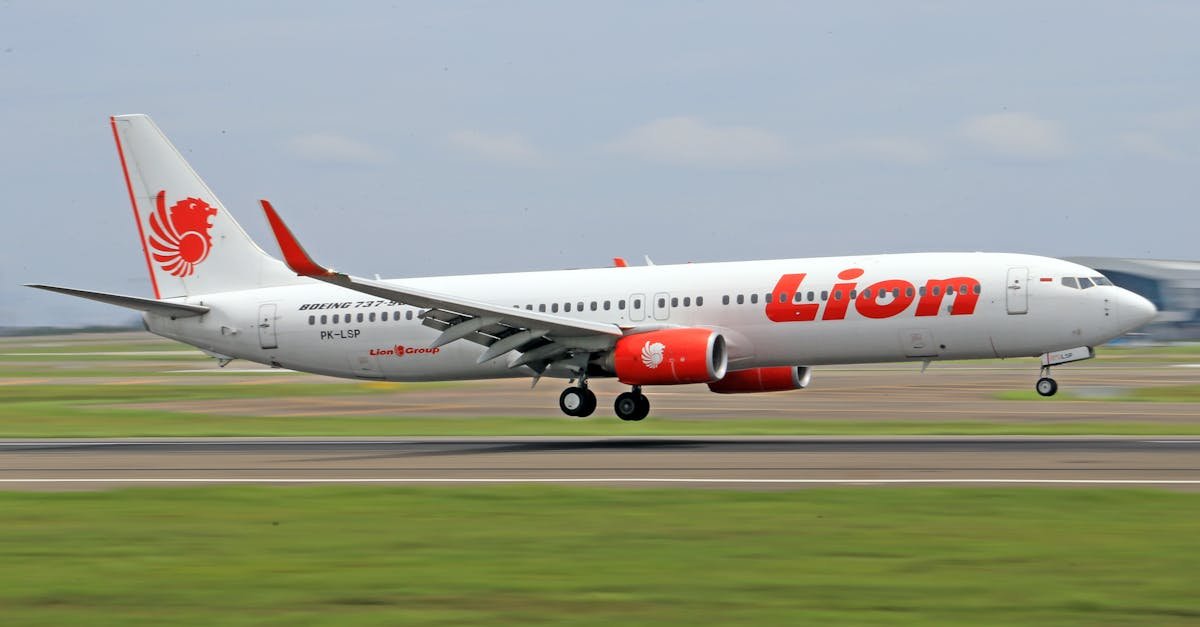
In the world of air travel, few things trigger a passenger’s anxiety faster than seeing something out of place on an airplane wing. Recently, a video went viral showing what appeared to be loose screws or bolts on a Lion Air Boeing 737-800 during a flight from Bangkok to Chiang Mai. For the person filming, the sight of metal fasteners vibrating or protruding from the wing surface felt like a sign of an impending disaster. However, to understand if this situation is truly dangerous, one must look past the initial fear and examine the engineering reality of how modern jets are built.
Aviation experts often point out that while any maintenance irregularity is a concern, not every loose screw represents a structural failure. To get to the bottom of the Lion Air incident, we need to explore the difference between decorative panels, aerodynamic fairings, and the actual load-bearing bones of the aircraft.
Understanding the Role of Fasteners on the Boeing 737-800
The Boeing 737-800 is one of the most widely used aircraft in the history of aviation. It is a workhorse for airlines like Lion Air and is designed with multiple layers of redundancy. When you look at the wing of a plane, you are not looking at a single solid piece of metal. Instead, you see a complex assembly of panels, access doors, and moving parts like flaps and slats.
Thousands of fasteners hold these components together. On an aircraft operated by Lion Air, these fasteners fall into two main categories: structural and non-structural. Structural bolts are the heavy-duty components that keep the wing attached to the fuselage or hold the engines in place. These are rarely visible to the naked eye from a passenger window.Non-structural screws, on the other hand, are often used to secure access panels or aerodynamic “skins” that smooth out the airflow.
When a screw appears loose on a Lion Air flight, it is almost always one of these non-structural fasteners. While they are important for efficiency and protecting internal systems, the loss of one or two usually does not compromise the ability of the aircraft to stay in the air.
Why Do Screws Come Loose on Commercial Flights?
It might seem impossible that a highly regulated machine could have a loose part, but the environment of flight is incredibly harsh. Aircraft owned by Lion Air fly multiple cycles a day, moving from the intense heat of the runway to the freezing temperatures of high altitudes. This constant thermal cycling causes metal to expand and contract.
Furthermore, vibration is a constant factor. Between the roar of the engines and the buffeting of the air at 500 miles per hour, every part of the plane is under steady mechanical stress. Over time, even the most secure screw can begin to back out if the locking mechanism fails or if it was not torqued perfectly during the last maintenance check.
In the specific case of the Lion Air video, experts noted that the screws were likely part of a fairing. A fairing is a specialized cover used to reduce drag. Even if a fairing vibrates or a screw comes loose, the underlying wing box remains solid and unaffected.
READ MORE: Kuwait Airways Boeing 777 Tail-Strike Protection Saves Flight at Amsterdam
The Lion Air Response and Maintenance Protocols
After the video gained traction online, Lion Air moved quickly to address the public concern. The airline stated that the aircraft in question underwent a thorough inspection immediately after landing. According to their technical team, the plane continued to meet international safety standards and the incident did not pose a direct risk to the flight’s operation.
Safety is the top priority for any major carrier, and Lion Air is no exception. The airline follows a strict Maintenance Steering Group (MSG-3) protocol. This involves:
- Daily Inspections: Ground crews perform walk-around checks before every single flight to look for obvious issues like leaking fluids or loose panels.
- A-Checks: More detailed inspections that happen every few hundred flight hours.
- C-Checks and D-Checks: Heavy maintenance where the aircraft is essentially stripped down and rebuilt to ensure every bolt is in top condition.
Despite these rigorous checks, small issues like a loose screw on a non-critical panel can occasionally slip through between major service intervals.
What Aviation Experts Say About the Risk
When asked about the danger of loose screws on a Boeing 737-800, most pilots and aeronautical engineers offer a calming perspective. They explain that aircraft are “over-engineered” by design. This means that if a panel requires ten screws to stay secure, it is likely designed to stay attached even if three or four of them are missing.
One expert noted that while seeing a loose bolt on a Lion Air wing is “unsightly” and “unprofessional” from a maintenance standpoint, it is rarely a safety emergency. The real danger would be if a large panel detached and struck the tail of the plane or got sucked into an engine. However, the fasteners used in aviation are designed to stay captured in their holes even when loose, preventing them from becoming flying debris.
How Passengers Should React to Visual Defects
If you are sitting on a Lion Air flight and notice something that looks wrong, the best course of action is to stay calm and inform the cabin crew. Flight attendants are trained to relay this information to the pilots. The flight crew can then consult their Minimum Equipment List (MEL) to determine if the issue requires an immediate return to the gate or if it can be handled upon arrival at the destination.
It is important for passengers to remember that the pilots are on the same plane. They have a vested interest in the safety of the flight and will not take off if they believe a mechanical issue puts the aircraft at risk. The visibility of a loose screw is often more frightening than the technical reality of the situation.
Maintaining Trust in Aviation Safety
The viral nature of social media means that a single video can quickly change the public perception of an airline. For Lion Air, incidents like these are an opportunity to reinforce their commitment to safety and transparency. While the sight of a loose screw is a reminder that maintenance must always be flawless, it also highlights the incredible resilience of modern aircraft.
Aviation remains the safest form of long-distance travel. The systems in place on a Lion Air Boeing 737-800 are designed to handle minor wear and tear without endangering lives. By understanding the difference between a cosmetic issue and a structural one, travelers can fly with more peace of mind.
Strengthening Oversight for the Future
Moving forward, the aviation industry continues to adopt new technologies to prevent these minor lapses. Many airlines, including Lion Air, are looking into high-definition camera systems and AI-assisted inspections that can spot tiny defects faster than a human eye during a quick walk-around.
Better tracking of fastener torque and the use of more advanced locking washers are also becoming standard. The goal is to reach a point where even the smallest non-structural screw stays perfectly in place for the entire life of the maintenance cycle. While no machine is perfect, the constant evolution of safety protocols ensures that Lion Air and other carriers keep improving their service.
Final Thoughts on Aircraft Integrity
While the headlines about loose screws on a Lion Air jet might sound alarming, the consensus among experts is clear:the aircraft is designed to handle such minor occurrences. The Boeing 737-800 is a remarkably sturdy machine, and the layers of redundancy built into its frame ensure that a few loose fasteners on an aerodynamic cover do not lead to a catastrophe. Passengers can continue to trust the rigorous engineering and the strict regulatory frameworks that keep the skies safe for everyone.
Leave a Reply