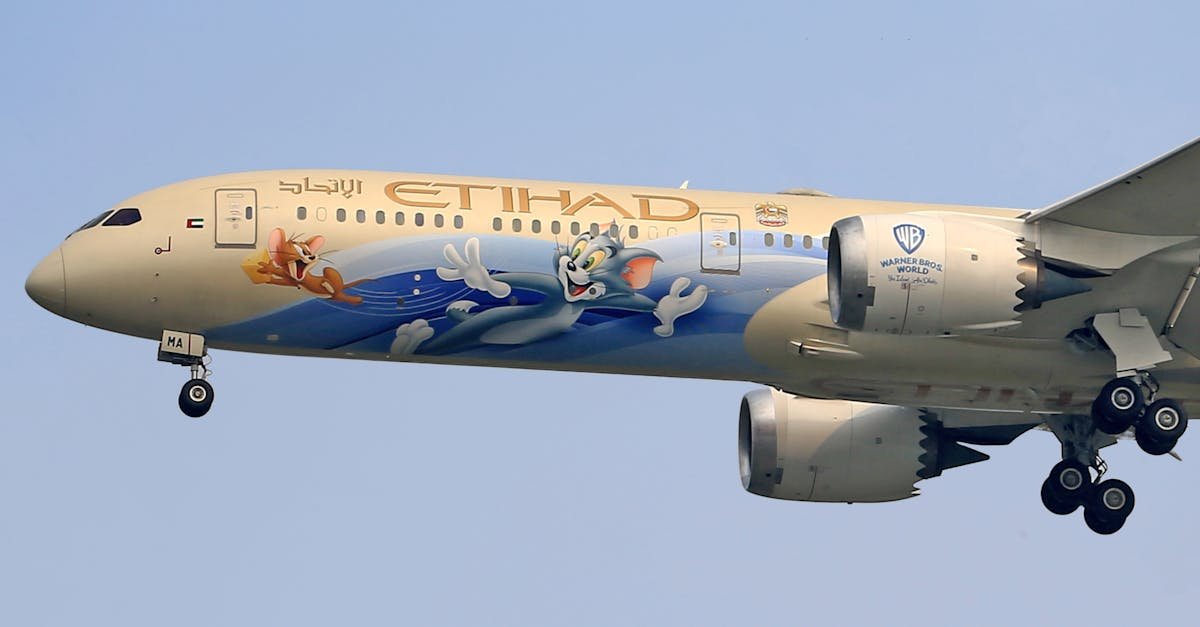
The aviation industry often speaks in terms of recovery, but what Etihad Airways recently achieved moves far beyond a simple return to form. On February 24, 2026, the national carrier of the United Arab Emirates pulled back the curtain on its 2025 financial results, revealing a story of growth that few predicted even three years ago. By reporting a record breaking net profit of $698 million, or 2.6 billion dirhams, Etihad has officially closed the chapter on its era of restructuring. This figure represents a massive 47 percent jump from the previous year, signaling that the airline is no longer just a participant in the global market but a dominant force once again.
The numbers are staggering when placed in context. Not only did profits soar, but the airline also welcomed 22.4 million passengers through its cabin doors during 2025. This 21 percent increase in passenger volume highlights a fundamental shift in how the world travels through Abu Dhabi. It is a resurrection built on more than just high demand. It is the result of a calculated, aggressive expansion of the fleet and a relentless focus on making the business run with surgical precision.
A Massive Leap in Financial Health
Financial experts often look at margins to see if a company is truly healthy or just lucky. In 2025, Etihad achieved a profit margin of 8.4 percent. To understand why this is significant, one only needs to look at the global average for the airline industry, which the International Air Transport Association estimated at around 3.9 percent. Etihad is currently operating at more than double the industry average for profitability.
Total revenue for the year hit 30.7 billion dirhams, which is roughly 8.4 billion dollars. This growth was not isolated to one part of the business. While passenger revenue led the way with a 24 percent increase, the cargo division also held its ground, bringing in 4.5 billion dirhams. This balance allowed the airline to generate nearly 8 billion dirhams in cash flow from operations. Having that much liquid capital meant the airline could pay for its new planes and upgrades without taking on heavy new debts, all while continuing to pay down its existing balance sheet.
The Fleet Expansion That Fueled the Fire
You cannot carry 22 million people without a lot of seats, and Etihad spent 2025 ensuring those seats were available. The airline added 29 aircraft to its fleet during the year, bringing the total operating fleet to 127 planes. This is the largest the airline has ever been. The mix of new arrivals included the highly efficient Airbus A321LR, more A350s, and additional Boeing 787 Dreamliners.
Perhaps the most visible sign of this “Resurrection” was the return of the giants. Etihad reactivated more of its Airbus A380s to handle the surge in demand on high traffic routes like London and New York. While many other airlines moved away from the four engine superjumbos, Etihad found a way to make them profitable by focusing on premium experiences and high capacity. By using a mix of massive long haul planes and nimble narrow body jets like the A321LR, the airline was able to fly into 110 different destinations, up from just 94 the year before.
Rethinking the Passenger Experience
A profitable airline is nothing without happy travelers, and Etihad spent a significant portion of 2025 reinvesting in the people sitting in its seats. The airline reported that its Net Promoter Score, a key measure of customer satisfaction, rose by 10 percent. This was not an accident. The airline launched a new website and a much more intuitive mobile app to make the digital part of the journey less stressful.
On the ground, the experience at Zayed International Airport in Abu Dhabi became a central part of the pitch. The airline expanded its premium services, offering private chauffeur transfers and dedicated check in areas that make the airport feel more like a luxury hotel than a transit hub. Inside the planes, the investment in the A321LR was a game changer for shorter routes. This plane features fully flat beds in business class, a luxury usually reserved for much larger aircraft flying across oceans. By offering long haul comfort on regional flights, Etihad gave travelers a reason to choose them over competitors.
The Strategy Behind the Surge
Chief Executive Officer Antonoaldo Neves has been the architect of this shift. His philosophy has been clear from the start. He believes that for an airline to grow, it first has to be successful and efficient. Under his leadership, the airline has focused on “Journey 2030,” a long term plan to double the number of passengers and the size of the fleet again by the end of the decade.
The 2025 results prove that this plan is moving faster than expected. The airline is already two years ahead of its original targets for passenger growth. One of the smartest moves was focusing on point to point traffic. Historically, Abu Dhabi was mostly a place where people changed planes. In 2025, the number of people starting or ending their journey in Abu Dhabi hit 5.5 million. The airline also doubled the success of its stopover program, which encourages travelers to stay a few days in the capital. This has turned the airline into a massive engine for the local economy and tourism sector.
A Growing Team for a Growing Brand
Behind the $698 million profit is a massive human effort. To support 105,000 yearly landings, Etihad had to go on a hiring spree. In 2025 alone, the company hired over 3,200 new employees. This included roughly 1,600 cabin crew members and nearly 400 pilots.
The company also focused on keeping the talent it already had. About 2,200 employees received promotions throughout the year. This internal growth created a culture of stability and pride that reflects in the service on board. With a workforce representing 152 different nationalities, the airline has built a global team that understands a global customer base. The leadership has already stated that they plan to continue this pace, aiming to hire between 2,500 and 3,000 new people every year for the next five years to keep up with the arriving planes.
What Happens Next for Etihad
The $698 million record is not the finish line. It is the foundation for the next phase. With two major aircraft orders placed in 2025, the pipeline for new planes is secure through the end of the decade. The airline is looking at new destinations across the United States, Africa, and Southeast Asia, aiming to provide at least two flights a day to every major city it serves.
The rating agencies have noticed this stability as well. Fitch recently upgraded the credit rating of the airline to AA minus, which is the highest public rating any airline in the world currently holds. This financial strength gives Etihad the “vault” it needs to jump into a new era where it is no longer the underdog trying to fix its balance sheet. Instead, it is a lean, profitable, and highly competitive leader in the sky.
As the industry looks toward 2026 and beyond, the story of Etihad serves as a masterclass in how to turn a struggling brand into a profit machine. It took a combination of strict cost control, a massive investment in the right planes, and a renewed focus on why people fly in the first place. The era of the “comeback” is officially over for Etihad. The era of dominance has begun.
Leave a Reply