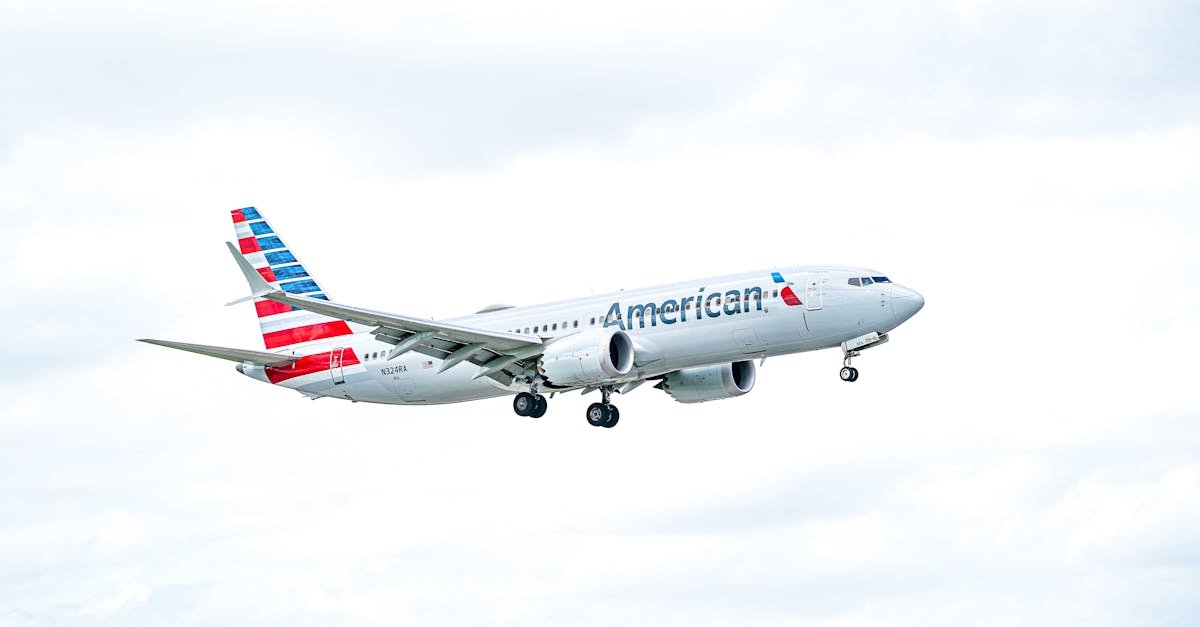
The evening sky over New Jersey was the backdrop for a tense aviation moment on Wednesday, March 25, 2026. For the passengers on American Airlines Flight 1461, what started as a short hop from the South turned into a high stakes emergency. The Boeing 737 MAX aircraft was making its final approach to Newark Liberty International Airport when a mechanical failure forced the pilots into a critical decision making process. This incident serves as a stark reminder of the unpredictable nature of air travel and the rigorous training that keeps the skies safe.
A Routine Departure Turns Tense
The journey began at Charlotte Douglas International Airport in North Carolina. Flight 1461 is a frequent and usually quiet route, whisking travelers between two major East Coast hubs. The aircraft, a Boeing 737 MAX, departed at approximately 7:14 PM, climbing into the clear night air for its two hour trek north. For most of the flight, there was no indication that anything was wrong. Passengers settled into their seats, likely expecting a standard arrival in Newark around 9:00 PM.
The situation changed as the plane began its descent toward the New York metropolitan area. Modern aircraft are equipped with a vast array of sensors designed to monitor every moving part. As the crew prepared for landing, an alert triggered in the cockpit. The pilots received a notification regarding the landing gear system. Specifically, the data suggested a drop in pressure or a mechanical anomaly with the nose gear, which is the set of wheels located directly under the front of the plane.
The Emergency Declaration Over New Jersey
In the world of aviation, “declaring an emergency” is a formal process that gives a flight immediate priority over all other traffic. As the Boeing 737 MAX approached Newark, the captain made the call to air traffic control. They reported a blown tire on the nose gear. This was not a minor inconvenience. The nose tire is essential for steering the aircraft once it touches the ground. If the tire is shredded or missing, the metal wheel assembly can spark against the runway, or worse, the plane can become difficult to control during the high speed rollout after landing.
Newark Liberty International Airport immediately went into a high alert status. Other flights were held in patterns or diverted to ensure the runway was completely clear for Flight 1461. On the ground, the sight was dramatic. Flashing red and blue lights from dozens of emergency vehicles began to line the edges of the tarmac. Fire trucks, ambulances, and Port Authority police prepared for the worst case scenario as the jet lined up with the runway.
Touching Down with a Blown Tire
Landing a massive jet with a compromised nose gear requires a delicate touch. Pilots are trained to keep the nose of the aircraft off the ground for as long as possible during the landing roll, using the rear main gear to take the brunt of the impact and the initial braking. When the nose finally touches down, the crew must work quickly to maintain the center line of the runway.
At approximately 9:00 PM, the Boeing 737 MAX made contact with the pavement. The sound of the landing was reportedly louder than usual for those sitting in the front of the cabin. As the front gear touched the ground, the remaining rubber on the blown tire likely disintegrated. The smell of burning rubber began to waft into the cabin through the air filtration system, a common but unsettling occurrence during tire failures.+1
Despite the mechanical failure, the aircraft stayed on the runway. The dual tire configuration of the 737 MAX nose gear proved to be a vital safety feature. Because there are two tires on the front assembly, the intact tire helped stabilize the plane even as the other one failed completely. The aircraft eventually slowed to a stop, surrounded by a ring of emergency responders.
Ground Operations and Passenger Safety
Once the plane was stationary, the focus shifted to the 160 passengers and crew members on board. In many emergency landings, the first instinct is to use the inflatable slides for a rapid evacuation. However, since there was no active fire and the aircraft was stable, the decision was made to keep everyone on board for a short period. This is often a safer route to prevent injuries that can occur during a frantic slide evacuation.
Engineers and fire crews inspected the landing gear while the passengers waited. They had to ensure that the heat from the friction had not ignited any hydraulic fluid or caused structural damage that would make moving the plane dangerous. After the “all clear” was given, the aircraft was towed off the active runway. Passengers eventually deplaned via mobile stairs and were bussed to the terminal. Remarkably, there were no reported injuries, a testament to the calm handling of the situation by the flight crew.
The Cleanup and Investigation
The impact of such an incident ripples through the entire airport. After Flight 1461 was cleared, the runway remained closed for an inspection. When a tire blows at high speed, it often leaves behind “FOD” or foreign object debris. Small chunks of reinforced rubber and wire can be scattered across the concrete. If another plane were to vacuum this debris into an engine during takeoff, it could cause a catastrophic failure. Ground crews spent significant time sweeping the area to ensure it was safe for the next arrival.
American Airlines and the Federal Aviation Administration have already begun looking into why the tire failed. Tires on commercial jets are designed to withstand incredible pressures and temperatures, but they are not invincible. Investigators will look at maintenance logs, the age of the tire, and whether any debris on the runway in Charlotte might have caused an initial nick that led to the blowout in Newark.
Context of Recent Boeing Incidents
It is impossible to discuss this event without mentioning the intense scrutiny currently facing Boeing. Over the last year, various issues ranging from door plugs to landing gear fires have kept the manufacturer in the headlines. While a blown tire is often a maintenance or operational issue rather than a design flaw, the fact that it occurred on a 737 MAX model ensures that the investigation will be thorough.
Aviation experts point out that tire blowouts, while frightening, are a known variable in flight operations. Modern jets are over engineered to handle these exact moments. The success of Flight 1461 in landing without a single scratch to a passenger highlights that the safety systems in place both mechanical and human worked exactly as they were supposed to.
Moving Forward After the Scare
For the travelers who were on board, the memory of the flashing lights and the smell of smoke will likely linger. For the rest of the traveling public, the incident is a reminder of the importance of the “silent” work done by ground crews, mechanics, and air traffic controllers. Every day, thousands of flights land without issue, but it is the preparation for the one that doesn’t that defines the industry.
The aircraft involved has been taken out of service for a full inspection and repair of the nose gear assembly. It will likely return to the skies once it passes a series of rigorous safety checks. In the meantime, the data from this landing will be shared across the industry to help other pilots and maintenance teams recognize the early warning signs of gear failure.
Leave a Reply