Tag: Crash

  • Kauai Helicopter Crash: Timeline, Victims, and Everything We Know So Far

    Kauai Helicopter Crash: Timeline, Victims, and Everything We Know So Far

    The natural majesty of the Garden Isle was met with tragedy on Thursday, March 26, 2026, when a sightseeing tour ended in a devastating accident. At approximately 3:45 p.m., a Kauai helicopter crash occurred just off the shores of Kalalau Beach, a remote and iconic stretch of the Nā Pali Coast. This incident has sent shockwaves through the local community and raised urgent questions about the safety of air tours in one of the world’s most challenging aviation environments.

    The flight was operated by Airborne Aviation, a company well known for its “doors-off” thrill seeker tours. Carrying one pilot and four passengers, the aircraft went down in the water about 100 yards from the sandbar. While the island of Kauai is famous for its dramatic cliffs and emerald valleys, this Kauai helicopter crash serves as a somber reminder of the risks inherent in exploring such rugged terrain from the air.

    Immediate Response to the Kauai Helicopter Crash

    The emergency began when the Kauai Police Department received a text to 911 message reporting that a helicopter had plunged into the ocean. Because Kalalau Beach is only accessible by boat or by the strenuous 11 mile Kalalau Trail, the rescue operation required an immediate and coordinated air and sea response. Multiple agencies, including the Kauai Fire Department, the U.S. Coast Guard, and Ocean Safety lifeguards, mobilized to reach the site before sunset.

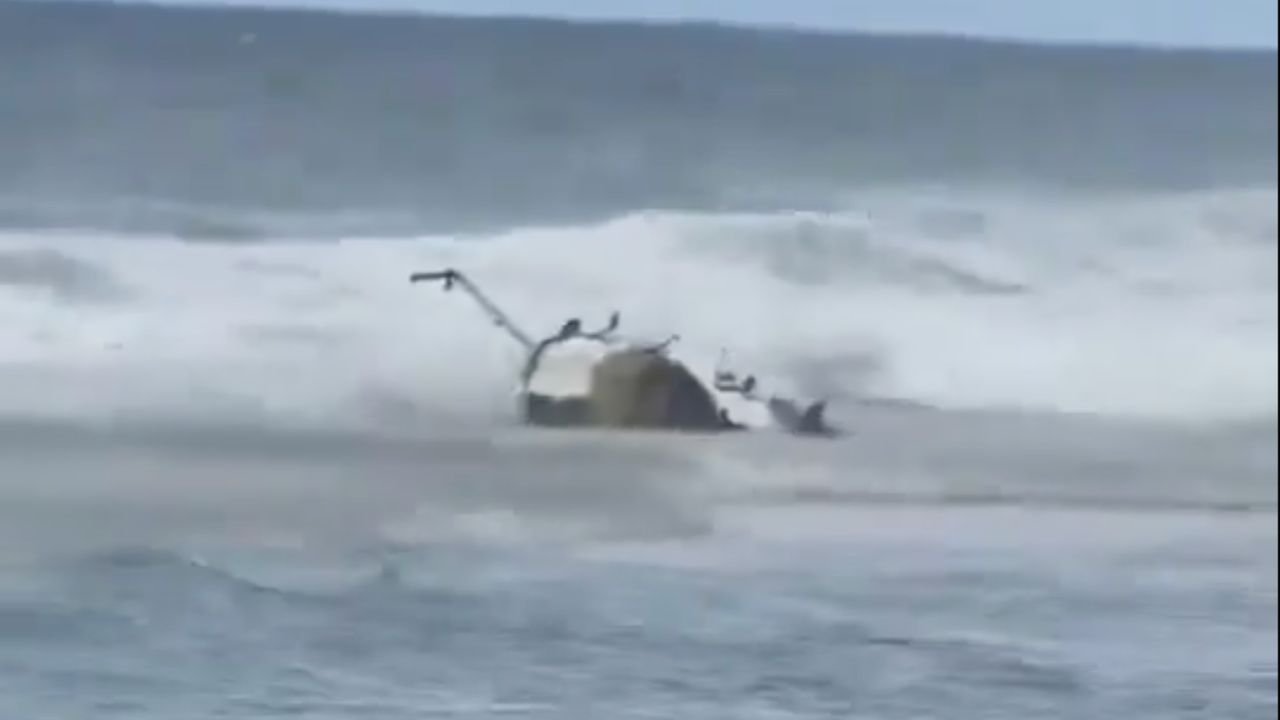
    Witnesses on the beach described a harrowing scene as waves began to crash over the fuselage of the downed Hughes 500 helicopter. Good Samaritans who were already at the remote beach joined first responders in pulling individuals from the surf. Despite the rapid arrival of rescue crews, the Kauai helicopter crash resulted in three confirmed fatalities.Two survivors were successfully recovered from the water and stabilized on the sand before being airlifted to Wilcox Medical Center in Lihue for urgent treatment.

    Details on the Aircraft and Airborne Aviation

    The helicopter involved in this Kauai helicopter crash was a Hughes 500, a model frequently chosen for tour operations due to its agility and excellent visibility for passengers. Airborne Aviation, the operator, has been a fixture on the island since 2009. Prior to this week, the company maintained a strong reputation, often utilized for government contracts, fire response, and search and rescue missions.

    This specific tour was part of their popular adventure package, designed to give tourists an unobstructed view of the island’s hidden waterfalls and deep canyons. However, the “doors-off” configuration, while popular for photography, has been a point of discussion in previous aviation safety reviews. Following the Kauai helicopter crash, Airborne Aviation has grounded its fleet to cooperate fully with federal investigators who are looking into the mechanical history of the aircraft and the specific flight conditions on Thursday afternoon.

    Understanding the Hazards of the Nā Pali Coast

    The location of this Kauai helicopter crash is one of the most beautiful but dangerous flight corridors in Hawaii. The Nā Pali Coast is defined by 3,000 foot cliffs that create unpredictable weather patterns. Even when the weather in Lihue or Princeville appears calm, the wind currents near Kalalau can shift violently.

    Pilots navigating this area must contend with “microbursts” and sudden downdrafts that can push a light aircraft toward the ocean with very little warning. History shows that the Nā Pali Coast has been the site of several incidents over the years. The sheer geography leaves almost no room for error if a mechanical failure or a sudden change in visibility occurs. Investigators will likely examine whether these environmental factors played a primary role in the recent Kauai helicopter crash.

    The Victims and the Search for Answers

    While authorities have confirmed that three people died in the Kauai helicopter crash, the names of the deceased have not been released to the public as officials work to notify their families. The three victims include passengers who had come to the island to enjoy its world class scenery. At the same time, the two survivors remain under medical care at Wilcox Medical Center. Their identities and the full extent of their injuries are currently being protected for privacy.

    For the families of those lost, the wait for answers will be a long process. The National Transportation Safety Board (NTSB) and the Federal Aviation Administration (FAA) have already arrived on the island to begin their probe. Their goal is to piece together the final moments of the flight by analyzing GPS data, witness statements, and any available maintenance records. Recovering the wreckage from the ocean floor is a top priority, as it may hold the key to understanding if an engine malfunction led to the Kauai helicopter crash.

    A History of Aviation Safety on the Garden Isle

    The Kauai helicopter crash on March 26 is unfortunately not an isolated event. Over the last decade, there have been several high profile accidents along the same coastline. In December 2019, a tragic crash claimed the lives of seven people in the same general area, and more recently, in July 2024, another tour helicopter went down near Hanakoa Valley

    These repeated incidents have led to a growing debate among residents and lawmakers. Many are calling for stricter regulations on tour flight paths and frequencies. While the tour industry is a major driver of the local economy, the safety of both visitors and pilots is now being scrutinized more than ever. This latest Kauai helicopter crash is expected to accelerate discussions regarding mandatory safety equipment and pilot training specific to the unique topography of the North Shore.

    The Impact on the Local Kauai Community

    Kauaʻi is an island built on the concept of “ohana” or family. When a Kauai helicopter crash occurs, the impact is felt far beyond the tourism sector. The first responders who fly the rescue missions are often friends or neighbors of the tour pilots. The community has already begun to show its support, with local businesses and residents offering help to the families of the victims.

    Mayor Derek Kawakami expressed his gratitude to the Coast Guard and local teams who worked tirelessly in the wake of the accident. The island remains in a state of mourning as it waits for more details to emerge. For many residents, the sound of helicopter rotors overhead, once a symbol of the island’s vibrant tourism, now brings a sense of unease following this latest tragedy.

    Moving Toward a Safer Future in the Skies

    The investigation into the Kauai helicopter crash will eventually result in a final report that identifies the probable cause. This document is vital for the entire aviation industry, as it often leads to new safety mandates that can prevent future loss of life. Whether the cause is determined to be mechanical failure, pilot error, or environmental factors, the findings will be used to update protocols for all operators in Hawaii.

    In the meantime, the recovery of the Hughes 500 fuselage will provide physical evidence for the NTSB. The process of lifting an aircraft from the Pacific is complex and depends heavily on ocean conditions. Until that work is finished and the survivors are able to provide their accounts, the full story of the Kauai helicopter crash remains incomplete. The focus for now remains on the victims, their families, and the two individuals fighting to recover from a day that was supposed to be the highlight of their Hawaiian vacation.

    Looking Ahead to the Official Investigation Findings

    As the debris is cleared and the investigation moves into its next phase, the NTSB will release a preliminary report within a few weeks. This document will outline the basic facts of the Kauai helicopter crash without assigning a definitive cause. For those seeking closure, this will be the first step in a long legal and emotional journey. The people of Kauai and the thousands of tourists who visit each year are hopeful that these findings will lead to a safer era for island aviation.
  • ‘Stop Truck 1!’: Chilling ATC Audio Precedes Fatal Air Canada Collision at LaGuardia; FAA Launches Probe

    ‘Stop Truck 1!’: Chilling ATC Audio Precedes Fatal Air Canada Collision at LaGuardia; FAA Launches Probe

    The quiet of a Sunday night at LaGuardia Airport was shattered by a catastrophic runway collision that has left the aviation community in a state of shock. Late on March 22, 2026, an Air Canada Express flight arriving from Montreal struck a Port Authority fire truck on the tarmac. The incident has resulted in a tragic loss of life and dozens of injuries, prompting the Federal Aviation Administration to shut down the airport and launch a high level investigation. As the sun rises over Queens on Monday, the focus remains on the survivors and the harrowing final seconds captured on air traffic control recordings.

    The Final Moments on Runway 4

    The sequence of events began just before 11:40 PM as Air Canada flight AC8646, a Bombardier CRJ-900LR, was completing its landing roll. According to flight tracking data and initial reports, the aircraft was decelerating when it encountered an Airport Rescue and Fire Fighting vehicle, identified in communications as Truck 1.

    Audio from the control tower provides a terrifying look at the confusion that led to the impact. In the recordings, air traffic controllers can be heard frantically yelling for the ground vehicle to halt. The commands were direct and desperate, with one controller shouting for the truck to stop at least three times in quick succession. Despite these urgent warnings, the collision was unavoidable. The Air Canada jet, still moving at a significant speed, slammed into the heavy fire engine near taxiway Delta.

    Fatalities and a Growing List of Injuries

    The human toll of this accident is heart-wrenching. While official counts are still being finalized by the Port Authority and local medical examiners, early reports indicate that at least two people have lost their lives. These fatalities are believed to be members of the ground crew who were inside the fire truck at the moment of impact.

    In addition to the deaths, approximately 70 people have been reported injured. The New York Fire Department and emergency medical teams rushed to the scene to establish a triage area right on the runway. Four firefighters were transported to nearby hospitals in critical condition, fighting for their lives after the massive vehicle they were in was struck by the Air Canada plane.

    On board the aircraft, the scene was one of pure terror. More than 100 passengers and crew members felt a massive jolt as the nose of the plane crumpled. While most passengers were able to evacuate using the emergency slides, many suffered from minor injuries, smoke inhalation, and extreme psychological trauma. The sight of the aircraft nose smashed and tilted upward served as a grim reminder of how much worse the situation could have been for those in the cabin.

    A Massive Ground Stop at LaGuardia

    Immediately following the collision, the Federal Aviation Administration took the unprecedented step of halting all traffic at LaGuardia. A ground stop was issued for all departing and arriving flights, effectively freezing one of the busiest airports in the country. Incoming flights were told to abort their landings and circle back or divert to other regional hubs like JFK and Newark.

    The impact on Monday morning commuters has been severe. The airport website shows a wall of cancellations and diversions as the primary runways remain closed for the investigation. Authorities have signaled that the closure could last through the afternoon of March 23, 2026. This shutdown is necessary not only for the federal probe but also to clear the significant debris field left by the Air Canada jet and the destroyed fire truck.

    Details of the Air Canada Aircraft

    The aircraft involved in the tragedy, registered as C-GNJZ, is a veteran of the Air Canada Express fleet. Operated by Jazz Aviation, the CRJ-900 is a workhorse for short routes between major North American cities. It had just completed a routine flight from Montreal when the disaster occurred.

    Visuals from the scene show that the cockpit area of the Air Canada plane bore the brunt of the impact. The underside of the nose was sheared away, and the landing gear appeared to be heavily damaged. This specific jet has been a reliable part of the fleet for over two decades, but the extent of the structural damage suggests it may never fly again. Investigators will be looking into whether any technical issues with the plane contributed to the pilots being unable to avoid the truck in the darkness.

    The Scope of the FAA and NTSB Probe

    The investigation into the Air Canada crash will be exhaustive. The FAA and the National Transportation Safety Board are already on the ground to begin their work. Their primary goal is to understand why a fire truck was crossing an active runway while a commercial jet was landing.

    Communication logs will be the first point of interest. Investigators will examine the specific instructions given to Truck 1 and whether the driver acknowledged the clearance to cross. They will also look at the lighting on the runway and whether the Air Canada pilots had sufficient visibility to see the obstacle in their path. The “Stop Truck 1” audio suggests a lapse in ground safety protocols that will likely result in sweeping changes to how vehicles move across the tarmac at LaGuardia.

    Emergency Response and On-Site Triage

    The response from New York City emergency services was a massive display of coordination. Within minutes of the Air Canada collision, dozens of ambulances and specialized rescue units lined the perimeter of the airport. Because the incident involved an airport fire truck, the remaining fire crews had to manage the emotional weight of rescuing their own colleagues while also ensuring the safety of the plane passengers.

    The evacuation of the Air Canada flight was described as orderly but frantic. Flight attendants worked quickly to get people off the plane as the smell of fuel and burning rubber filled the air. Many passengers left their belongings behind, focusing only on getting as far away from the damaged jet as possible. The triage center remained active through the night as medics worked to stabilize the most severely injured before they were rushed to trauma centers.

    Navigating the Travel Disruption

    For those scheduled to fly today, the situation remains fluid. Air Canada has released statements expressing their concern for those involved and is working to assist passengers who were on flight AC8646. Travelers are being told not to head to LaGuardia without a confirmed flight, as the terminal areas are overcrowded and the ground stop remains in place.

    The ripple effect of this crash is being felt across the entire East Coast. Flights as far away as Boston and Washington D.C. are seeing delays because of the blockage at LaGuardia. The removal of the Air Canada aircraft will be a delicate process that requires heavy machinery, meaning the runway could be out of commission for longer than initially expected.

    Moving Forward After the Runway Tragedy

    The collision between the Air Canada flight and the emergency vehicle is a rare and devastating event that will leave a lasting mark on aviation safety. As the community mourns the loss of the first responders and hopes for the recovery of the injured, the search for answers continues.

    Safety experts will use the data from the flight recorders and the air traffic control tapes to build a minute by minute reconstruction of the accident. This tragedy at LaGuardia serves as a stark reminder of the complexities of airport ground operations. While the investigation is just beginning, the impact of the Air Canada crash will be discussed for years to come as the industry strives to ensure such a collision never happens again.