Tag: Southwest

  • Southwest Pilots Forced into Evasive Maneuvers After Terrifying Blunder: Complete Details, Investigation

    Southwest Pilots Forced into Evasive Maneuvers After Terrifying Blunder: Complete Details, Investigation

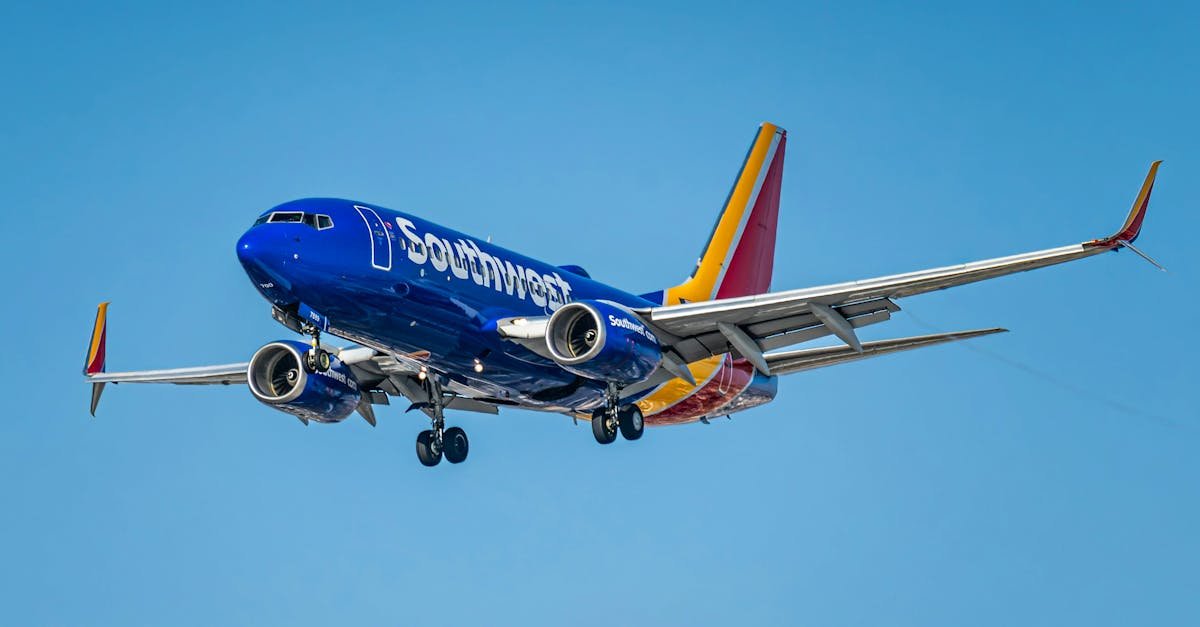
    Air travel is often seen as a seamless dance of technology and human skill, but a recent event at Nashville International Airport served as a stark reminder of how quickly that harmony can break down. Two Southwest aircraft found themselves in a high-stakes situation where seconds and a few hundred feet were all that stood between a routine flight and a national tragedy. This incident, which involved a terrifying air traffic control error, has sparked a deep look into how our skies are managed and the vital role of onboard safety systems.

    The Moment of Crisis in the Nashville Skies

    The afternoon started like any other at one of the busiest hubs in the South. Southwest Flight 507 was on its final approach to land at Nashville, coming in from Myrtle Beach. At the same time, Southwest Flight 1152 was positioned on a parallel runway, ready to begin its journey toward Knoxville. These types of simultaneous operations are common at large airports, relying on strict separation rules to keep everyone safe.

    However, the weather was not making things easy. Gusty winds were whipping across the airfield, forcing the crew of Southwest Flight 507 to make a split-second decision. Realizing the landing was not stable enough to continue safely,the pilots initiated a go-around. This is a standard safety procedure where the plane climbs back into the air to try the landing again. It should have been a non-event, but a confusing instruction from the control tower changed everything.

    How a Single Instruction Created a Path for Disaster

    As the Southwest landing crew began their climb, they received a specific directive from the air traffic controller. They were told to turn right and maintain a certain altitude. On paper, this might sound like a standard way to clear the landing path. In reality, this specific turn sent the Southwest jet directly into the departure corridor of the other Southwest plane that was currently taking off from the parallel runway.

    Within moments, the two massive Boeing 737s were closing the gap between them at a frightening speed. Data later revealed that at their closest point, the two Southwest planes were separated by only 500 feet of altitude. In the world of commercial aviation, where 1,000 feet is the absolute minimum standard for vertical separation, 500 feet is considered a hair-breadth. The margin for error had vanished, leaving the safety of hundreds of passengers in the hands of technology and the quick reflexes of the pilots.

    The Technology That Saved the Day

    When human error occurs in the control tower, a secondary layer of protection is supposed to kick in. This is known as the Traffic Collision Avoidance System, or TCAS. Every Southwest jet is equipped with this sophisticated hardware,which talks to other planes in the vicinity. As the distance between the two Southwest aircraft reached a critical level,the TCAS alarms in both cockpits began to blare.

    These alerts do not just warn of danger; they give specific commands. In this case, the system commanded one Southwest crew to climb aggressively while telling the other Southwest crew to descend. This is a crucial moment for pilots. Training dictates that they must follow the TCAS command immediately, even if it contradicts what the air traffic controller is telling them over the radio. The Southwest pilots did exactly that. By listening to the computer over the human controller, they were able to pull the planes apart and re-establish a safe distance.

    Investigating the Root Cause of the Blunder

    The Federal Aviation Administration and the National Transportation Safety Board have both launched intensive reviews into what went wrong. The focus is not just on the individual controller who gave the wrong turn instruction,but on the environment at the Nashville tower. Investigators want to know if the controller was overworked, if the weather conditions created a visual distraction, or if there was a lack of clear communication between different stations in the tower.

    Southwest has also been fully engaged in this process. The airline has a vested interest in understanding why two of its own planes were put in such a precarious position. Early reports suggest that the controller may have suffered from a loss of situational awareness, essentially losing track of where the departing Southwest flight was located relative to the one performing the go-around. This type of error is rare but highlights the immense pressure placed on the people who manage our airspace.

    A Pattern of Close Calls at Nashville International

    While this specific event with the two Southwest planes is shocking, it is not the only time Nashville has seen a near-miss recently. Just a few weeks prior, an Alaska Airlines flight had to slam on its brakes during takeoff to avoid a Southwest jet that had been cleared to cross the runway. These recurring incidents have raised red flags for safety experts.

    The aviation industry is currently facing a shortage of experienced air traffic controllers, and airports like Nashville are seeing record-breaking numbers of flights. When you combine high traffic volume with a fatigued or less experienced workforce, the safety net can begin to fray. For Southwest, which operates a massive number of daily flights out of Tennessee, ensuring that the local infrastructure can support their operations safely is a top priority.

    What This Means for Future Southwest Travelers

    If you have a flight booked with Southwest, you might be feeling a bit of unease after hearing about a 500-foot near-miss. However, aviation experts point out that the system actually worked. Even though a mistake was made on the ground, the multiple layers of safety—the pilot training and the onboard TCAS technology—successfully prevented a collision.

    Southwest has praised the professionalism of its crews, noting that their adherence to emergency protocols was the deciding factor. Moving forward, travelers can expect to see more scrutiny on how parallel runways are managed during go-around maneuvers. The FAA often issues new safety alerts to controllers nationwide after an event like this to ensure that the same mistake isn’t repeated at another airport.

    Strengthening the Safety Net for Every Flight

    The investigation into the Southwest incident will likely lead to some changes in how Nashville handles its departures and arrivals. There may be new rules about how far a plane must turn during a go-around or better tools installed in the tower to alert controllers when two flight paths are projected to intersect.

    The goal of the aviation industry is to learn from every mistake. By dissecting exactly how the air traffic control blunder happened, the FAA can create better training programs. For the passengers on those two Southwest flights, the experience was undoubtedly terrifying, but the lessons learned from those 500 feet of separation will likely make the skies safer for everyone else in the years to come. The resilience of the aviation system lies in its ability to admit fault,investigate thoroughly, and adapt before the next flight takes to the sky.
  • Panic at 30,000 Feet? FBI Investigates After Southwest Flight Makes Emergency Landing

    Panic at 30,000 Feet? FBI Investigates After Southwest Flight Makes Emergency Landing

    A routine flight across the country turned into a scene of intense scrutiny and high-stakes decision-making this week. For the passengers aboard Southwest Airlines Flight 2094, the journey did not end at their intended destination. Instead, they found themselves on the tarmac in Atlanta, surrounded by law enforcement and federal agents.

    When an aircraft makes an unscheduled landing, the first priority is always safety. However, when the Federal Bureau of Investigation (FBI) gets involved, the narrative shifts from a simple mechanical glitch to a potential security matter. This incident has sparked a massive conversation regarding airline safety protocols and the thin line between a misunderstood comment and a genuine mid-air threat.

    The Timeline of the Mid-Air Security Alert

    The flight began like any other morning departure. Passengers were settled in, the beverage service was underway, and the Boeing 737 was cruising at its standard altitude. Everything changed when the flight crew received information regarding a potential security concern.

    While the airline has been careful with the specific details to protect the integrity of the investigation, reports from those on board suggest that the tension became palpable the moment the captain announced the diversion. Pilots are trained to handle a variety of emergencies, but a security-related diversion requires a specific set of maneuvers. The descent was rapid but controlled, as the cockpit sought to get the plane on the ground as quickly as possible.

    Upon landing at Hartsfield-Jackson Atlanta International Airport, the aircraft was directed to a remote area of the airfield. This is a standard procedure for security threats, designed to keep the plane away from busy terminals and other parked aircraft.

    Why the FBI Leads These Investigations

    A police officer in uniform holds open handcuffs outdoors, clear authority symbol.

    Many people wonder why the FBI steps in instead of local police during an airline incident. The answer lies in federal jurisdiction. Once the cabin door of an aircraft closes and the plane is in flight, it enters federal territory. Crimes or threats committed on an airplane fall under the authority of the United States government.

    In this specific Southwest case, the FBI’s presence was immediate. Agents interviewed passengers, spoke with the flight crew, and conducted a thorough sweep of the cabin and cargo hold. Their goal is to determine if there was a “credible threat” or if the situation was a result of a misunderstanding or a mental health crisis.

    In many modern cases, these investigations center around “unruly passenger” behavior or suspicious comments made to crew members. In a post-9/11 world, there is no such thing as a small joke or an insignificant threat when you are seven miles above the earth.

    The Protocol for Diversions and Emergency Landings

    Every pilot has a thick manual of Quick Reference Handbooks that dictate exactly what to do when things go wrong. An emergency landing for a security threat involves more than just flying the plane. It requires constant communication with Air Traffic Control and the airline’s dispatch center.

    When Flight 2094 declared an emergency, they were given priority over every other plane in the sky. Other flights were held in patterns or redirected to make a “hole” in the sky for the Southwest jet. This coordination is a marvel of modern aviation safety, ensuring that a plane in trouble has a clear path to the nearest suitable runway.

    Managing Passenger Anxiety in a High Pressure Cabin

    For the people sitting in seats 12A or 24F, the technical protocols matter less than the fear of the unknown. When a plane suddenly changes course and the flight attendants stop their service to secure the cabin, panic can spread quickly.

    Social media has changed how these events unfold in real-time. Passengers often post videos or tweets from their phones while the plane is still on the taxiway. In this instance, snippets of the atmosphere inside the cabin leaked out almost immediately. You could see the concern on the faces of travelers as they watched federal agents board the plane with tactical gear.

    The psychological impact of such an event stays with a traveler long after they reach their home. Many of the passengers on this flight had to be rebooked on later departures, but the stress of the FBI interrogation and the sudden landing left many feeling rattled.

    The Role of Technology in Detecting Threats

    Modern aviation relies heavily on technology to keep the skies safe. From advanced screening at the gate to onboard sensors, the layers of security are deep. However, the human element remains the most unpredictable variable.

    In the case of this Southwest flight, it appears that human observation triggered the alarm. Whether it was a piece of luggage that looked out of place or a conversation that sounded threatening, the crew took the “better safe than sorry” approach. Airlines have moved toward a zero-tolerance policy regarding safety. If a flight attendant feels that the safety of the flight is compromised, they are empowered to tell the captain, and the captain has the final word on whether to land the plane.

    The Financial and Operational Cost of a Diversion

    While safety is the primary focus, the logistical nightmare of a diverted flight is significant. A single emergency landing can cost an airline tens of thousands of dollars. This includes extra fuel costs, landing fees at the diversion airport, and the cost of rebooking hundreds of passengers.

    Furthermore, the aircraft itself is often taken out of service for a period of time while it is inspected. This creates a “domino effect” across the airline’s schedule. If that plane was supposed to fly from Atlanta to Denver and then to Los Angeles, those later flights are now delayed or canceled. For Southwest, which operates a “point-to-point” network, a single diversion in the morning can affect flights across the entire country by the evening.

    Legal Consequences for Sparking a Federal Investigation

    If the FBI determines that a passenger intentionally caused a disruption or made a false threat, the legal consequences are severe. Federal charges for interfering with a flight crew can lead to years in prison and massive fines.

    In recent years, the FAA has also started levying civil fines against passengers who cause diversions. These fines can exceed $30,000. This is on top of any criminal charges the Department of Justice might pursue. The message from the government is clear: the safety of the national airspace is not something to be trifled with.

    Lessons Learned from the Atlanta Incident

    Every time a plane makes an emergency landing, the aviation industry learns something new. Federal agencies and airlines will sit down to review the tapes, the cockpit voice recorders, and the witness statements. They look for ways to improve communication and see if the situation could have been de-escalated without a diversion.

    In the 2026 landscape of travel, where flights are more crowded than ever, these incidents serve as a reminder of the vigilance required to keep millions of people moving safely every day. The Southwest pilots involved in this landing are being praised for their professional handling of a tense situation, ensuring that despite the “panic,” the plane landed without a scratch.

    Moving Forward After a Travel Scare

    The investigation into Flight 2094 will likely conclude with a detailed report that clarifies exactly what was said or found on that aircraft. For the general public, it is a reminder to always be aware of your surroundings and to follow crew instructions without hesitation.

    Aviation remains the safest form of long-distance travel in history. While headlines about FBI investigations and emergency landings are frightening, they actually prove that the system is working. The moment a potential problem was identified, the entire machinery of federal law enforcement and aviation safety swung into action to protect the lives of those on board.

    If you are a frequent flier, it is helpful to understand these processes. Knowing that there is a plan for every scenario can actually reduce the anxiety of flying. The next time you buckle your seatbelt, you can do so with the knowledge that thousands of professionals are watching over your flight, ready to act the moment anything out of the ordinary occurs.

  • 5-Year-Old Impresses Southwest CEO After Spotting ‘Discrepancy’ in Training Manual

    5-Year-Old Impresses Southwest CEO After Spotting ‘Discrepancy’ in Training Manual

    Aviation is a world defined by precision. Every bolt, every line of code, and every training manual page is scrutinized by engineers and veteran pilots with decades of experience. It is an industry where mistakes are not just frowned upon; they are a matter of safety. So, when Southwest Airlines gets a call about an inconsistency in their training materials, they usually expect it to come from a senior flight instructor or a federal inspector. They certainly do not expect it to come from a child who is still learning his addition and subtraction.

    William Hines is not your average 5 year old. While most kids his age are focused on cartoons or playgrounds, William has spent a significant portion of his young life obsessed with the mechanics of flight. His passion for airplanes goes beyond just playing with toy models. He studies the systems, the layouts of cockpits, and the technical language of the skies. This deep dive into the world of aeronautics recently led him to a discovery that went viral and eventually caught the attention of the highest levels of leadership at Southwest Airlines.

    A Tiny Expert with a Sharp Eye

    The story began when William was looking through a technical manual for a Boeing 737, the primary aircraft used in the Southwest Airlines fleet. For many adults, these manuals are dense and incredibly difficult to understand. They are filled with complex diagrams of the Primary Flight Display and the Navigation Display. These screens provide pilots with critical information such as altitude, airspeed, and terrain data. To the untrained eye, the graphics look like a mess of lines and colors. To William, they are a map of a world he dreams of joining one day.

    As he was studying the images, William noticed something that did not sit right with him. He was looking at two different screens in a cockpit diagram that were supposed to be showing the same terrain from different perspectives. William realized that the way the terrain was rendered on one screen did not match the scale or the position of the terrain on the second screen. He pointed out to his parents that the displays were showing different zoom levels or distances that did not align logically in a synchronized cockpit environment.

    The Video That Changed Everything

    William’s mother was so impressed by his observation that she captured the moment on video. In the clip, the young boy calmly explains the technical layout of the screens. He uses his finger to trace the lines of the terrain and explains why the two images are inconsistent. He notes that one side appears to be closer while the other side is further away, making the overall diagram confusing for someone trying to learn how the systems work together.

    When the video was posted to social media, it did not take long for the aviation community to take notice. Pilots and enthusiasts alike were shocked that a child who had not even started first grade could identify a subtle visual discrepancy in professional grade training material. The video eventually made its way to the desk of Bob Jordan, the CEO of Southwest Airlines. Rather than dismissing the claim or ignoring the video, the airline decided to embrace the moment and celebrate the young boy’s passion.

    A Personal Invitation to Headquarters

    Southwest Airlines has long been known for a corporate culture that values personality and a bit of fun. Recognizing a unique opportunity to encourage a future pilot, Bob Jordan sent a personal message to William and his family. He invited them to the Southwest Airlines headquarters in Dallas, Texas, for a day they would never forget.

    The airline did not just give him a quick tour and a gift bag. They treated William like a true member of the flight crew. Upon his arrival, he was presented with a custom made pilot uniform that fit him perfectly. He was given the title of “Pilot for a Day” and was introduced to senior captains and executives. The highlights of the trip included a tour of the operations center and a chance to see how a major airline manages thousands of flights every single day.

    Stepping Into the Flight Simulator

    The most exciting part of the visit for William was the opportunity to step inside a professional flight simulator. These machines cost millions of dollars and are used to train actual commercial pilots in every imaginable weather condition and emergency scenario. Most people never get the chance to sit in one of these high tech cockpits, let alone operate the controls.

    Under the guidance of professional instructors, William took the captain’s seat. He was able to see the very screens he had been studying in his manuals come to life in a 3D environment. He practiced takeoffs and landings, showing a level of focus and understanding that left the instructors speechless. It was a full circle moment for the young boy. He had gone from pointing out a discrepancy in a printed book to seeing those exact systems function in a simulated flight environment.

    Was It Really a Mistake in the Southwest Manual?

    After the story gained national attention, many people wondered if the manual was actually wrong. Technically, the airline explained that the images were not a safety hazard or a functional error. In a real Boeing 737 cockpit, pilots have the ability to adjust the range and zoom of their individual displays. One pilot might want to see the terrain twenty miles ahead, while the other might want to see it eighty miles ahead.

    However, in the context of a training manual diagram, consistency is key for students who are learning the ropes. William had identified a visual inconsistency where the two displays in the illustration were not synchronized in a way that made sense for a static teaching tool. By pointing this out, he highlighted a detail that the graphic designers and technical writers had missed. It was a testament to his incredible attention to detail and his ability to process complex spatial information.

    The Future of Aviation and STEM

    Stories like William’s are more than just “feel good” news pieces. They highlight the importance of encouraging children to pursue their interests in Science, Technology, Engineering, and Math. Aviation is an industry that is currently facing a global shortage of pilots and technicians. When a child shows this much promise and passion at such a young age, it is vital for the industry to foster that spark.

    Southwest Airlines understood this perfectly. By inviting William to their headquarters, they were not just correcting a manual or doing a PR stunt. They were investing in the next generation of aviators. They showed William that his voice matters and that his skills are valued in the professional world. This kind of validation can be the deciding factor in whether a child continues to pursue a difficult career path as they grow older.

    A Day to Remember for the 5-year-old

    As William and his family flew back home, they carried with them memories that will likely last a lifetime. William left Dallas with more than just a custom flight suit and some cool photos. He left with the knowledge that he had successfully challenged the status quo of a multi billion dollar corporation.

    The aviation world is small and tightly knit. People will likely be talking about the boy who corrected the manual for years to come. If William continues on this path, there is little doubt that he will eventually find himself back in a Boeing 737 cockpit, this time for real. He has already proven that he has the eyes of a captain and the mind of an engineer. For now, he is back to being a 5 year old, but with a very impressive story to tell at show and tell.

  • The Southwest Effect 2.0: Why US Airlines are Still One Tech Glitch Away from Total Meltdown

    The Southwest Effect 2.0: Why US Airlines are Still One Tech Glitch Away from Total Meltdown

    The image of thousands of suitcases piled high in a terminal while families sleep on airport floors has become a recurring nightmare for American travelers. We often think of aviation as the peak of modern engineering, yet the reality behind the check-in desk is much different. While the planes themselves are high-tech marvels, the digital brains that coordinate where those planes and their crews go are often decades out of date. This creates a fragile environment where a single line of bad code or a minor server hiccup can ground an entire nation’s fleet in hours.

    The Ghost of Holiday Season Past

    To understand why 2026 feels so precarious, we have to look back at the original Southwest meltdown. That event was a wake-up call that most people hit the snooze button on. It was not just a weather problem. It was a failure of a legacy scheduling system that simply could not keep up with the chaos. When the computers lost track of where the pilots were, the airline essentially stopped existing for a week.

    Today, we are seeing “The Southwest Effect 2.0″ because the same underlying issues have spread across the industry. Airlines have spent billions on shiny new cabins and faster Wi-Fi, but the back-end infrastructure remains a patchwork of old code and manual processes. When one piece of the puzzle fails, the entire picture falls apart.

    The Fragility of Modern Scheduling

    The most critical part of an airline is not the fuel or the wings. It is the scheduling software. This software must balance thousands of moving parts: pilot rest requirements, flight attendant locations, aircraft maintenance cycles, and gate availability. In the United States, several major carriers still rely on systems built on programming languages that were popular in the 1970s.

    When a storm hits or a software update goes wrong, these systems face a data overload. They are designed for smooth sailing. As soon as a few hundred flights are canceled, the software enters a feedback loop. It cannot reassign a pilot to a new flight because it does not “know” the pilot is legally allowed to fly. The result is a total system freeze where planes are ready and crews are waiting, but the computer will not let them meet.

    The CrowdStrike Lesson of 2024

    We saw a massive example of this vulnerability recently when a faulty security update from CrowdStrike knocked out Windows systems globally. While many industries recovered in a day, Delta Airlines struggled for nearly a week. This was a classic case of the Southwest Effect 2.0. Even though the initial “glitch” was fixed quickly, the secondary systems could not handle the backlog.

    The manual work required to reset thousands of servers and re-sync crew schedules proved that the human element is being overwhelmed by the scale of modern aviation. If an airline has to manually reboot 40,000 servers to get moving again, that airline is not resilient. It is simply lucky that it does not happen more often.

    A Perfect Storm in 2026

    The current year has brought new challenges that make these tech glitches even more dangerous. We are currently facing a massive shortage of air traffic controllers and experienced pilots. This means there is no “slack” in the system. In the past, if a computer went down, humans could step in and manage the flow at a slower pace.

    Now, every worker is stretched to the limit. When the technology fails, there is no one left to pick up the slack. We are also seeing record-high travel demand as we lead up to the 2026 World Cup. With more people in the airports than ever before, a two-hour technical delay now has the potential to spiral into a three-day operational collapse.

    The FAA Modernization Race

    It is not just the airlines that are at risk. The Federal Aviation Administration is currently in the middle of a massive $12.5 billion overhaul of the air traffic control system. For years, controllers have been using paper strips to track planes. While we are finally moving toward a cloud-based digital system, the transition period is the most dangerous time.

    Running old and new systems at the same time is like trying to change the tires on a car while it is driving 60 miles per hour. Any minor error during this migration could trigger a “ground stop” that affects every airline at once. We are essentially betting that our aging infrastructure can hold together just long enough for the new tech to arrive.

    The Hidden Cost of Outsourcing Systems by Southwest, American Airlines and Others

    Another reason why we are so vulnerable to a total meltdown is the way airlines have outsourced their IT departments. Many carriers no longer have the “nerds in the basement” who built the original systems. Instead, they rely on third-party vendors and remote contractors.

    While this saves money, it creates a massive communication gap during a crisis. When a system crashes, the people who know how to fix it might be on a different continent or working for a company that has five other clients experiencing the same emergency. This “fragmentation” of responsibility means that a small glitch takes much longer to resolve than it did twenty years ago.

    Why Travelers Should Be Concerned

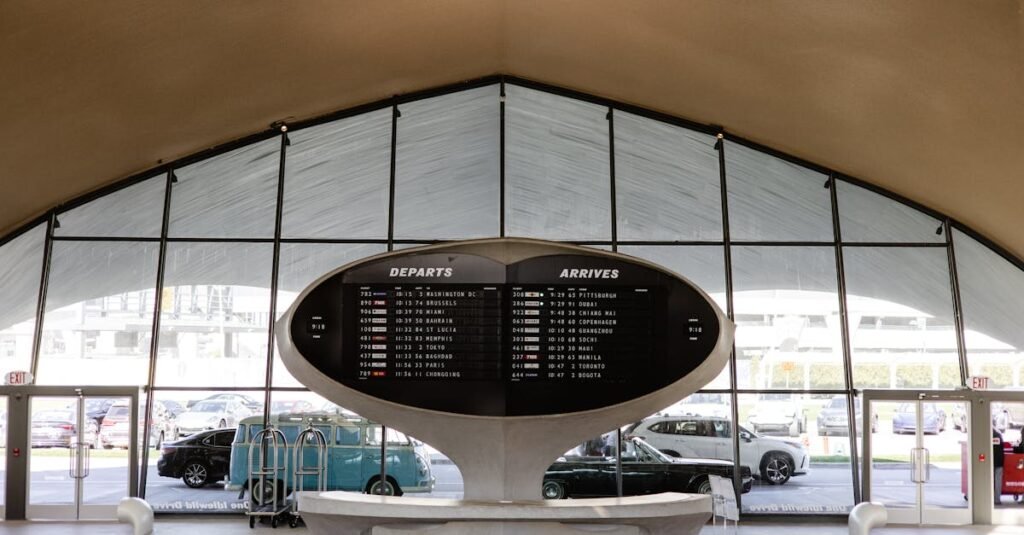
    The stylish departure and arrival board at JFK's historic TWA terminal, New York.

    For the average American traveler, the Southwest Effect 2.0 means that your “on-time” status is a coin flip. The industry has become so interconnected that a power outage in an Atlanta data center can cause a cancellation for a passenger in Seattle.

    Airlines are trying to solve this by moving to the cloud, but the cloud is just someone else’s computer. If the cloud provider has an outage, the airline has no Plan B. We have traded local reliability for global efficiency, and we are now seeing the price of that trade.

    How to Protect Your Travel Plans

    Since we know the system is brittle, travelers have to change how they book. The era of “everything going right” is over for now. The best way to avoid being a victim of the next meltdown is to fly earlier in the day. Most tech glitches and “cascading delays” happen in the afternoon and evening as the system’s stress builds up.

    It is also vital to use the airline’s mobile app but not rely on it exclusively. During a total meltdown, the apps are often the first things to provide incorrect information because they are drawing data from the very servers that are failing. Always have a backup plan, such as a rental car reservation or a hotel app, ready to go.

    The Path Forward

    Scaling the US aviation industry for the future requires more than just new planes. It requires a complete “digital gut renovation.” Airlines need to stop treating their IT departments as cost centers and start treating them as the core of their safety mission.

    Until we see a move away from 50-year-old code and a return to robust, in-house technical teams, the “Total Meltdown” will remain a permanent feature of American air travel. We are currently flying on a system held together by digital duct tape, and 2026 will be the year we find out if that tape can hold.

  • When Will Southwest Debut the Boeing 737 MAX 7? All We Know So Far

    When Will Southwest Debut the Boeing 737 MAX 7? All We Know So Far

    For nearly seven years, the aviation world and specifically Southwest Airlines has been playing a high-stakes game of “wait and see” with the Boeing 737 MAX 7. As the smallest member of the MAX family, the aircraft was originally intended to be the workhorse that would modernize Southwest’s short-haul fleet by 2019. However, a whirlwind of regulatory shifts, technical redesigns, and production hurdles has pushed that dream further down the runway.

    As of early 2026, the fog is finally beginning to lift. While the airline remains “optimistic,” the target for the official debut has moved to early 2027. This article dives deep into why the timeline shifted, the technical “fix” that saved the program, and what this means for the future of the world’s largest all-737 operator.

    The New Timeline: From Certification to Service

    To understand when you’ll actually step on board a Southwest MAX 7, we have to distinguish between “certification” and “entry into service.” They are not the same thing.

    2026: The Year of the FAA

    Southwest CEO Bob Jordan recently updated investors and analysts, stating that the airline now expects the Federal Aviation Administration (FAA) to grant the MAX 7 its type certification around August 2026. This follows a “rigorous testing” phase that Boeing has been conducting throughout late 2025 and the beginning of 2026.

    2027: The Passenger Debut

    Even if Boeing hands over the keys in late 2026, Southwest cannot simply start selling tickets. The airline requires a buffer of roughly six months to:

    • Train Pilots: Thousands of pilots must be familiarized with the specific nuances of the MAX 7 variant.
    • Maintenance Induction: Maintenance crews need to integrate the new airframe into their rigorous safety schedules.
    • Proving Runs: The airline must conduct its own non-passenger flights to satisfy operational requirements.

    Consequently, Southwest has officially adjusted its fleet planning to target Q1 2027 for the first commercial passenger flight of the Boeing 737 MAX 7.

    Why the Delay? The Engine Anti-Ice Hurdle

    The primary “roadblock” that haunted the MAX 7 for the last two years wasn’t the flight control software (MCAS) that grounded the fleet in 2019. Instead, it was a specialized hardware issue involving the Engine Anti-Ice (EAI) system.

    The Overheating Risk

    During the certification process, regulators discovered a potential flaw: under specific atmospheric conditions (dry, cold air), if a pilot left the engine anti-ice system on for too long, the heat could cause the carbon-composite engine inlets to overheat. This posed a structural risk to the engine housing.

    The Permanent Fix

    Boeing initially sought a temporary exemption to allow the plane to fly while they worked on a fix. However, following the high-profile door-plug incident on an Alaska Airlines flight in early 2024, the FAA and Boeing shifted to a “safety first” culture. Boeing withdrew the exemption request and spent 2025 engineering a permanent hardware redesign. This new system, completed in late 2025, is what is currently being flight-tested to ensure the MAX 7 meets the most modern safety standards.

    Southwest’s Pivot: The “MAX 8” Strategy

    Southwest is not just sitting idly by while Boeing works. To prevent a shortage of seats during the peak 2025 and 2026 travel seasons, the airline has had to get creative with its order book.

    In recent SEC filings (including the 10-K released in February 2026), Southwest revealed it has converted dozens of MAX 7 orders into the larger MAX 8.

    • The Benefit: It allows Southwest to continue growing its capacity and retiring its oldest aircraft.
    • The Trade-off: The MAX 8 is larger and carries more passengers (175 seats vs. 150 on the MAX 7). While great for high-traffic routes, it is less efficient for the “long and thin” routes that the MAX 7 was designed to dominate.

    How Will the “Baby Boeing” Impact Southwest

    Why is Southwest so committed to the MAX 7 despite nearly a decade of delays? The answer lies in the airline’s fundamental business model: point-to-point, high-efficiency travel.

    1. Replacing the 737-700

    Southwest still operates over 300 of the older Boeing 737-700s. These aircraft are the backbone of their fleet, but they are aging. The MAX 7 is the direct successor, offering:

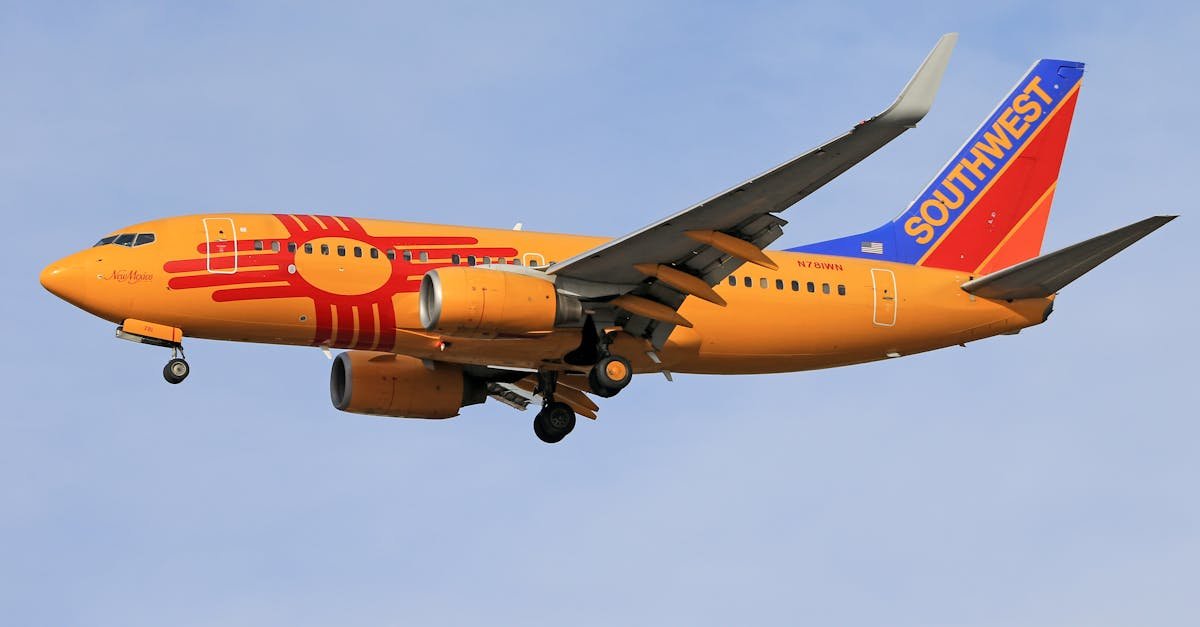
    A Southwest Airlines jet with special livery flying against a blue sky, showcasing aviation technology and travel vibrancy.
    • 18% lower fuel burn per seat.
    • Significantly lower carbon emissions, helping the airline hit its 2030 sustainability goals.

    2. Range and “Thin” Routes

    The MAX 7 has an incredible range of nearly 3,800 nautical miles which is about 1,000 more than the -700. This allows Southwest to fly from mid-continent U.S. cities to Hawaii, or deep into the Caribbean and Central America, without needing a “hub” or a larger, half-empty plane.

    3. Operational Commonality

    By staying with an all-737 fleet, Southwest saves hundreds of millions of dollars in training, spare parts, and crew scheduling. They simply cannot afford to switch to an Airbus A220 without upending their entire cost structure.

    Challenges Remaining for 2026 and 2027

    While the outlook is positive, the “Early 2027” debut is not yet set in stone. Several factors could still sway the timeline:

    • Production Caps: The FAA still maintains a production cap on Boeing (currently around 42 aircraft per month) as it monitors quality control. If Boeing cannot ramp up production by late 2026, Southwest may see its delivery slots pushed back.
    • The “2031 Deadline”: Southwest has set a hard target to retire all 737 Next Generation (NG) aircraft by 2031. To hit this, they need to take delivery of roughly one MAX 7 every week for the next five years which a massive logistical undertaking.
    • Regulatory Scrutiny: The FAA is operating under a “zero-shortcut” policy. Any minor anomaly found during the summer 2026 flight tests could result in a multi-month delay.

    The Strategic Path Forward for the Southwest Fleet

    The arrival of the MAX 7 in 2027 represents more than just a new plane; it is the linchpin of Southwest’s broader business transformation. As the airline moves toward assigned seating and an enhanced cabin experience in 2026, the MAX 7 will be the first aircraft to enter the fleet fully equipped with these new standards from day one. This includes the high-speed USB-A and USB-C power ports, larger overhead “Space Bins,” and the quieter engine profile that passengers have come to expect from the MAX 8.

    From a network perspective, the delay has acted as a bottleneck for Southwest’s “long and thin” route ambitions. While the MAX 8 is perfect for heavy-demand routes like Las Vegas to Phoenix, the MAX 7 is the surgical tool required to make smaller markets profitable over long distances. For example, direct flights from mid-sized cities in the Midwest to Hawaii or deeper into Central America become much more economically viable with a 150-seat aircraft that burns significantly less fuel.

    Furthermore, the 2027 debut aligns with Southwest’s aggressive goal to be an all-MAX operator by 2031. To achieve this, the airline must maintain a seamless “delivery machine” with Boeing. Any further slippage beyond early 2027 would not just delay a debut it would threaten the airline’s long-term cost-reduction targets and its ability to compete against carriers with newer, more diverse fleets. For now, the “August 2026 certification” remains the date to watch.