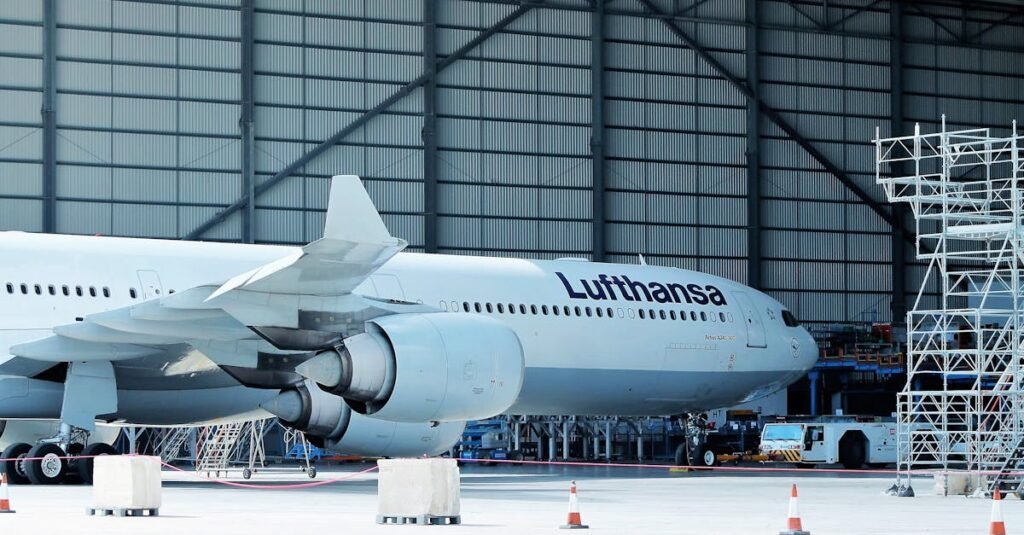
A routine short haul flight from Munich to Copenhagen turned into a grueling ordeal for over one hundred travelers this week. What was supposed to be a quick ninety minute hop across Europe transformed into an stationary overnight marathon on the tarmac. Passengers on Lufthansa flight LH2446 found themselves trapped inside an Airbus A320neo for nearly seven hours after their flight was cancelled due to a series of logistical failures and rigid airport curfews.
The incident highlights a growing concern in the aviation industry regarding ground handling capabilities and the lack of contingency plans at major hubs. While flight cancellations are a common part of modern travel, the decision to keep passengers confined to a narrow body aircraft overnight has sparked outrage and raised serious questions about passenger rights and airline ethics.
A Typical Evening Turns Into a Logistic Deadlock
The trouble began on the evening of Thursday, February 19, 2026. Lufthansa flight LH2446 was scheduled to depart from Munich Airport at 9:30 PM with a planned arrival in Copenhagen by 11:05 PM. Like many flights during the busy winter season, the service was initially hit by rolling delays. Despite the uncertainty, airline staff proceeded with the boarding process, transporting the 123 passengers by bus to a remote parking stand where the Airbus A320neo was waiting.
By the time everyone was seated, the departure window was rapidly closing. Munich Airport operates under a strict midnight curfew to minimize noise pollution for local residents. As the clock ticked toward 12:00 AM, it became clear that the aircraft would not be taking off. The flight was officially axed, leaving a cabin full of tired travelers expecting a quick bus ride back to the terminal and a hotel voucher. However, the nightmare was only just beginning.
The Midnight Closure and the Vanishing Ground Crew
In most scenarios, a cancelled flight at a major hub like Munich would result in passengers being deplaned within thirty minutes. In this instance, a catastrophic breakdown in communication occurred between Lufthansa and the airport ground services. As the crew attempted to call for buses to ferry the passengers back to the terminal, they were met with a shocking reality.
By 2:00 AM, the flight crew had to deliver the news that no one wanted to hear. They informed the passengers that the airport had effectively closed for the night. More importantly, they claimed that all authorized bus drivers had already finished their shifts and gone home. Because the aircraft was parked on a remote stand, passengers were legally forbidden from walking across the active apron to the terminal due to strict security regulations. With no drivers to operate the buses and no legal way to walk off, the passengers were effectively locked inside the plane.
Survival on a Short Haul Aircraft
The Airbus A320neo is a marvel of modern engineering, but it is not designed to function as a hotel. Unlike long haul wide body jets, these regional aircraft are built for efficiency on short routes. This means the seats are designed with a tight pitch of roughly thirty inches, and the cabin lacks the amenities required for a comfortable night of sleep.
Passengers reported a lack of basic supplies. Since the flight was only intended to last ninety minutes, the galley was stocked with minimal food and beverages. There were no pillows, blankets, or amenity kits available to soften the experience of sleeping upright in economy class seats. The crew reportedly provided updates every half hour, but as the night wore on, the atmosphere in the cabin grew increasingly tense and claustrophobic.
Legal Limbo on the Tarmac
During the early morning hours, some passengers reportedly asked if they could simply exit the aircraft and wait on the ground or attempt the walk to the terminal building. The crew remained firm, citing international aviation law and airport safety protocols. Accessing the apron without a designated escort or vehicle is a significant security violation that could result in heavy fines or arrests for both the passengers and the airline staff.
This legal deadlock meant that even though the terminal was visible in the distance, it might as well have been on another continent. The travelers were forced to endure the cold Munich night inside the pressurized tube, waiting for the first shift of ground staff to arrive at dawn.
The Dawn Rescue and Rebooking Chaos
The ordeal finally came to an end in the early morning hours of Friday when the first wave of airport workers returned to duty. Buses eventually arrived to collect the exhausted travelers and return them to the terminal. However, the end of the “tarmac prison” was merely the start of a new set of challenges.
Many passengers were rebooked on the earliest available flight to Copenhagen, which was scheduled for 6:40 AM.Adding insult to injury, that flight was also delayed by nearly an hour. After spending the entire night in a cramped seat without proper rest or nutrition, the travelers finally reached Denmark nearly twelve hours behind schedule.
Lufthansa and Munich Airport Under Fire
The backlash against the German flag carrier has been swift. Critics argue that a major airline operating out of its primary hub should have the influence and resources to find at least one bus driver in an emergency. The fact that over one hundred people were forced to sleep on a plane because of a “lack of buses” at one of Europe’s busiest airports is being viewed as a systemic failure.
Lufthansa has since attributed the incident to a combination of weather related delays and an acute shortage of apron bus drivers. However, aviation experts suggest that the strict adherence to labor hours and airport curfews may have taken precedence over basic passenger welfare.
Passenger Rights and Compensation
Under European law, specifically the regulation known as EC 261, passengers are entitled to significant protections during flight disruptions. In a case like this, each passenger is likely eligible for at least 250 Euros in compensation for the delay. Furthermore, the airline is legally required to provide “duty of care,” which includes meals, refreshments, and hotel accommodation.
By failing to provide a hotel and instead keeping passengers on the aircraft, Lufthansa may face additional legal scrutiny. Legal experts suggest that the “inhumane” conditions of being trapped on a stationary plane without adequate facilities could lead to further claims beyond the standard delay payouts.
Lessons for the Future of Aviation
This incident serves as a stark reminder of the fragility of the global aviation network. When one link in the chain breaks be it a crew shortage, a curfew, or a lack of ground transportation then the entire system can collapse, leaving the customer to bear the brunt of the failure.
For travelers, it underscores the importance of knowing your rights and perhaps carrying a few extra essentials even on the shortest of flights. For airlines, it is a loud wake up call that digital tools and automated systems are no substitute for effective crisis management and human empathy.