Aviation is a world defined by precision. Every bolt, every line of code, and every training manual page is scrutinized by engineers and veteran pilots with decades of experience. It is an industry where mistakes are not just frowned upon; they are a matter of safety. So, when Southwest Airlines gets a call about an inconsistency in their training materials, they usually expect it to come from a senior flight instructor or a federal inspector. They certainly do not expect it to come from a child who is still learning his addition and subtraction.
William Hines is not your average 5 year old. While most kids his age are focused on cartoons or playgrounds, William has spent a significant portion of his young life obsessed with the mechanics of flight. His passion for airplanes goes beyond just playing with toy models. He studies the systems, the layouts of cockpits, and the technical language of the skies. This deep dive into the world of aeronautics recently led him to a discovery that went viral and eventually caught the attention of the highest levels of leadership at Southwest Airlines.
A Tiny Expert with a Sharp Eye
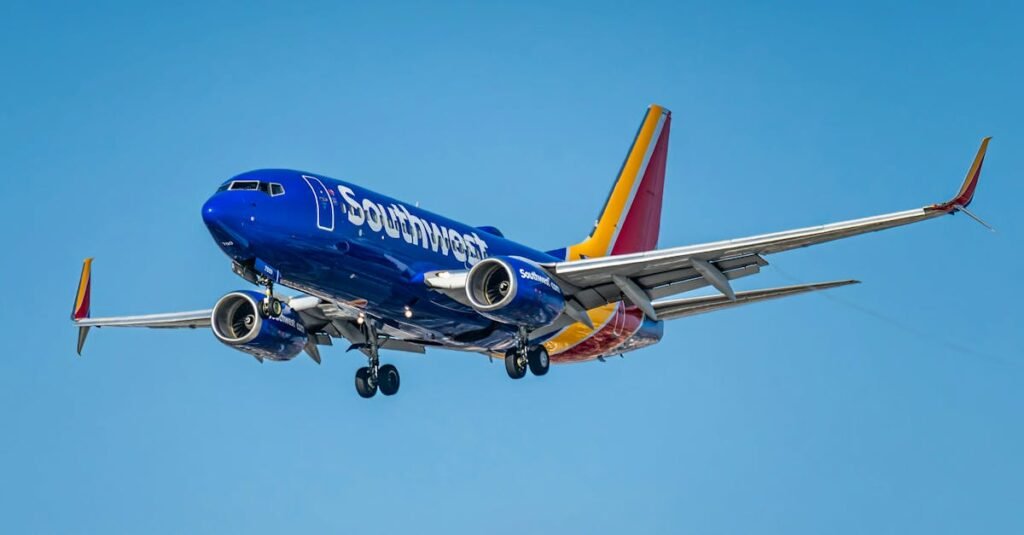
The story began when William was looking through a technical manual for a Boeing 737, the primary aircraft used in the Southwest Airlines fleet. For many adults, these manuals are dense and incredibly difficult to understand. They are filled with complex diagrams of the Primary Flight Display and the Navigation Display. These screens provide pilots with critical information such as altitude, airspeed, and terrain data. To the untrained eye, the graphics look like a mess of lines and colors. To William, they are a map of a world he dreams of joining one day.
As he was studying the images, William noticed something that did not sit right with him. He was looking at two different screens in a cockpit diagram that were supposed to be showing the same terrain from different perspectives. William realized that the way the terrain was rendered on one screen did not match the scale or the position of the terrain on the second screen. He pointed out to his parents that the displays were showing different zoom levels or distances that did not align logically in a synchronized cockpit environment.
The Video That Changed Everything
William’s mother was so impressed by his observation that she captured the moment on video. In the clip, the young boy calmly explains the technical layout of the screens. He uses his finger to trace the lines of the terrain and explains why the two images are inconsistent. He notes that one side appears to be closer while the other side is further away, making the overall diagram confusing for someone trying to learn how the systems work together.
When the video was posted to social media, it did not take long for the aviation community to take notice. Pilots and enthusiasts alike were shocked that a child who had not even started first grade could identify a subtle visual discrepancy in professional grade training material. The video eventually made its way to the desk of Bob Jordan, the CEO of Southwest Airlines. Rather than dismissing the claim or ignoring the video, the airline decided to embrace the moment and celebrate the young boy’s passion.
A Personal Invitation to Headquarters
Southwest Airlines has long been known for a corporate culture that values personality and a bit of fun. Recognizing a unique opportunity to encourage a future pilot, Bob Jordan sent a personal message to William and his family. He invited them to the Southwest Airlines headquarters in Dallas, Texas, for a day they would never forget.
The airline did not just give him a quick tour and a gift bag. They treated William like a true member of the flight crew. Upon his arrival, he was presented with a custom made pilot uniform that fit him perfectly. He was given the title of “Pilot for a Day” and was introduced to senior captains and executives. The highlights of the trip included a tour of the operations center and a chance to see how a major airline manages thousands of flights every single day.
Stepping Into the Flight Simulator
The most exciting part of the visit for William was the opportunity to step inside a professional flight simulator. These machines cost millions of dollars and are used to train actual commercial pilots in every imaginable weather condition and emergency scenario. Most people never get the chance to sit in one of these high tech cockpits, let alone operate the controls.
Under the guidance of professional instructors, William took the captain’s seat. He was able to see the very screens he had been studying in his manuals come to life in a 3D environment. He practiced takeoffs and landings, showing a level of focus and understanding that left the instructors speechless. It was a full circle moment for the young boy. He had gone from pointing out a discrepancy in a printed book to seeing those exact systems function in a simulated flight environment.
Was It Really a Mistake in the Southwest Manual?
After the story gained national attention, many people wondered if the manual was actually wrong. Technically, the airline explained that the images were not a safety hazard or a functional error. In a real Boeing 737 cockpit, pilots have the ability to adjust the range and zoom of their individual displays. One pilot might want to see the terrain twenty miles ahead, while the other might want to see it eighty miles ahead.
However, in the context of a training manual diagram, consistency is key for students who are learning the ropes. William had identified a visual inconsistency where the two displays in the illustration were not synchronized in a way that made sense for a static teaching tool. By pointing this out, he highlighted a detail that the graphic designers and technical writers had missed. It was a testament to his incredible attention to detail and his ability to process complex spatial information.
The Future of Aviation and STEM
Stories like William’s are more than just “feel good” news pieces. They highlight the importance of encouraging children to pursue their interests in Science, Technology, Engineering, and Math. Aviation is an industry that is currently facing a global shortage of pilots and technicians. When a child shows this much promise and passion at such a young age, it is vital for the industry to foster that spark.
Southwest Airlines understood this perfectly. By inviting William to their headquarters, they were not just correcting a manual or doing a PR stunt. They were investing in the next generation of aviators. They showed William that his voice matters and that his skills are valued in the professional world. This kind of validation can be the deciding factor in whether a child continues to pursue a difficult career path as they grow older.
A Day to Remember for the 5-year-old
As William and his family flew back home, they carried with them memories that will likely last a lifetime. William left Dallas with more than just a custom flight suit and some cool photos. He left with the knowledge that he had successfully challenged the status quo of a multi billion dollar corporation.
The aviation world is small and tightly knit. People will likely be talking about the boy who corrected the manual for years to come. If William continues on this path, there is little doubt that he will eventually find himself back in a Boeing 737 cockpit, this time for real. He has already proven that he has the eyes of a captain and the mind of an engineer. For now, he is back to being a 5 year old, but with a very impressive story to tell at show and tell.