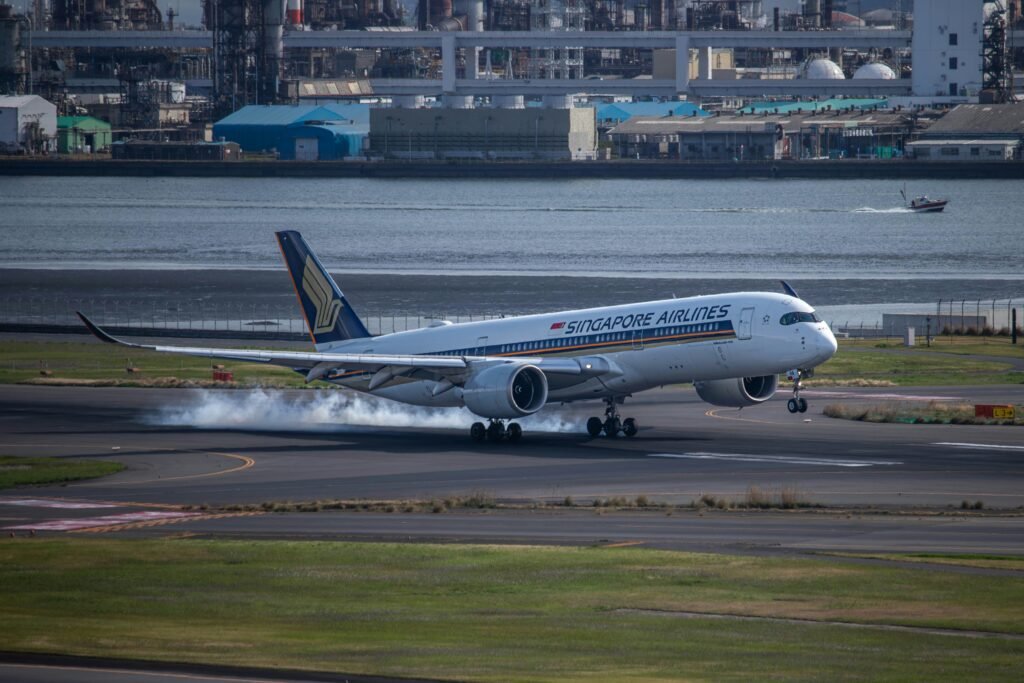
Singapore Airlines Flight SQ917, an Airbus A350-900 operating from Manila to Singapore, performed a go-around at Singapore Changi Airport on Saturday, January 24, before completing a safe landing but photos and official responses have since drawn attention to what may have been a tail strike during the maneuver.
The aircraft involved — registered 9V-SHW — initially attempted to land on Runway 02L at Changi around early evening. Due to wind conditions reported at the time, the flight crew executed a rejected landing (go-around)procedure. During this maneuver, the tail of the aircraft made contact with the runway surface, according to multiple local media reports citing airline sources and aviation tracking data.
After climbing to a safe altitude, the flight repositioned for a second approach to Runway 02C, landing without further incident approximately 25 minutes later. All 256 passengers and 16 crew members disembarked normally, and there were no injuries reported.
Singapore Airlines A350 Photos Raise Questions About Possible Tail Strike
Photos shared on social media including images captured shortly after the aircraft reached the terminal reportedly show scrape marks and damage on the lower rear fuselage near the tail section. Aviation observers and online trackers have described the visual evidence as consistent with a tail strike, though Singapore Airlines has not released detailed diagnostic information publicly.
In an official response to queries from media outlets, a Singapore Airlines spokesperson confirmed the aborted landing was due to wind conditions and emphasized that the aircraft later landed safely and disembarked normally. The airline also said the aircraft is undergoing repairs following the incident.
“All customers and crew disembarked normally,” read the official statement
While tail strikes are relatively uncommon events in modern commercial flight operations, they are a known risk when aircraft perform go-arounds from low altitude. During these maneuvers, sudden changes in thrust and pitch can increase the likelihood of the aft fuselage contacting the runway surface if not carefully controlled.
Flight tracking data also shows that 9V-SHW has remained on the ground in Singapore since the January 24 flight, suggesting it has been taken out of service for inspections and maintenance while other aircraft operate scheduled flights in its stead.
This incident highlights how routine safety procedures such as go-arounds can lead to complex aircraft responses and post-flight scrutiny, especially when visual evidence circulates before formal statements are published. For now, the confirmed elements are clear: a go-around was performed, the aircraft subsequently landed safely, and visible tail damage has prompted repairs and further observation.