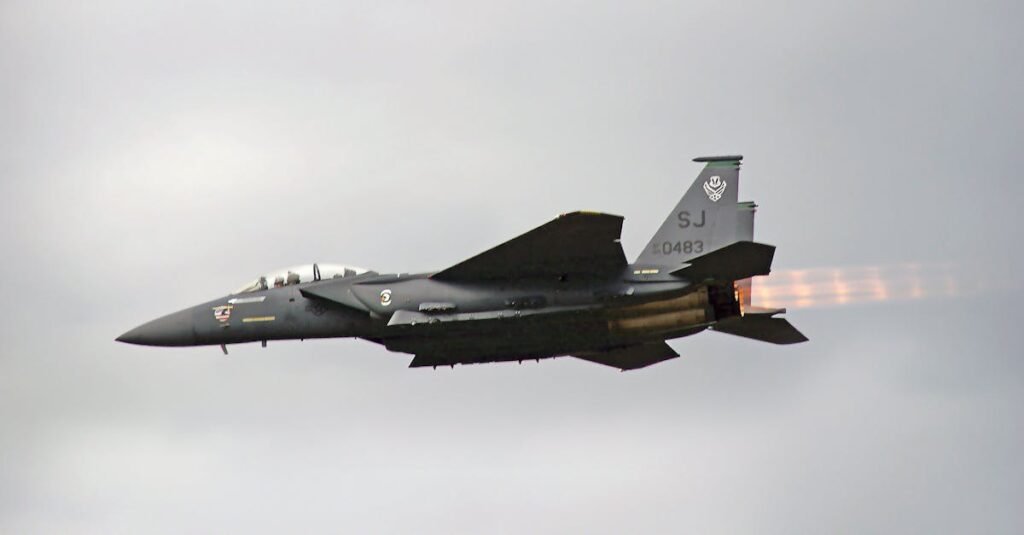
The recent loss of three F-15E Strike Eagles over Kuwait on March 2, 2026, has sparked a massive wave of questions regarding the financial health of the American fighter fleet. While the safety of the aircrews remains the top priority, the sudden disappearance of nearly 150 million dollars in aerial hardware from the active inventory is a significant blow to the defense budget. This incident during Operation Epic Fury comes at a time when the Air Force is already navigating a complex and expensive transition toward newer technology.
To understand the true F-15 cost in today’s landscape, you have to look beyond a single sticker price. The fleet is currently a mix of aging air superiority legends, versatile ground attack workhorses, and a brand new digital version that is rolling off the assembly line with a price tag that surprises many.
The High Financial Stakes of Recent Combat Losses
When three Strike Eagles were downed in the friendly fire incident earlier today, the immediate impact was more than just operational. Each of those jets represented a massive previous investment in upgrades. While an F-15 cost much less when it was first manufactured in the 1990s, the modern value of a fully mission-capable Strike Eagle is roughly 50 million dollars.
These lost aircraft were equipped with modern AESA radars and advanced electronic warfare suites that cost millions to install. Replacing that capability isn’t as simple as buying a used plane. The Air Force must now decide whether to pull older jets out of storage or accelerate the purchase of new models to fill the gap. This 150 million dollar loss in a single afternoon highlights why the F-15 cost is such a volatile and trending topic in 2026.
Breaking Down the F-15 Cost for the New Eagle II
The biggest driver of the F-15 cost narrative right now is the F-15EX Eagle II. This is the newest version of the jet, and its price has been a point of contention in the latest Pentagon budget. For the 2026 fiscal year, the flyaway F-15 cost for one Eagle II is between 90 million and 97 million dollars.
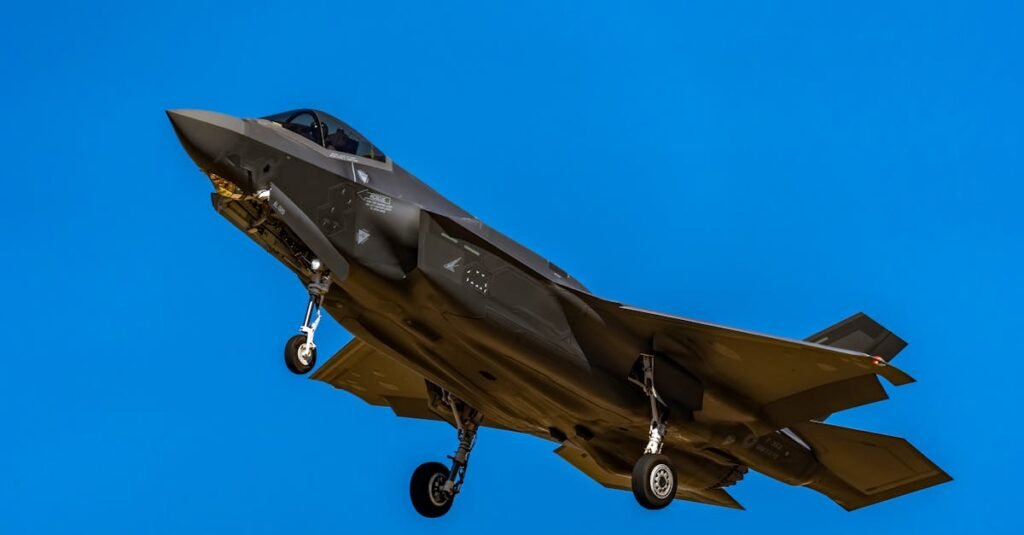
If you want a jet that is actually ready for a high-end fight, the price goes up. Once you add in the Eagle Passive Active Warning Survivability System (EPAWSS) and various targeting pods, the F-15 cost for a combat-ready unit reaches approximately 117 million dollars. This puts the fourth-generation Eagle II in the strange position of being more expensive to buy than the stealthy F-35A, which currently carries a price tag of around 82.5 million dollars for the airframe alone.
A Look at the Total U.S. Air Force Inventory
The U.S. Air Force manages a fleet of about 360 Eagles, but they are far from identical. The total F-15 cost for the taxpayer depends heavily on which version of the plane is being maintained or replaced.
The Strike Eagle Inventory (F-15E)
The F-15E is the heavy hitter of the group. Before the losses in Kuwait, there were 218 of these in the active inventory. The Air Force is currently trying to decide the fate of about 119 of these jets that use older engines. Retiring them would save billions in maintenance, but it would also shrink the number of available planes during a time of global tension. The remaining jets with newer engines are being kept for the long haul.
The New Eagle II Inventory (F-15EX)
The Air Force currently has about 45 of these new jets, but the goal is to reach 129. In the 2026 budget, 3.1 billion dollars was requested to buy 21 additional aircraft. The F-15 cost here is seen as an investment in a “missile truck” that can carry massive amounts of weapons that stealth jets simply cannot fit inside their internal bays.
The Aging Interceptors (F-15C/D)
The oldest part of the family consists of about 100 jets used primarily for defending U.S. airspace. Most of these are being retired this year because their wings are literally wearing out. A few of the best ones, known as Platinum Eagles, will stay in service for another few years. Their F-15 cost is mostly tied to the expensive structural repairs needed to keep them safe to fly.
Comparing the F-15 Cost to Other Modern Fighters
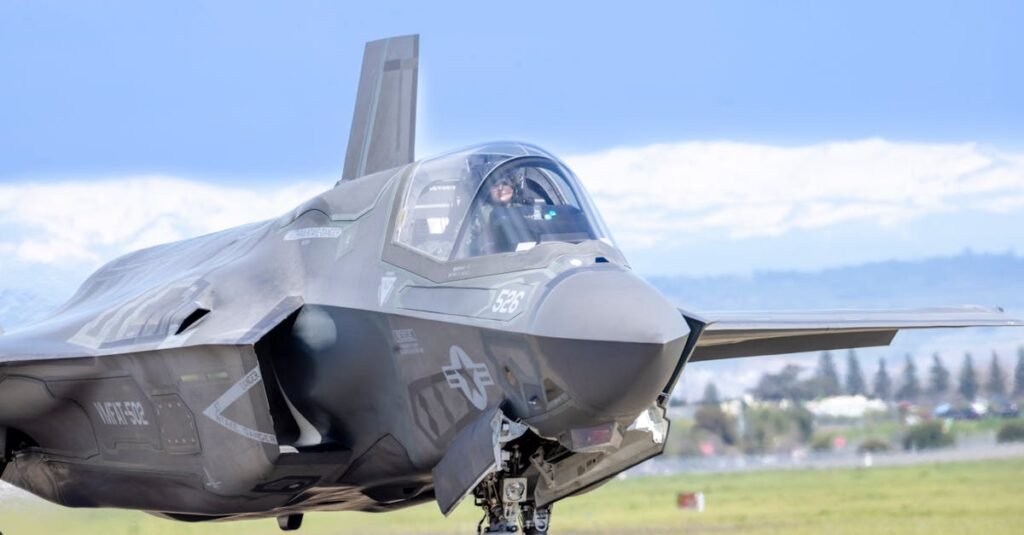
One of the most common questions is why the Air Force would buy a 100 million dollar F-15 when they could buy a stealthy F-35 for less. The answer lies in the long-term F-15 cost of ownership.
While the F-15EX is expensive to buy, it is significantly cheaper to fly. The F-15 cost per flight hour is roughly 29,000 dollars. In comparison, an F-35 can cost 35,000 dollars or more for every hour it spends in the air. Over twenty or thirty years of service, the Eagle II ends up being the more economical choice for many missions. Additionally, the F-15EX has a massive service life of 20,000 hours, which is more than double what most other fighters can handle before they need to be scrapped.
Why Location and Packages Change the Price
The F-15 cost also changes based on who is buying it. For example, recent deals with international partners show much higher numbers. Israel recently signed a deal for 25 new F-15IA jets that could be worth up to 8.5 billion dollars when you include training, spare engines, and weapons.
When you see a headline saying an F-15 cost 300 million dollars, it usually means the total package price for an export customer. For the U.S. Air Force, the price stays lower because the infrastructure, training schools, and supply chains are already in place. They are just buying the planes, not the entire ecosystem required to run an air force.
Factors Driving the Increase in F-15 Cost
Several things have made the F-15 cost rise over the last few years. Inflation has hit the aerospace industry hard, making raw materials and specialized parts more expensive. There is also the issue of the industrial base. Since Boeing is the only company making the F-15, the government pays a premium to keep that production line open and the workers employed.
The complexity of modern technology also plays a role. The F-15EX is essentially a flying supercomputer. It has the world’s fastest mission computer and a digital backbone that allows it to be updated with new software in weeks rather than years. You are not just paying for metal and engines; you are paying for the code and the sensors that allow the jet to see enemies from hundreds of miles away.
The Future Value of the F-15 Fleet
Despite the high F-15 cost, the Air Force sees these jets as essential for the next two decades. The loss of three aircraft today is a major setback, but the plan to modernize the fleet continues. By pairing the heavy-hitting F-15 with stealthy fighters and new autonomous drones, the military hopes to create a force that is both capable and affordable in the long run.
The era of the 30 million dollar fighter jet is over. Whether it is a brand new Eagle II or an upgraded Strike Eagle, the F-15 cost reflects its status as one of the most capable and durable machines ever built. As the Pentagon works to replace the aircraft lost in Kuwait, the debate over the price of air power will only get louder.
The Economic Reality of Modern Air Power
Every time an aircraft is lost or a new budget is released, we get a clearer picture of what it takes to stay ahead in the skies. The F-15 remains a centerpiece of that strategy, even as the price tag continues to climb into the hundreds of millions.