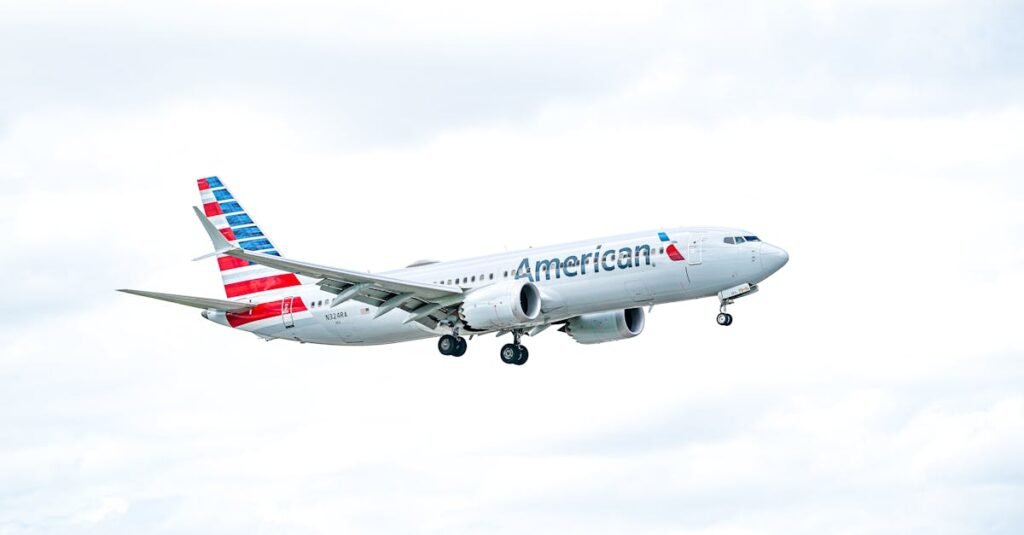
A routine international flight transformed into a complex forensic investigation this week after ground technicians at José María Córdova International Airport in Medellín, Colombia, identified a puncture on an American Airlines Boeing 737. The damage, discovered during a standard post flight walkaround, appears consistent with a projectile strike.
While the aircraft landed without incident and all passengers disembarked safely, the discovery has triggered an urgent review by aviation security officials and local law enforcement. The focus of the inquiry sits on identifying the exact moment the metal skin of the American Airlines jet was breached and whether the aircraft was specifically targeted or caught in a random trajectory of gunfire.
The Post Flight Inspection Discovery
The breach was found during the transition period between the arrival of the American Airlines flight from the United States and its scheduled departure back to the mainland. Ground crews performing the mandatory exterior check noticed a small, clean hole in the lower section of the fuselage. This specific type of damage is immediately categorized as a high priority safety event because it involves the structural integrity of the pressurized cabin.
Upon closer inspection, the puncture showed characteristics typically associated with a small arms bullet. The entry point did not cause any immediate system failures during the flight, which explains why the flight crew did not report any cockpit warnings or loss of hydraulic pressure during the descent. The American Airlines aircraft was pulled from the active rotation and moved to a maintenance hangar where it remains under guard for further analysis.
Analysis of the Descent Path
Investigating an aerial strike requires a detailed look at the flight data recorder and the specific geography of the approach into Medellín. The airport serves as a major gateway but is situated in a high altitude valley surrounded by varied terrain. Aircraft on final approach are often flying at lower altitudes over rural and semi urban districts where ground activity is less controlled than the immediate airport perimeter.
Safety experts are currently mapping the GPS coordinates of the flight path to determine the most likely window for the strike. If the projectile hit the plane while it was at several thousand feet, the ballistics would suggest a high powered rifle or a lucky shot from a significant distance. If the strike occurred during the final seconds before touchdown, the perimeter security of the airport itself comes into question.
What Do the Unconfirmed Reports on Local Accounts Say?
There are several unconfirmed reports circulating within the Rionegro region regarding the origin of the shot. It is critical to note that Colombian authorities have not officially verified any of these claims. Some local witnesses have suggested that sporadic gunfire was heard in a district several miles from the runway threshold around the time of the landing.
Other speculative reports mention the possibility of celebratory gunfire or a local conflict occurring on the ground that accidentally intersected with the flight path of the American Airlines Boeing 737. Until ballistic recovery is complete and the metal fragments are analyzed, these accounts remain strictly anecdotal. The Colombian National Police are conducting a ground sweep of the areas beneath the arrival corridor to search for any evidence of recent firearm discharges.
American Airlines Released an official statement to New York Post and said:
“The aircraft was immediately removed from service for further inspection and repair. We will work closely with all relevant authorities to investigate this incident.”
Engineering Perspectives on Hull Integrity
Commercial aircraft like the Boeing 737 are manufactured using high grade aluminum alloys. While these materials are exceptionally strong and designed to handle the massive pressure changes of high altitude flight, they are not bulletproof. The skin is thin to save weight, relying on the internal skeletal structure for its primary strength.
A small caliber bullet hitting the fuselage at a shallow angle might ricochet, but a direct hit will almost always penetrate the outer skin. The fact that the cabin did not experience an explosive decompression suggests one of two things. Either the strike occurred at a low enough altitude where the pressure differential was minimal, or the projectile was stopped by internal insulation or secondary structures before it could breach the interior pressure seal where the passengers sit.
Procedural Response by American Airlines
American Airlines has maintained a standard protocol in response to the incident, prioritizing the safety of the subsequent flight by canceling the return leg. The carrier is working in tandem with the Federal Aviation Administration and the Transportation Security Administration to evaluate the risk levels associated with the Medellín route.
The airline has sent a specialized team of structural engineers to Colombia to assess whether the airframe can be repaired on site or if a specialized ferry flight is required. A ferry flight involves flying the aircraft at a low altitude without passengers to a major maintenance base in the United States, such as the one located in Tulsa or Miami. This ensures that the hull is not subjected to high pressure cycles until a permanent, certified patch is applied.
Security Context at José María Córdova International
The airport in Medellín is one of the busiest in South America and adheres to international security standards set by the International Civil Aviation Organization. However, controlling the vast tracts of land surrounding any major airport is a logistical challenge. Most modern aviation security focuses on preventing threats from boarding the aircraft, but ground to air incidents represent a different category of risk.
If the investigation concludes that the aircraft was hit while in the air, it may prompt a review of the minimum vectoring altitudes for the region. Air traffic control may be required to keep planes at higher altitudes for longer periods to minimize exposure to potential ground hazards.
Examining Historical Precedents
Ground to air strikes involving civilian hardware are rare in commercial aviation but not entirely unheard of. Most documented cases involve stray bullets from hunting accidents or celebratory events near the flight path. In rare instances, aircraft have been hit by projectiles during periods of civil unrest in various parts of the world.
The Medellín incident is being treated with heightened scrutiny because of the importance of the US-Colombia travel corridor. Authorities are looking for patterns to see if any other carriers have reported similar fuselage damage in recent months that may have been misidentified as bird strikes or debris damage during takeoff.
Technical Forensics and Ballistics
The next phase of the investigation involves extracting the projectile if it is still lodged within the airframe of the American Airlines flight. Ballistic forensics can determine the caliber of the bullet and, in some cases, the type of firearm used. This data is essential for the Colombian National Police as they attempt to narrow down the search area on the ground.
Metallurgical tests will also be conducted on the entry hole. The way the metal peeled back at the point of impact can tell investigators the velocity and the angle of the shot. This helps distinguish between a bullet falling back to earth after being fired into the air and a shot fired directly at the moving target.
Operational Status of the Boeing 737 Fleet

The Boeing 737 remains a workhorse for American Airlines, and this specific incident is being viewed as an external security event rather than a mechanical or design flaw of the aircraft itself. There have been no calls to ground similar aircraft, as the damage was clearly caused by an outside force.
Airline operations to Medellín continue, though pilots have likely been briefed to remain vigilant and report any unusual sightings or sounds during their approach and departure phases. The coordination between the airline, the American government, and the Colombian civil aviation authority remains the primary channel for resolving the mystery of how a commercial jet ended up with a bullet hole in its side.